
All posts by Rod Lott

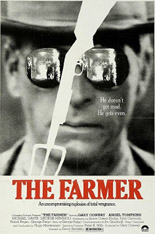
The Farmer (1977)

Cult films number many, yet few earn that status from going unseen. The Farmer is one from that small crop, unavailable for roughly 45 years after a theatrical run so unsuccessful, “theatrical limp” would be more accurate.

Gary Conway (I Was a Teenage Frankenstein), who also produced, takes the lead role of Kyle Martin, a Silver Star soldier returning home from World War II to find his late father’s farm headed toward foreclosure. Prospects are grim until Kyle rescues gamblin’ man Johnny (Michael Dante, The Naked Kiss) from a drunk-driving accident. In thanks, Johnny sends his floozie girlfriend, Betty (Angel Tompkins, Relentless), to gift $1,500 in cash to Kyle, who takes the dough and the dame.

After getting acid-blinded by gangster Frank Passini (George Memmoli, Mean Streets) for cheating on the ponies, Johnny offers Kyle $50,000 to get “the bastard scum.” It’s an offer he can’t refuse. Well, actually, he can and does … until one of Passini’s men, the aptly named Weasel (Timothy Scott, Vanishing Point), rapes Betty and burns down Kyle’s barn, essentially turning it into a hot glue factory. Only then is our do-gooder ready to put the Passini gang to pasture.
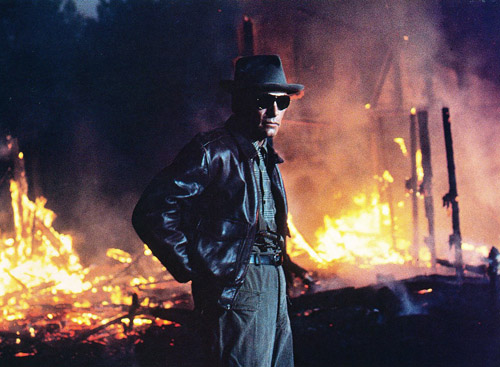
This is where The Farmer shifts into revenge mode, earning itself a spot in the 1970s cycle of veteran-vengeance pics like Taxi Driver and Rolling Thunder. It’s nowhere near the greatness of either, but a rep is a rep. The highlight isn’t Kyle shooting bad guys with a sawed-off shotgun packed with homemade potassium cyanide pellets; the highlight is how those pellets send its targets violently sliding across concrete as if they were first-timers in the ice follies.

That brutal blast and a surprise ending are enough to let you leave The Farmer on enough of a high note to distract you from how the first hour is fairly hokey, time-biding and more complicated than necessary — perhaps the result of four credited screenwriters. Had the movie been made 10 years later, director David Berlatsky might have tasked one of those scribes to juice up the script with action-hero quips like, “The farm report: You’re dead” and “They call me The Farmer, and I’m here to till your soil,” and “Wheat futures? Rising. Your future? Nonexistent.” —Rod Lott

Get it at Amazon.

Beast of War (2025)

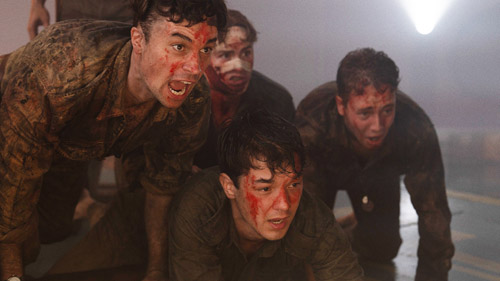
You wouldn’t think the director of such Australian genre fare as Sting and Wyrmwood would follow those flicks with a somber World War II drama. And thankfully, he hasn’t! Although Beast of War arrives “inspired by” the sinking of the HMAS Armidale by Japanese forces in 1942, Kiah Roache-Turner is most interested in what happens to be the tragedy’s most marketable and cinematic element: a shark — or, as the thick accents cry, “Shauckkkkkkk!”

Before stranding seven soldiers on a leftover chunk of their bombed-out boat, Roache-Turner takes 20 minutes to introduce the men as they learn lessons in boot camp that will come in handy in the toothy face of death. Our surrogate leader is the noble Leo, ably played by Mark Coles Smith (TV’s Picnic at Hanging Rock) in the Hemsworthian mold. The movie’s nerve-jangliest sequence finds Leo jumping from floating chunk to floating chunk — like a high-stakes game of Floor Is Lava — to retrieve a motor in hopes of escaping the hungry and efficient ocean predator.

In between explorations of racism against the Indigenous and the drinking of one’s urine, the shark pops up — and exactly when you expect it. However, because the creature isn’t CGI, each appearance is a bloody treat. In fact, the practicality helps overcome the production’s overall soundstaginess. One slow-motion shot of the Great White emerging from the water against an orange sky is so damned visually stunning, I wish it were longer. 

While America seems content to treat the shark movie largely as a joke to slather an absurd concept atop (e.g., Dickshark, Shark Exorcist, Cocaine Shark), Australia takes up our slack. Between Dangerous Animals, Fear Below and now this, all in the same year, it’s nice to see at least one country take the sharksploitation subgenre seriously — but not too seriously. —Rod Lott

Get it at Amazon.

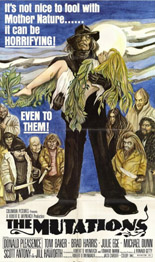
The Mutations (1974)

In the 1970s, a television commercial for a margarine indistinguishable from butter played ad nauseam, pushing its tagline into everyday culture: “It’s not nice to fool Mother Nature.” In The Mutations, Donald Pleasence learns why (minus the vegetable oil spreads, of course).

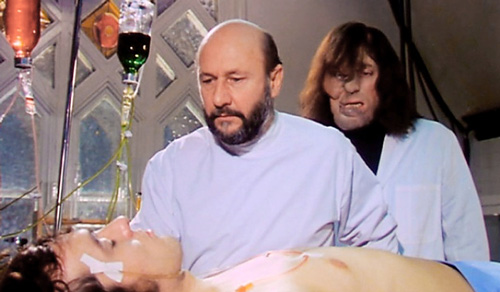
As Dr. Nolter, university professor and maddest of mad scientists, he seeks to create a new species by fusing man with plant. If that means “recruiting” his own students for hands-on testing, much to the detriment of enrollment numbers, so be it.

Notler acquires specimen by enlisting the kidnapping services of little person Michael Dunn (Frankenstein’s Castle of Freaks) and hulking, hatted monstrosity Tom Baker (weeks from donning the fedora as TV’s Doctor Who). Those mismatched men co-own a circus of “freaks,” which includes a bearded lady, frog man, gator woman and so on. Whichever experiments fail, Nolter gifts back to them — a textbook example of mutually beneficial business.

Rare is the film with the power to immerse the viewer in its environment. In the case of The Mutations, however, said surroundings are a rather dull college science lecture we can’t leave. The first 10 minutes of the movie pairs Pleasence’s (Halloween) wilted yammering with time-lapse footage of blooming flora and sprouting shrooms. The pace picks up a bit once Nolter’s in his lab, feeding live bunnies to his giant Venus flytrap, a monstrosity so shoddily constructed, it looks like an Audrey II from a Little Shop of Horrors production staged by the Kids of Widney High.

Like Nolter attempting to splice this with that, helmer Jack Cardiff (The Girl on the Motorcycle) attempts the same in merging the science and circus plots. Neither quite works on its own, and especially not together — I mean, they do in that a result results, but it hardly operates as intended. In fact, it killed Cardiff’s short-lived directorial career, sending him back to the more fertile ground of cinematography.

Also known as The Freakmaker, a moniker that can’t help but make you think of Mentos, this out-of-touch creature feature isn’t exactly blossoming with surprises; when Scott Antony (Dead Cert) jokes in Act 1 after class, “I don’t want to be a vegetable,” we instantly know his fate. Others with potential for plucking include stunning Hammer starlets Julie Ege (The Legend of the 7 Golden Vampires), Olga Anthony (Captain Kronos: Vampire Hunter) and Jill Haworth (Brides of Dracula), plus sword-and-sandal refugee Brad Harris (Goliath Against the Giants), who also produced. —Rod Lott

Get it at Amazon.

Stand Alone (1985)

A veteran of World War II, Lou (Charles Durning, Dark Night of the Scarecrow) just wants to live a quiet life and do things no more strenuous than teaching his grandson (Cory “Bumper” Yothers, Dreamscape) how to operate an RC tank that could actually kill someone. Those retirement plans look to topple after one trip to his pal’s diner, where Lou witnesses a double-donut shoplifter get machine-gunned to death by a drug gang. Oops.

Sure enough, Lou is targeted all over town, primarily by the gang’s gangly, glaring leader (Luis Contreras, Dollman), which begs the question, “Why keep going into town?” And that begs a second question: Did Durning read the script before joining the project? Because he strikes me as the kind of guy who would be concerned over the sheer number of pages containing the phrase “Lou runs.”

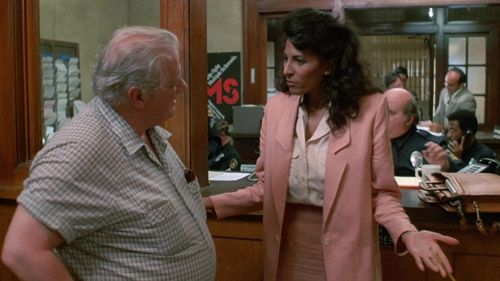
Once he fingers the perps in a police lineup, the gang members — all ethnic, of course — head for his home. That’s where the heart is, as well as a box containing Lou’s WWII weapons and whatnot. Lou shoe-polishes his face (not enough to get canceled), Home Alones his house and readies that bayonet so he may — cue the title — Stand Alone. Well, if you don’t the assistance from his police buddy (Pam Grier, Pet Sematary: Bloodlines), that is.

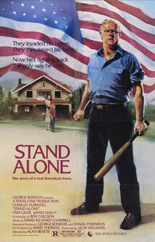
Stand Alone plays a lot like that same year’s Death Wish 3, if Charles Bronson had a basketball-sized pelvis. This Lone Star State-lensed revenger arrived first, by a mere two months. Curiously, New World Pictures marketed the pic more akin to Walking Tall, complete with Durning clutching a wooden bat as big as Joe Don Baker’s hittin’ stick. —Rod Lott

Get it at Amazon.

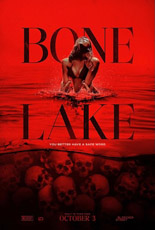
Bone Lake (2024)

Bone Lake opens with a naked couple running through the woods as they attempt to dodge arrows shot from an unknown pursuer’s crossbow. Movie, you have my attention.

And that’s merely the prologue. The film’s primary lovers are Sage (Maddie Hasson, Malignant) and Diego (Marco Pigossi, Amazon’s Gen V). He’s planning to use their romantic getaway to a lakeside rental home — a mansion, practically — as the pic-perfect opportunity to propose.

Good intentions go sideways with the arrival of a second couple, Cin (Andra Nechita, Bad Teacher) and Will (Alex Roe, Rings), who also have reserved the place. A quick squabble yields a quick compromise: The place is big enough for the foursome — and then some — what with all its extra rooms and a hallway leading to three locked doors.

Starting with Barbarian, this is the fourth movie I’ve seen to use a double-booked abode as a springboard, so something’s in the water culturally. Bone Lake is the first to make it kinky, putting T&A into the BnB. Rather than settle for being your average erotic thriller going through the motions (like up top, from behind, on a car hood, etc.), the screenplay by Suicide Blonde’s Joshua Friedlander chooses to lean harder into gamesmanship than genitalia. With creativity, director Mercedes Bryce Morgan (Spoonful of Sugar) deftly choreographs the horror-adjacent tale’s balance of dark comedy, sexual politics and fireplace implements.

I’d argue that its “twist” is purposely transparent, given how the film is driven more by characterization than plot. For example, Diego is set up as a wannabe novelist who may lack the talent to fulfill his dream, with Sage not only winning the bread, but feeling her boyfriend plays things too safely, both on the page and in their relationship.

But don’t let that make Bone Lake sound like therapy homework. Rest assured, it kicks out the jam of The Exploited’s “Sex & Violence” for good reason — and twice! All four leads have a bloody good time to ensure you do as well. It doesn’t break ground, but it waters it enough to getcha wet. —Rod Lott

Get it at Amazon.