
All posts by Rod Lott

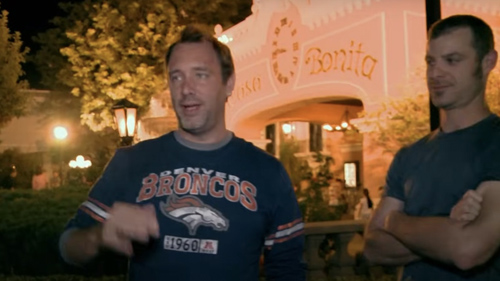
Godzilla 1985 (1985)

With a revisit of Godzilla 1985, the biggest question isn’t why it took Toho more than a decade to bring the king of the monsters back from retirement. The biggest question also isn’t why it ignores the 14 sequels following the 1954 original Godzilla. Rather, the biggest question is why the opening introduces some kind of flying tick the size of an Igloo ice chest, only for it to never reappear.

At least that’s my biggest question. More serious G-fans may wonder otherwise, like, “This was the first Godzilla movie you saw in full?” It sure was! Before I could drive, it took some convincing for my mom to rent it for me. New World Pictures’ VHS release had Marv Newland’s immortal Bambi Meets Godzilla cartoon playing upfront, too.

But to answer the inquiries posed in paragraph one: Who cares when Raymond Burr is back! Returning for the first and last time since the Americanized franchise-starter, Burr (Gorilla at Large) is the barrel-chested newspaperman Steven (née Steve) Martin. Also returning: Godzilla, re-emerging in Japan after all these years, taking out a Russian sub in the process. The Russkies blame the U.S., not the big lizard, thereby stoking nuclear fears.

As the lone Western Hemisphere-based survivor of Godzilla’s initial stampede three decades prior — you know, before the world discovered color — Martin is summoned to the Pentagon as an adviser. The Pentagon is played by a darkened room, plus one hallway to allow for product placement for Dr Pepper, so misunderstood.

That’s about all the “story” Godzilla 1985 requires. The Japanese authorities employ bird chirps to lure our favorite kaiju into a volcano; luckily, Godzilla takes a detour to stomp the shit out of downtown Tokyo first — the film’s raison d’être. Having previously performed assistant duties on King Kong vs. Godzilla and others, director Koji Hashimoto understands his simple mission and rises to the occasion: Showcase the nice model work and get out of the way.

By contrast, the Burr/Pentagon/American footage handled by R.J. Kizer (Hell Comes to Frogtown) is all passive spectatorship. However, it does allow for the introduction of, despite his red hair, a U.S. military major (Travis Swords, Pink Cadillac) who milks his second-banana status for all it’s worth. For example, while monitoring the sitch in Japan, he notes, “That’s quite an urban renewal program they’ve got going over there.” He’s not wrong. —Rod Lott

Get it at dvdrparty.

Boy Kills World (2023)

Somewhere between The Purge and The Hunger Games stands The Culling. For decades, the annual, cereal-sponsored event allows the ruler of a totalitarian regime to round up and execute enemies on live TV. Years ago, a boy named Boy witnessed the murder of his family that way. Deaf, mute and now totally ripped, the grown-up Boy (Bill Skarsgård, Barbarian) undertakes a mission of revenge on that politician (Famke Janssen, X-Men) and her own brood.

German director and co-writer Moritz Mohr has built Boy Kills World, his debut feature, similarly to how posh parents whip up a baby by selecting preferred genes. His film is inspired by video games, dystopian sci-fi, kung-fu movies, graphic novels, splatter à la Sam Raimi (who incidentally produces) and more video games. Instead of blonde hair and blue eyes, Mohr seems to have chosen the elements calculated to get his firstborn branded with the “instant cult classic” label. The problem is, awful title notwithstanding, that winning formula can’t be brewed in a lab.

Its fight sequences run so long and are so CGI-dependent, the effect is like watching a marathon session of your roommate play an FPS. At least some of the skirmishes are scored by the propulsive party sounds of El Michels Affair, which recall The Go! Team at its jump-ropin’ peak.

Although slick in the right spots and boasting fun (in small doses) comic turns from Michelle Dockery (Non-Stop) and Sharlto Copley (Monkey Man) as members of the political dynasty, the film tries hard to please — so hard that it ultimately proves to be too much of a good thing. In fact, it’s too much of too much, right down to use of the Wilhelm scream. —Rod Lott

Get it at Amazon.

Monolith (2022)

A disgraced journalist (Lily Sullivan, Evil Dead Rise) attempts to rebuild her career — if not her credibility — by starting Beyond Believable, an investigative podcast on unexplained events. One night, the subject for a potential first episode falls in her lap via an anonymous email. Bearing the subject line “The Truth Will Out,” it contains only a name, a phone number and a cryptic reference to a brick.

As the saying goes, curiosity killed the podcaster, so she takes the bait. A couple of calls later, she’s nose-deep in the mystery — or conspiracy? —regarding these black bricks of unknown origin and composition, and containing odd symbols inside.

One unsolicited tip is all it takes to lead her down a rabbit hole. For a good while, the same holds true for Monolith viewers as well, thanks to Sullivan’s engaging performance — all but required when you’re the lone actor onscreen. Unlike the recent, similarly themed First Time Caller, the Australian Monolith benefits from its always-on lead character not being abhorrent.

As first-time filmmakers, director Matt Vesely and scripter Lucy Campbell take a lot of correct steps upfront. Ultimately, their conclusion’s dogged ambiguity could work against the film’s potential life span. Sci-fi viewers don’t demand complete, lock-and-key explanations — witness The X-Files — but for Monolith to pivot so hard to the abstract after an hour of Sullivan’s methodical info-gathering feels indolent. Nevertheless, I look forward to whatever they direct their energy toward next. After all, the truth will out. —Rod Lott

Get it at Amazon.

Immaculate (2024)

As a religious-horror film, Immaculate earned my respect simply for leaning into internet commenters’ clutched-pearls cries of “evil” and “blasphemous” by using those nobodies’ quotes in its ad campaign, then doubling down with a one-day promotion for $6.66 admission. Members of the Neon marketing department, I proclaim you unholy geniuses.

Then, unlike most of the offended, I actually saw Immaculate. It retains my respect, so much so that I grant it a vow of obedience. (Poverty and celibacy, however? Let’s not go overboard.)

In Italy’s Our Lady of Sorrows, the newest nun is Cecilia (Sydney Sweeney, Madame Web), a young American woman. As Cecilia gets a tour of the 17th-century grounds and introduced to her fellow 21st-century sisters in Christ, the flick is so transparent in foreshadowing, it’s naked, e.g., “Be careful of this one. She bites.”

It’s not like things at the convent aren’t already, well, off; Cecilia’s spider-sense tingles from the outset. Then she gets pregnant, despite her iron-clad virginity. Holy calamity, scream insanity.

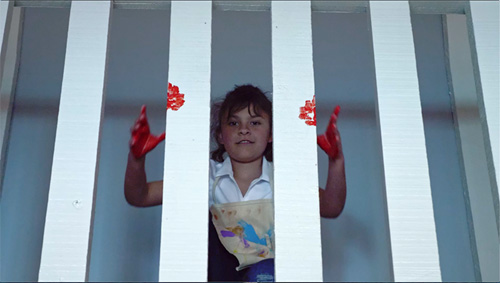
Some of Immaculate’s horrible happenings come as shocks, while others are so telegraphed, they’re practically stamped with the Western Union logo. And yet, even some of those shock, despite being expected. In the aforementioned tour, Cecilia’s ears perk up at a passing mention of “catacombs.” Ours do, too, knowing full well the story will near its end at this location. Sure enough, it does, but director Michael Mohan presents it like he’s leading viewers through a haunted house. It’s effective as, um, hell.  

Sweeney, a shrewd businesswoman who also produced the film, seems uneasy in the first act. How much of that is her character’s nervousness, her performance limitations or my own inability to divorce my mind from her sexualized persona in past roles and public, I cannot determine. But once the shit hits the fan — or the God seed hits her womb, so to speak — Sweeney sizzles. Particularly excellent in the birthing scene, with the lens scrunched tight on her bloodied face for what seems like unbroken minutes, she’s a raw nerve.

Arguably the movies’ highest-profile example of the nunsploitation subgenre since Ken Russell danced with The Devils in 1971, Immaculate could have wussed out. It doesn’t. I admire its commitment to middle-brow nastiness and trashiness — and more so its refusal to back down, as Mohan (reuniting with Sweeney after their erotic thriller, The Voyeurs) and first-feature scribe Andrew Lobel carry their button-pushing transgression all the way through what its literally Immaculate’s final shot.

Be careful of this one. She bites. —Rod Lott

Get it at Amazon.

The Coffee Table (2022)

When we meet spouses Jesús (David Pareja) and Maria (Estefanía de los Santos), they’ve got a brand-new baby and are arguing over a brand-new table in a furniture store. Under the protest of his much older wife, Jesús picks one made of bronze, ivory and an “unbreakable” slab of glass. And thus begins The Coffee Table.

It sounds like a joke — the IKEA instructions-inspired opening credits sequence suggests as much — but I assure you, the poster’s phrasing of “a cruel Caye Casas film” is not a marketing conceit.

No spoilers here: A moment at the 20-minute mark will divide audiences — and not necessarily into nice, clean halves. Just as something really, really bad feels like it will happen, it does. We don’t see the horrific act; worse, we feel it.

At this point, The Coffee Table holds immense potential at becoming the darkest of dark comedies; Casas (Killing God) and his co-screenwriter, Cristina Borobia, need only go one way: all in.

But they don’t. Instead, almost apologetic at having gone so far so soon, they shift the tone into the realm of familial/relationship drama, as Jesús spends the rest of the movie trying to keeping the lid on What Transpired from Maria. Your nerves remain jangled, jarred and wracked, yes — and performances strong — but the Spanish film simply isn’t the same.

Until the ending, when Casas leaps out of the corner he’s backed himself into as everything — and I do mean everything — comes to a head. —Rod Lott

Get it at Amazon.