

 Three years after Norway showed Hollywood what a contemporary disaster movie can and should be with The Wave, it does it again with the unlikely sequel, The Quake.
The first film’s tragedy has left geologist-cum-hero Kristian Eikjord (Kristoffer Joner, Mission: Impossible — Fallout) an addled mess, unable to shake (forgive me) the memory of the hundreds of people he wasn’t able to rescue. As a result, he remains in Geiranger alone, estranged from three people among the hundreds he did save: his wife (Ane Dahl Torp, Dead Snow) and two children. Meanwhile, in Oslo, when a colleague dies from falling debris in a tunnel, Kristian gets the feeling The Big One is about to rock that highly populated capital city, where his family now resides.
 Given Kristian’s PTSD, no one believes his ranting and raving until, of course, the earthquake arrives, splitting the ground like a wet paper towel and toppling building like a toddler to Jenga blocks, in truly special effects. With his colleague’s daughter (newcomer Kathrine Thorborg Johansen) on hand for assistance, Kristian must save the Eikjords once more, heading to a hotel skyscraper whose flaccid top dangles precariously over downtown.
Taking over from Wave director Roar Uthaug (2018’s Tomb Raider) is Headhunters cinematographer John Andreas Andersen, and the transition is seamless. He proves quite adept in staging action and suspense, as well as working within Ulthaug’s established look, mood and skillful balance of spectacle and drama so Wave viewers will feel right at home, so to speak, ensuring continuity of genuine care about the characters.
Now, to address the plausibility of this scenario, it helps that the disaster this time around is frackin’ manmade. As with The Wave, the core incident is based on an incident in Norwegian history. Real science is rooted in the story, as is real pain; The Quake goes into territory the big-and-dumb blockbuster likes of San Andreas wouldn’t dare. That’s not an outright dismissal of American disaster movies, but the pairing of these pictures is all the justification needed that the genre does not require curdling. —Rod Lott
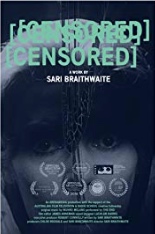
 They say one man’s trash is another man’s treasure. Make that other man a woman — specifically, Down Under filmmaker Sari Braithwaite — and the treasure is [Censored], a documentary constructed solely of film footage once banned by the Australian Censorship Board and now culled from the Australian National Archives. Over the course of 63 minutes, excitement over her find not only fades, but flips, as she narrates each step of a crisis of conscience.
 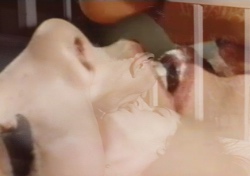 She more than makes do. The displaced frames find a home as she initially sets out to examine and decry her homeland’s history of censorship, grouping the cuts thematically and presenting them with a modicum of context. We get a montage of screen kisses — chaste to erotic, consensual to forced, hetero- to homosexual — and think little of it. Young men then brandish knives, and their serrated machismo strikes the viewer of silly, if nothing else.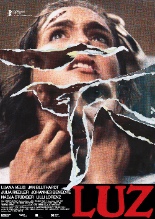
 A cabbie walks into a police station, and what happens next is not a joke. The tomboyish driver is Luz (featuring-debuting Luana Velis), and she has flung herself out of her car in the dead of night because she is being pursued by a demon. It happens.
 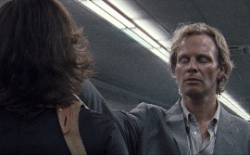 Luz is being sold as a horror movie in the mold of Dario Argento, Lucio Fulci and David Cronenberg. While their influence on Singer can be glimpsed, the pitch may be doing a disservice to the German film in setting audience expectations it cannot possibly meet. Those primed for a possession thriller filtered through those masters’ lenses will be ill-prepped for a near-somniferous pace that makes the slow-burn style of today’s reigning arthouse-horror hits (e.g.,