
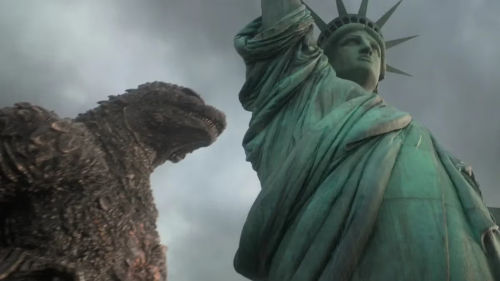

While America’s Godzilla/Kong buddy-cop franchise offers heaping helpings of dumb monster fun, substance is virtually nonexistent. And prior to 2016, you could easily argue Japanese studios weren’t handling the iconic kaiju with much more tact. The Showa- and Heisei-era Godzilla films have a nostalgic charm, but beyond 1954’s original, you can only destroy a major metropolitan so many times before it feels inconsequential.
Fortunately, Shin Godzilla’s procedural take on the human drama paired with a grotesque creature design made the stakes feel real again. And with 2023’s Godzilla Minus One, director Takashi Yamazaki brought the most human and emotionally earned story to ever feature the atomic lizard. Despite not quite reaching the highs of its Oscar-winning predecessor, Godzilla Minus Zero comes surprisingly close, even as this series stomps over what feels like more familiar ground.
Two years after Shikishima (Ryunosuke Kamiki) and Noda (Hidetaka Yoshioka) successfully destroy Godzilla and anchor his, uh, chunks to the bottom of the ocean, another monstrous threat terrorizes central Japan. Noda leads a kaiju response team, working with the recent American occupation of Japan to subsequently test an experimental bomb and an experimental weather-based weapon. Both fail and only empower their target, inspiring Professor Murakami (Min Tanaka), a survivor of the bombing of Hiroshima, to recommend a more drastic and destructive strategy.
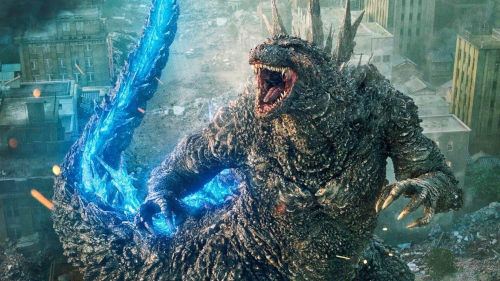
While Godzilla Minus Zero does expand on what kinds of narratives can unfold within the franchise, it also feels overly dependent on what Minus One established. Survivor’s guilt and the escalation of war appropriately ring true, but despite what feels like more time spent with Noda and Koichi’s family, the real expansion of the ideas explored in the prior film come through Professor Murakami. Tanaka stands out amid several powerful performances, presenting a decent into vengeful justice that feels unhinged, but not outright hysterical.
Of course, most aren’t hankering for a Godzilla film because they expect a deeply emotion arc. Yeah, it’s a welcome addition, but inevitably, you’ll yearn for a rampage or two. Minus Zero delivers in this department, maybe even more so from a technical perspective than Minus One, but it also feels more subdued. Really, there are only two or three major set pieces and handful of standalone sequences. Granted, they’re all executed exceptionally well, especially a dog-fighting scene that concludes the first act, but they do feel lighter. It’s like when the human narrative stalls, the kaiju action doesn’t come quite in the nick of time. You’ll welcome it when it shows up, but that misstep in pacing makes it feel a bit less impactful than it could be.
Minus Zero also keeps a strong sense of scale, which is overwhelmingly supported by Naoki Sato returning for another exceptional score. More so than any piece of the sound design, Sato makes the monsters feel a bit more grand, and the quieter moments that are almost less intimate due to the cinematography, still feel tender.
Even if Minus Zero doesn’t quite escape that very tall shadow of Minus One, it’s still a worthy sequel that leaves the future of Godzilla — at least when it’s produced by the Japanese studio Toho — shining bright. Whatever mathematical equation the kaiju winds up in next, the result, like this flick, should be positive. —Daniel Bokemper