

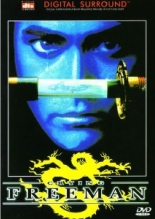
 Mark Dacascos’ performance in Crying Freeman isn’t all that solid, but this is still a great movie, the first from his Brotherhood of the Wolf director, Christophe Gans.
In it, Dacascos plays the titular Freeman, a potter-turned-assassin who guiltily sheds tears for the deaths of those he is ordered to execute. In the beginning, a beautiful artist (Julie Condra) observes one of his hits in San Francisco; the laws of his Sons of Dragons organization require all eyewitnesses be killed, too, but for some reason, he spares her life.
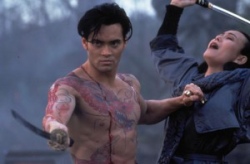 Even though he can’t bring himself to kill her, others are willing to take his place, so Freeman must protect her as he falls in love with her. He also wants out of his organization, so he has to use all his super-killer moves to off his former comrades in Japan and the Interpol agent who tails him there (Kiss of the Dragon’s Tcheky Karyo).
Based on a manga of which I have no knowledge, Crying Freeman is lensed in a highly stylized, hyper-real manner, with lots of slow-motion shots and kinetic violence. It’s a bit slow in spots, but Gans has such a knack for visuals, few frames aren’t worth gawking at. Despite Dacascos’ presence, there aren’t much martial arts, but a lot of shootin’ and swordplay. And Rae Dawn Chong. —Rod Lott
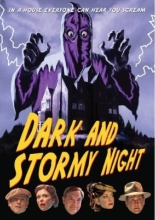
 Charles Ludlam, late founder of the Ridiculous Theatrical Company, once wrote a play the dialogue of which consisted of the punch lines of old jokes. No, I don’t remember the title. Jeez, do I have to do everything around here?
 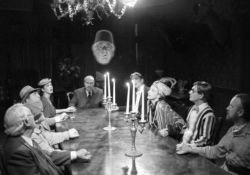 The relatives — and assorted strangers, servants and one guy in a gorilla suit — have gathered for the reading of the will, then they start dropping like lead bon mots. Blamire’s usual gang of thesps, with a quartet of guest actors who have been in movies you’ve actually heard of, deliver their senseless lines as if any of this had any meaning beyond tickling your nostalgia for Hollywood Poverty Row thrillers until it hollers, “Uncle!”
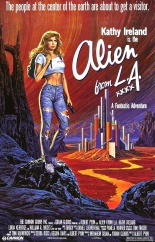
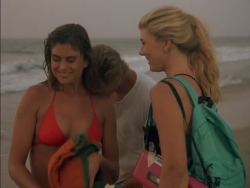 Cursed with the kind of voice that causes dogs to howl in misery whenever she speaks, her is further diminished by a script that requires her to essay the role of the whiniest protagonist in the history of narrative storytelling. At times, the dialogue suggests that this was a deliberate choice on the part of director/co-writer Albert Pyun. Forced to cast Ireland as his lead, he obviously decided to turn her greatest weakness into the film’s main running joke, but chose to do so in a way that only makes watching it more of a chore than it might have otherwise been.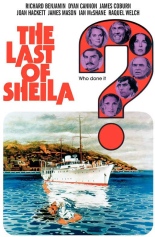
 You just have to look at its credits to appreciate what a one-of-a-kind movie
  In the movie, James Coburn plays a games-obsessed producer who has gathered a group of fellow industry folks (including Cannon, Richard Benjamin, James Mason, Raquel Welch, Joan Hackett and Ian McShane) for a weeklong trip on his private yacht. All of his guests have two things in common: They harbor a potentially embarrassing secret their host knows about, and they were all present at Coburn’s house the night his wife, the titular Sheila, died under mysterious circumstances.
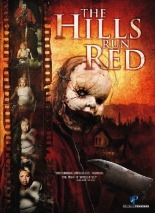
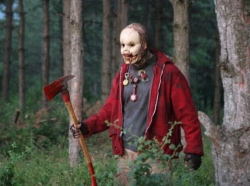 If you think they’ll discover the film’s villain of the doll-masked Babyface there, you’ve seen more than one horror movie! These Hills aren’t exactly original — in fact, they’re downright predictable — but that has to be all part of the plan, paying homage to down-and-dirty conventions of the slasher genre in its heyday, while bringing it into the present with an unrated amount of gore, much of it made possible by the creative use of barbed wire.