

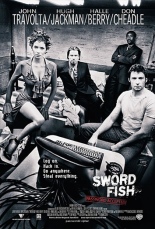
 “You know what the problem with Hollywood is?” asks John Travolta at the beginning of Swordfish. “They make shit. Unremarkable, unbelievable shit.” The same could apply to this slick, brainless action-porn from Joel Silver and Dominic Sena (Gone in 60 Seconds) that manages to be merely mildly entertaining.
X-Men’s Hugh Jackman is the true star, playing a world-renowned hacker fresh off serving an 18-month prison term for his electronic crimes. Despite orders never to touch a computer again, he is drafted by slimy rich guy Travolta into cracking a few codes in exchange for money he can use to reunited with his estranged daughter. It’s a move he’ll soon regret, as the FBI is soon on his ass, while Travolta reveals himself to be a deluded terrorist wishing to embezzle $9 billion from secret DEA accounts with Jackman’s expertise.
 For every good scene in Swordfish, there’s a terrible one. The opening city-block explosion shown in some sort of 360˚ bullet-time is a stunner; paradoxically, having Jackman forced to infiltrate a Department of Defense at gunpoint in 60 seconds while he’s receiving a blowjob is a howler.
Halle Berry’s bared breasts are nice; the montage of Jackman unconvincingly hacking away is not. Don Cheadle livens up every scene he’s in; Travolta — in another laughably miscast role — kills every one he’s in. It’s almost like the film is its own love/hate relationship. Seeing a school bus airlifted by a helicopter in the finale is absurd, but hey, ‘splosions a-plenty, amIright? —Rod Lott

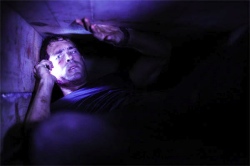 When I first saw the movie’s trailer, which includes the moment when an asp slithers into the coffin through a crack, I thought the film would be a tough sell — not because it plays so strongly on the common fear of enclosed places, but because its lack of action would bore younger audiences.

 The answer: Because Arthur Penn was awesome.
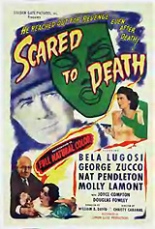
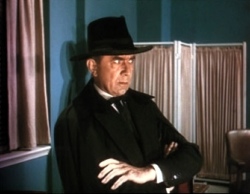 I know that filmmaking was still pretty antiquated back in 1947, but you’d think the filmmakers would have been smart enough not to begin with an autopsy if they wanted audiences to be surprised when the lead female dies at the end. You’d also think they’d have the foresight not to end with the line “She was … scared to death!” but they didn’t, and God bless them for it. —Rod Lott
 When Uggams is towed into town by Ted Cassidy (Lurch from