

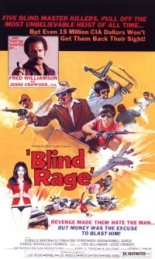
 If Dobermans can be taught to rob a bank, why not blind guys? That’s the premise behind Blind Rage, an oddball crime film that assembles a multicultural quintet who can’t see for shit, to pull off a money heist to end all money heists. Because they’re blind, yes, but also two of the men have names that are synonyms for penises, Wang and Willie. I don’t think history has seen such a thing.
As with that series of bank-robbing doggie movies, this film’s best scenes are the training sequences: “Let’s begin by synchronizing your Braille watches.” Heck, there’s even to-scale model created out of the barest of wood framing so the guys can soak up the sound of each other’s footsteps, the placement of the deposit-slip table, and whatnot. They’re even taught target practice: “Any foreign sound you hear, shoot.” Solid advice; that’s how kids get killed, you know.
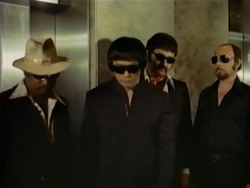 And what would this movie be without a little kung fu fighting when it comes time to doing the crime? Probably just as incredibly average, running a few less minutes.
Who are director Efren C. Piñon and writer Leo Fong kidding? This should all but be credited as a remake of The Doberman Gang franchise, because instead of exploiting animals, they’ve just exploited the handicapped. They’ve also exploited a top-billed Fred Williamson, who shows up only at the tail end as his Jesse Crowder character (“one mean cat!”) from Death Journey and No Way Back. The fucking IHOP gets almost as much screen time. —Rod Lott
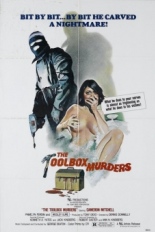
 To be fair, the slasher portions of this infamous slasher film make up only a small part of the picture. It should be called A Criminal Investigation Into the Toolbox Murders. Regardless,
 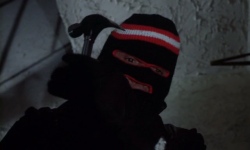 After the ski-masked killer’s rounds of chiseling and hammering tenants, one right after the other, The Toolbox Murders switches into a police procedural, à la Law & Order: Hardware Victims Unit, as the cops investigate. Unlike Tobe Hooper’s superior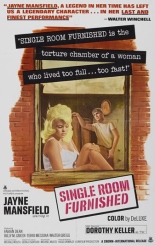
 Gossip columnist Walter Winchell appears in the prologue of
 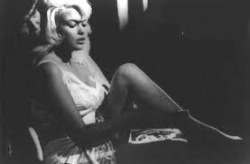 In the first, Frankie (Martin Horsey) and Johnnie recall the night they met, and she mopes over unmade egg salad sandwiches. He talks like Dustin Hoffman after getting kicked in the head by a horse. Twice. In the next tale, Mae finds herself pregnant and seeks the solace in Charley (Fabian Dean), her lumpy schmo of a neighbor.
 A brand-new groom strangles himself to death with his tie at his own wedding reception. A young woman running track experiences such a sudden jolt of speed that she literally can’t slow or stop until the bones snap out of her legs. On his wife’s 70th birthday, a man leaps through the window of their apartment building. Just before these acts, all three mention a “green monkey.” Call me crazy, but I think they just might be related.
  And for a while, this Japanese thriller is as well, as authorities attempt to draw the line that connects the three tragedies. What director Masayuki Ochiai does wrong is then steer the story from a procedural mystery to the supernatural element of the “creepy young girl” then so prevalent and in vogue among Asian cinema — and soon in American remakes. Even with accompanying surreal set design that suggests hiring Dr. Caligari as a contractor, what was interesting becomes unimaginative and tiresome. —Rod Lott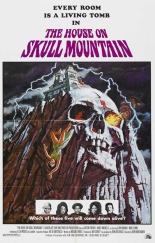
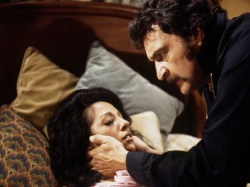 Phillipe is a creepy fool who drunkenly hits on Cousin Lorena; Harriet is a timid housemaid who sees visions of death. Lorena and Andrew quickly form a relationship that may or may not be romantic (I choose “not,” because it allows me to continue judging Phillipe while still liking the two leads), giving this House some appeal that it probably doesn’t deserve. There’s nothing overtly sexual in the way they act around each other; they’re just extremely comfortable in one another’s company and encourage each other in more ways than simply trying to stay alive. There’s a particularly sweet scene where Andrew complains about not knowing anything about himself: “I don’t even know what color I am.”