The Fabulous Journey to the Centre of the Earth (1977)

In the Jules Verne adaptation The Fabulous Journey to the Centre of the Earth, one word in the Spanish production’s title is grossly inaccurate. Can you guess which?

After acquiring a map purported to share the whereabouts of you-know-what, Professor Otto Lindenbrock (Kenneth More, The Sheriff of Fractured Jaw) embarks on a mission to you-know-where, by way of Mount Sneffels — a landmark that could not sound more stupid, except that it does with each subsequent utterance. Accompanying the professor are nancy-boy Axel (Pep Munné, Girl with the Golden Panties), who narrates, and muscle-for-rent Hans (Pieces’ Frank Braña), who is paid in sheep. Inviting herself is Glabuen (Ivonne Sentis, China 9, Liberty 37), who is not only the professor’s rock-collecting niece, but Axel’s girlfriend.

Although Juan Piquer Simón (the aforementioned Pieces) went to the lengths of helming his film in an actual cave, don’t expect any sort of spatial geography, other than knowing the characters want to descend. At one point, Axel’s voice-over mentions “an exciting adventure,” despite no proof of such onscreen. And I say that knowing full well the movie features such sights as giant mushrooms, man-eating tortoises, cave-dwelling dinosaurs, bath-toy sea monsters, a Kmart King Kong and a lava-spewing volcano — and yet, very little of all of the above. It’s a real patience-frayer.

In terms of production design, costuming and men’s grooming habits, Simón nails the 19th-century look, although the cast’s prim-and-proper affectations and behaviors suggest a setting more Hereford than Hamburg. Performance-wise, More is the most grounded; Munné and Sentis, overly theatrical; and Spanish cinema legend Jack Taylor (Edge of the Axe) literally sits through much of his minor role.

While Fabulous Journey (aka Where Time Began) is not the worst Verne adaptation I’ve seen, it’s photo-finish close. With feasible naïveté, it hews so faithfully to the novel that it emerges stuffy and starched. Lob whichever insults you’d like at Simón’s other, less respectable Verne picture, 1981’s Mystery on Monster Island, but boring, it is not. —Rod Lott

Get it at Amazon.

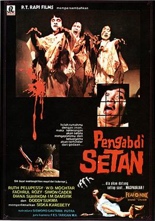
Satan’s Slave (1982)

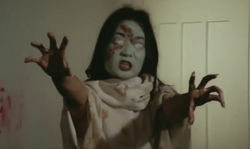
Lonely teen Tomi (Fachrul Rozy) may live in a wealthy-ish home, but his stern father is always working; his good-time sister is always at the discotheque; and his recently deceased mom has just come back from the dead as an unholy apparition of pure evil. While most kids would experiment with sex or drugs to cope, he instead reads horror movie magazines, a direct path to the Unholy One.

The family, having lost their faith in God, becomes bewitched under housekeeper Darminah (Ruth Pelupessy), a diabolical agent of the devil who will inadvertently kill anyone who dares interfere with her plans to turn the children into slaves, presumably of Satan; this includes gruesomely resurrecting the woefully asthmatic groundkeeper and the daughter’s cracked-skull boyfriend.

These demonic forces of absolute malevolence are spooky as hell, with their pale white skin, pinhole-pupiled eyes and newly formed pair of vampire teeth ready to bites the blasphemous necks of the scared family. And even though this clan is offered chance after chance to get in good with God, they constantly turn it down, right up to the very end when a holy man shows up at their door with an army of spiritual warriors.

While not as downright bizarre as other Indonesian flicks — have you seen The Queen of Black Magic? — Satan’s Slave is far more atmospheric, with genuinely creepy moments that almost feels like it should be viewed on a 10th-generation VHS dub at 3 in the morning. It’s a personal style that has me believing director Sisworo Gautama Putra was an unheralded master of horror, in Indonesia and beyond. —Louis Fowler

Get it at Amazon.

The Bride (1973)

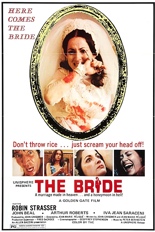
Alternately released as The House That Cried Murder and, more notoriously, Last House on Massacre Street, Jean-Marie Pélissié’s The Bride is an unassuming horror thriller worth a trip or two down the aisle.

Head over heels in love, Barbara (soap star Robin Strasser) can’t wait to marry David (Arthur Roberts, Midnight Movie). She’s even designed and built them her dream home, a midcentury modern number that looks like a semester’s worth of geometry homework. So what’s the problem? Well, David works for her doting dad (John Beal, Amityville 3-D), who looks unfavorably on her choice of suitor: “What I’m saying is,” he tells his daughter, “I think he stinks.”

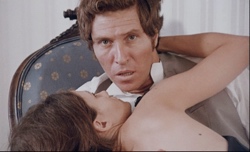
Father indeed knows best, because at their wedding reception — repeat: at their wedding reception — David ducks upstairs for a tryst with another woman, Ellen (Iva Jean Saraceni, Creepshow). Finding them in flagrante delicto, Barbara impulsively wounds David with scissors and flees the scene. Two weeks later, she’s still off who-knows-where, while David is looking to get divorced and already shacking up with Ellen. That’s when the eerie phone calls and eerier acts of aggression begin …

Popular opinion has it that any horror movie with an MPAA rating below the R bares no teeth. While that may be true for today’s offerings more often than not, it’s stunningly narrow-minded for product from the early 1980s and on back. The Bride is the perfect example why. Affixed with a whistle-clean PG, it may be a simple story told in a frugal 76 minutes, but it hits the right buttons as it does so. The script by Pélissié and John Grissmer — who went on to give us the incredible Blood Rage, which features snippets of this film playing at the drive-in — thrives on a macabre sense of humor, while Pélisse — in his one and only directorial chore — proves he can stage suspense effectively; one shot in David’s dream sequence, with Barbara poised like a spider waiting to pounce, stands out as chilling.

Although Saraceni is a bit shrill, the no-name actors do Pélisse proud. As shameful as it is that he never helmed another feature, even more so is that Strasser goes unheralded for a strong, layered performance. —Rod Lott

Get it at Amazon.

Revenge in the House of Usher (1983)

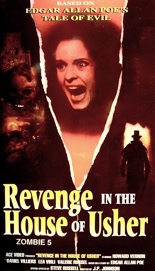
Right away, Revenge in the House of Usher renders itself suspect due to three things:
• referring to its source material, an Edgar Allan Poe short story of about two dozen pages, as a “novel”
• misspelling that legendary author’s name as “Edgard Allan Poë”
• being written and directed by Jess Franco

Book ’em, Dano.

With characters named Harker and Seward — not to mention the film’s theme of blood transfusions — Revenge makes one wonder if Bram Stoker deserved Poe’s credit. Both authors’ bibliographies rest in the public domain, so either fits the typical Franco budget.

Franco fave Howard Vernon (The Erotic Rites of Frankenstein) is Dr. Eric Usher, who invites his favorite med student, the aforementioned Harker (Robert Foster, Franco’s Night of Open Sex), to come hang at his cool castle. Old, crazed and near death — basically, Dennis Hopper in Hoosiers — Usher asks Harker to continue keeping Usher’s reanimated daughter (Françoise Blanchard, The Living Dead Girl) alive with fresh blood transfusions. As Usher confesses to his mentee, he’s killed many women — but, hey, it was “for science,” so all’s good, right?

As Usher spills his secrets, Franco cannily fills the running time and fortifies his bottom line by reusing footage of Vernon as the title character of The Awful Dr. Orlof, the filmmaker’s black-and-white breakthrough from 1962. Thrifty! And those scenes make up the only good parts of Revenge in the House of Usher — which is weird, considering this flick has an assistant with one comically large eye, not to mention Lina Romay Lina Romaying herself all over the place.

It may be impossible to overstate how boring this movie is, with a story that crawls at the pace of a snail — one that’s been showered in salt. Unofficial though it may be, the Orloff franchise has its ups and downs. This one is the below the basement, more Eurosnorer than Euroshocker. —Rod Lott

Get it at Amazon.

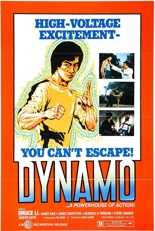
Dynamo (1978)

With Bruce Lee dead and buried, the world needs a new action star and they find one in Lee-alike Bruce Li! He’s just an everyday dude who becomes just as good as Lee — possibly better — with just a few days of training. And he’s going to need it to, because an area advertising agency has put a hit out on him, which seems a bit drastic.

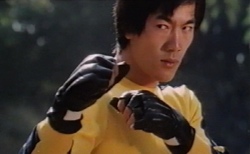
Once a horny cab driver with a passing resemblance to Lee, Li is hired by an unscrupulous producer to become the new face of international kung fu; clad in a Game of Death workout suit, he uses his Yuen Woo Ping-choreographed martial arts to lay waste to a team of sparring partners, including one sent to kill him. He also uses it to make love to a French actress. Ooh-la-la!

The Cosmo Company, by the way, wants to assassinate Li because he won’t fall in line with their advertising wants and needs, forcing them to send world-class skiers, room-service attendants and a guy who resembles a fit Rudy Ray Moore to crack his dragon-looking ass in half, often spectacularly failing.

Li is pitted in one fight after another in the 96-minute runtime, often soundtracked by songs such as “Nobody Does It Better” from The Spy Who Loved Me. With a Rocky-lite finale and a quickie ending, Dynamo might as well have been the Bruceploitation masterpiece of the era, showcasing the nimble Li as a worthy successor with an actual personality to match. —Louis Fowler

Get it at Amazon.

Random Genre & Cult Movie Reviews