White Fire (1984)

Say the words “flamethrower” and “Robert Ginty,” and I’m excited to watch The Exterminator and/or Exterminator 2. But those words also apply to White Fire, a European action film that ultimately will extinguish your desire. For starters, Ginty isn’t the one who throws those flames, but he does get to rip into the flesh of his attackers with a Stihl chainsaw — a great element that, unfortunately, comes front-loaded with all the good stuff.

Ginty’s Bo is in the diamond-smuggling business, thanks to his loving sister, Ingrid (Belinda Mayne, Alien 2: On Earth), being employed by a mining company and using her assets to manipulate the CEO (Gordon Mitchell, Frankenstein’s Castle of Freaks). The siblings’ scheme is discovered by sleazy people who want in on it, just as a random miner lucks upon the fabled million-year-old White Fire diamond, a 2,000-carat rock so named because it’s radioactive, burning the hands of all who touch it.

What will burn your eyes, however, are the incestuous overtones between Bo and Ingrid, such as him freeing her towel from her nude body after she emerges from a swim, and voicing what a shame it is he’s her bro when she has a rockin’ bod like that. If you think that’s icky, just wait until he starts living with the prostitute Olga, who’s Ingrid’s spitting image — so much so that she’s also played by Mayne. Then again, White Fire comes written and directed by skin-flick filmmaker Jean-Marie Pallardy (Erotic Diary of a Lumberjack), for whom this kind of thing is NBD.

Shot in Istanbul (not Constantinople), White Fire introduces Fred Williamson (The New Gladiators) in the second half as a foil for Bo — a case to file under “Too Little, Too Late.” Ginty’s mealy-mouthed appeal is a peculiar one, with him forever in motion like a coke fiend. That he’s sold as some kind of sex symbol is hard to swallow; that’s he also sold as a guy who can karate-kick his way through a circle of heavily armed men is even harder. Nearly every backup goon looks like a Turkish Tom Savini, but only one gets bisected by a table jigsaw, testes first. —Rod Lott

Get it at Amazon.

Terror Night (1987)

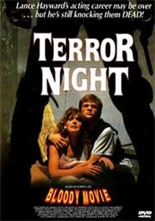
Commercially available under the alternate, slightly more generic title of Bloody Movie, Nick Marino’s Terror Night gathers a bunch of D-list has-beens ripe for the dispatching, including Alan Hale Jr., Aldo Ray, Dan Haggerty and Flick Attack Hall of Famer Cameron Mitchell.

But don’t worry — the usual 20-somethings playing teenagers get killed, too.

The murders go down at the abandoned mansion of silent matinee idol Lance Hayward, your rough-and-tumble Douglas Fairbanks type. The star hasn’t been seen in years, so the night before his condemned casa is to be torn down, several young couples sneak onto the property to check the place out. Someone is already there, however, and he dons a different costume from Hayward’s most famous film roles, complete with appropriate prop to kill. Because Hayward played Robin Hood, Zorro, pirates and other swashbucklers, you can expect death by arrow, sword, hook and whatnot.

This is a great gimmick for a slasher movie, making it more original than most — and apparently legally problematic, because with each murder, Marino splices in a few frames from the appropriate old film of Hayward’s. However, since Hayward doesn’t actually exist, the movies tend to be actual Fairbanks flicks, like The Thief of Bagdad.

Word on the street is this is why the 1987 film went unreleased until oh-so-quietly hitting 21st-century DVD. Word on the street also is that Marino, who never directed before or since, had uncredited “help” from one-eyed House of Wax helmer André De Toth and porn director Fred Lincoln (star of Wes Craven’s The Last House on the Left).

What we know for sure is this: The kill effects are pretty impressive, and VHS scream queen Michelle Bauer (Sorority Babes in the Slimeball Bowl-O-Rama) ditches her biker leather to run around fully naked. And even if she didn’t, Terror Night deserves to be better-known. Copyright issues aside, it’s the single slasher most likely to be tolerated by your Paw-Paw next time you visit the nursing home. —Rod Lott

Get it at Amazon.

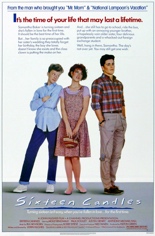
Sixteen Candles (1984)

I hadn’t seen John Hughes’ Sixteen Candles in about 16 years. With changes to the culture happening so fast these days, I’d recently been wondering how this teen film has held up, especially with many accusations of Asian-based racism, possible date rape and so on.

The answer is “not great.”

I’m pretty sure we’re all familiar with the setup by now: Samantha’s (Molly Ringwald) family forgets her “fucking birthday” on the account of her sister’s upcoming nuptials, which sets into motion a series of event that includes giving her panties to a geek (Anthony Michael Hall) at a high school dance while, eventually, ending up with the quintessential hunk (Michael Schoeffling) of her dreams.

While the film is still riotously hilarious, some of these laughs come with pangs of guilt. One of the most troubling is foreign exchange student Long Duk Dong (Gedde Watanabe); while Dong has many of the film’s most memorable lines, his stereotyped character seems more like a one-note joke from one of Hughes’ equally troublesome National Lampoon pieces.

And while Samantha is a realistically relatable character at a time when some of the worst-written ones were often female, her dream guy — even more than ever — comes off more like the Patrick Bateman of date rapists. At one point, he brags how he could “violate” his drunk girlfriend “10 different ways” if he wanted to, and then gives the passed-out prom queen to the geek Farmer Ted, ostensibly to drive home.

Like her when she awakens, we’re not sure if anything happened between her and Ted, but she ultimately forgives him with a chance at a wholly unrealistic relationship. When I was a geeky youth myself, I thought it was the perfect situation; now I’m not so sure. He may be forgiven in and by the film, but it’s kind of hard for the audience, at least by today’s standards, to do the same.

I guess we can play it off with the trite “it was the ’80s” cliché, a different time with strangely lax mores when compared to today. Watched through that retrofitted eye, Sixteen Candles does stand up as one of the most memorable comedies of the time, but ultimately one you couldn’t get away with today and, honestly, why would you want to? —Louis Fowler

Get it at Amazon.

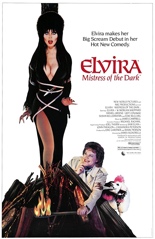
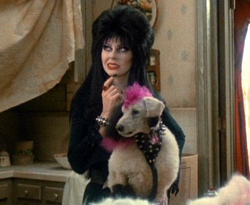
Elvira, Mistress of the Dark (1988)

From Coors Light commercials to Saturday afternoon horror flicks, the constant bosomy presence of Elvira on television did a real erotic number on me growing up, implanting a lifelong lust for buxom Gothic females fully loaded with a heart-ripping skill for double entendre and a heartbreaking like for me in their arsenal.

While those dark and stormy romances never turned out the way I devilishly hoped they would, when Elvira went to the big screen in 1988’s Elvira, Mistress of the Dark, it gave me an ironic glimmer of hope that someday a black-clad beauty would cross my path in her ever-lovin’ fight against demonic forces, real or imagined.

Working as a late-night horror hostess, Elvira (Cassandra Peterson) leaves her terrible job to collect an inheritance from a recently deceased aunt. Landing in the conservative town of Fallwell, Massachusetts, she soon learns her mother was the original Mistress of the Dark, which comes in handy when she also learns her Uncle Vincent (W. Morgan Sheppard) is an evil warlock with sights set on world domination.

But the real threat here is the small town, led by the stereotypical busybody Chastity Pariah (Edie McClurg), who, after eating a magical casserole, gets so aroused she sits on some guy’s face in a public park. With the help of the area’s equally horny teens, however, Elvira is able to win the town over and defeat her evil lineage.

With so many Mae West-ian jokes about breasts, fellatio and other sexually explicit acts, it’s amazing this film escaped with a PG-13 rating. But it was a different time, I guess — one where people could burn witches at the stake for surefire laughs. Elvira, Mistress of the Dark is a satanically overlooked comedy that should be rescued from the pyre. —Louis Fowler

Get it at Amazon.

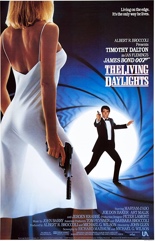
The Living Daylights (1987)

We all owe Timothy Dalton an apology. Turns out he’s quite good in the role of James Bond, even if his first of two shots at bat, The Living Daylights, is not an all-star entry in the 007 franchise.

Befitting of its time — near the end of the Cold War — Daylights pits Bond against the ever-fearsome KGB, but also the ever-formidable Joe Don Baker (Walking Tall) as a gluttonous arms dealer. Honestly, the plot is overwritten with the usual geopolitical brouhaha that could drive you crazy on first viewing, so just worry about following the fun as 007 traipses ’round the world with Kara (Maryam d’Abo, Xtro), a Russian cellist he meets cute when she tries to assassinate the KGB agent Bond helps to defect (Jeroen Krabbé, The Fugitive).

If you’ve ever wanted to see Bond on a roller coaster as part of a carnival date, you’re in luck! This is the one for you. However, coming in at the back end of the ’80s, Daylights feels curiously past its sell-by date, starting with one of the series’ worst theme songs, by a-ha, the Norwegian pop act that already had peaked. Meanwhile, Desmond Llewelyn’s Q demos a literal ghetto blaster in a missile-launching boombox, and a bad guy infiltrates supposedly secure grounds by tossing milk-bottle bombs.

Still, with old pro John Glen (Octopussy) directing the penultimate in his record-setting run of five 007 films, count on action sequences executed with clockwork precision. As good as the scenes are that kick off the plot and then bring it to closure — the latter while hanging out the open cargo bay of an airborne plane — two others are more deserving of mention. The first is the prologue, in which a military paintball exercise suddenly gains life-or-death consequences; the second finds Bond and the bland Kara fleeing pursuers by riding an open cello case down a ski slope. Snow has been exceedingly kind to this franchise, no matter who dons the tux. —Rod Lott

Get it at Amazon.

Random Genre & Cult Movie Reviews