Je T’aime Moi Non Plus (1976)

Serge Gainsbourg is held up, by me, as the undisputed master of Parisian perversity, audibly in his music and visually in his films. With titles like the exhibitionist Stan the Flasher or the incestuous Charlotte for Ever, he’s one of the few directors who continually lived up to the devious promises of his first flick, Je T’aime Moi Non Plus.

Warhol himbo Joe Dallesandro is the über-trashy Krassky, a homosexual garbage man who dumps refuse with his clingy boyfriend, the homicidally jealous Padovan. When they stop for lunch at a run-down diner, he meets Johnny (Gainsbourg’s then-wife, Jane Birkin), a noticeably androgynous waitress desperate for some sort of human connection.

In many beautifully filmed scenes of raw attraction put to a gorgeously lush soundtrack, the two fall in inseparable love, but when it comes time for hetero-intercourse, Krassky can only perform one way, and I’m sure you know what that is: wholly stereotyped searing anal, of course, causing absolute pain for Johnny, whose dry screaming gets them thrown out of every motel in town.

They eventually find sexual solace in the back of his garbage truck.

While some have called Je T’aime misogynistic — the brutal finale makes it an absolutely hard accusation to fight — this un-love story shared its title with the notorious Gainsbourg/Birkin tune of the same name, a lust-filled romp that, though not as sweet, is a cynical view of diseased love like many of his songs. With a pedigree like that, it’s strange his films aren’t held up as the sleaze-filled treasures they should be. —Louis Fowler


Get it at Amazon.

El Chicano (2018)

They say “Never say never,” but I’m saying “never”: Marvel or DC will never make a superhero flick that features a Latinx headliner — if they can even fucking find one, and I don’t mean as an alien, extraterrestrial or undocumented.
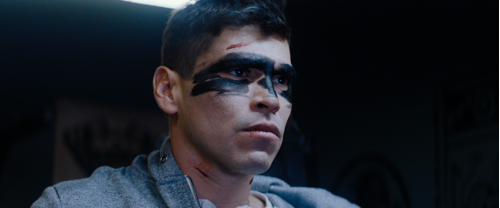
That means if we want a heroic avenger to cheer in an ongoing battle against evil, we’re going to have to create our own, typically to varying degrees of success. This is exemplified with the vigilante El Chicano, an original character conceived by Ben Hernandez Bray and Joe Carnahan, also to varying degrees of success.

In the film El Chicano, a dark knight has protected East L.A. and the surrounding areas since the 1940s, using his well-honed fighting skills, tricked-out cycle and skull-like visage to strike what I’m assuming is fear into the hearts of thugs and bangers, dealers and politicians.

While investigating a deadly cartel moving into his jurisdiction, LAPD Detective Diego Hernandez (Raul Castillo) discovers that his dead brother had taken on the mantle of El Chicano and now it’s his turn, using the mask and his muscle to disrupt the flow of drugs and the scourge of murders that, apparently, his childhood friend is woefully behind.

El Chicano picks and chooses what white-boy comic-book mythos to take from — a little Punisher here, a bit of Batman there — to become El Chicano. Despite an overly long origin, when he finally slips the half-mask on, it plays very much like the type of satisfying story superhero fans should crave, leading to a super-loco tacked-on coda for a sequel I wish were here right now. —Louis Fowler

Get it at Amazon.

Creep Van (2012)

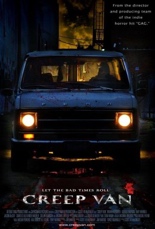
For his sophomore effort, director Scott W. McKinlay reassembles much of his cast and crew from his 2006 debut, Gag. That includes Brian Kolodziej, who takes the driver’s seat of Creep Van as Campbell, a young man forced to accept a lowly gig at a car wash after being fired from a grocery store for stealing porno magazines they don’t even stock.

Being without wheels, Campbell wants to buy a dirty and dirt-cheap van he finds for sale; says his co-worker/love interest (Amy Wehrell), “It looks like the poster child for rape prevention.” That’s really the least of the vehicle’s problems, because it’s driven by a guy who has booby-trapped it to do away with those who dare inquire about acquiring it. A busty blonde (super-sexy Lisa Waishes-Cornwell, Tomcats) finds its seat belt cutting into her shoulder, while a bikini babe (Angelina Armani, Fear Clinic) gets her head smashed in its spring-loaded side door.

To no one’s surprise, it’s in this realm of the sick that Creep Van finds its stride. While the film has a healthy sense of humor, one could argue successfully that it’s too jokey — verging on Troma, at that — than need be. (Speaking of, Troma head Lloyd Kaufman cameos, one assumes as nonfinancial payback for McKinlay serving as a producer for Kaufman’s Citizen Toxie: The Toxic Avenger IV.) When it most counts — Act 3, of course — McKinlay leaves the laughs in the dust, which I wish he had done much sooner, since the comedic tone doesn’t mesh as well with the convincingly grotesque effects as he might think.

That said, I can’t help but recommend that horror fans scream, “Shotgun!” and buckle in for a harmless 80-minute ride. As a throwback to old-school slashers, you could do a ton or two worse. I was never bored by what transpired — a target at which more microbudgeted projects should take care to aim. —Rod Lott

Get it at Amazon.

Bill & Ted Face the Music (2020)

In the year 2020, America has become the first chapter of a particularly bad dystopian sci-fi novel. That’s probably why the excessively optimistic Bill & Ted Face the Music might be the most needed movie of the year, giving a bit of cinematic hope in our hour of needful reality.

Like any self-respecting member of Generation X, 1989’s Bill & Ted’s Excellent Adventure (and, to a lesser extent, 1991’s Bill & Ted’s Bogus Journey) was a defining moment for me and most of my friends, waiting desperately for the fictitious day that the music of Wyld Stallyns changes the world as we know it forever.

Of course, it never happened.

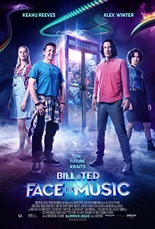
Now middle-aged and married with daughters, Bill (Alex Winter) and Ted (Keanu Reeves) are still trying to write the song that will evolve humanity toward a peaceful existence, with no luck. Ironically, time has seemingly ran out and the fabric of reality is about to collapse in on itself unless the mythical track is finally completed in about 70 minutes. This gives the guys the bright idea to time-travel to the future and steal the song from themselves.

While that’s going on, daughters Billie (Brigette Lundy-Paine) and Thea (Samara Weaving) use a spare time machine to go backward and create the greatest band ever, collecting musical icons such as Louis Armstrong, Jimi Hendrix, Mozart and so on. It’s not a spoiler if I say they definitely have the more solid plan.

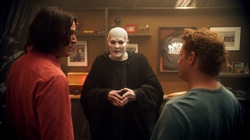
With the return of Death (William Sadler), a holographic Rufus (George Carlin) and the never-was catchphrase “Station!,” as much as a goofy trip down memory lane as it wants to be (and is), it becomes something more in our current climate, with Reeves and Winter portraying two genuinely good guys compelled to do the right thing, even if it means giving the role of planetary saviors to their daughters.

It’s hard to not sound apocalyptic when recommending Bill & Ted Face the Music, but it is the movie we truly need right now — and maybe that’s the true peace-bringing message of the Wyld Stallyns and their excellent adventures. —Louis Fowler

Get it at Amazon.

Virtual Girl (1998)

Breed The Lawnmower Man in a three-way with Ghost in the Machine and, oh, Animal Instincts 3, and you still haven’t come close to the direct-to-analog-tape atrocity that is Virtual Girl. The softcore stinker wallows in a league almost to itself: erotic thrillers dependent on immediately dated bleep-blop-bloop internet technology of the late ’90s. All it’s missing is an upon-climax cry of “You’ve got mail!”

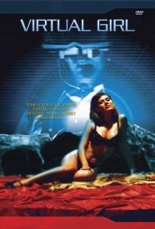
From Richard Gabai, the multihyphenate behind 1989’s Assault of the Party Nerds, this li’l flick of tits, bits and bytes begins as a computer-generated sex doll named Virtuality (played with arched, harshly penciled eyebrows by Deuce Bigalow: Male Gigolo eye candy Charlie Curtis) destroys her program’s creator because what he saw in his lascivious invention wasn’t hearts, but dollar signs.

Enter John Lewis, the studly, happily married man played by a debuting Max Dixon (who not only failed to appear in the 2001 sequel, but every screen project since). As the ace glitch-catcher at the software company where Virtual Girl is under development, John takes the program for a test drive and gets all hot and sweaty — heck, who wouldn’t? — yet is able to resist temptation and Virtuality’s rather comely come-ons. In a movie like this, however, it’s only a matter of time before they’re boning on the regular.

Virtual Girl puts the “seedy” in “CD-ROM” by offering skin, skin and skin in scene after scene. Wanting to pleasure John’s every desire during a roll in the virtual hay, Virtuality full-body morphs into a number of different-looking vixens, each with progressively manmade, awkwardly nippled breasts. He digs it, because he’s not getting any from his wife (Meatballs 4’s Miche Straube). Soon, Virtuality wants him all for herself, so she messes with his home security system, personal computer and bank account, just to show she’s got him by the balls. Fantasy though she may be, this lingerie-clad lady has a murderous streak in her hot bod: One corporate schmo gets his hands melted onto his keyboard; another programmer engaging in cybersex has his head blown off.

Full of cheesy, instantly obsolete computer animations of giant skeletons and spaceships, Gabai’s Girl is one of those movies where a crew member’s last name is listed as “Hughpenis” in the credits, because you just know he’d thought it’d be a real gas. It’s also one of those movies — and this has gotta be a first — where said credits end with a mailing address to which viewers can write and ask questions about the picture. Two decades later, my letter remains unanswered. Damn you, Virtual Girl! —Ed Donovan

Get it at Amazon.

Random Genre & Cult Movie Reviews