Category Archives: Kitchen Sink

Flux Gourmet (2022)

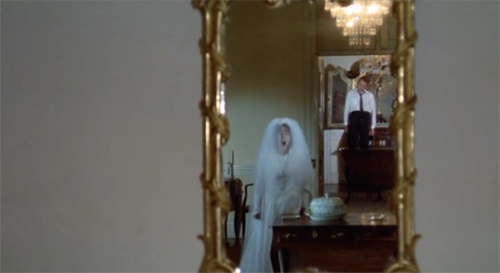
WTFA gastronomic grotesque, Peter Strickland’s Flux Gourmet explores issues of patriarchy, intimacy, trauma, oppression, artistic integrity and unrelenting flatulence — “seldom malodorous,” mind you.

At the Sonic Catering Institute, a three-person culinary collective undertakes a four-week residency. Fronted by Elle (Fatma Mohamed, Strickland’s The Duke of Burgundy) the trio is a dysfunctional, codependent mess. That could also describe its performance art, if said act can be properly described at all, being displays in which the auditory co-exists with the alimentary. The institute’s head (Gwendoline Christie, Strickland’s In Fabric) puts Elle and her teammates (Assassin’s Creed’s Ariane Labed and Hugo himself, Asa Butterfield) through seemingly nonsensical exercises involving graph paper or grocery-store improv. A glacial-level fracture forms.

Documenting this monthlong experience of epicurean toxicity is a journalist (Makis Papadimitriou, Chevalier) struggling with a secret: painful, excessive farting. Strickland being Strickland, that’s hardly the film’s most outrageous aspect, as he marries concepts from the two aforementioned films with the sound-dependent conceit of his 2012 breakthrough, Berberian Sound Studio. Then he bakes that mix at an exponent of 350˚ for 111 minutes until unclassifiable, and serves with avocado paste, mint sauce and an omelet-related fetish. You won’t know what hit you — a great thing indeed.

Although sound designer Tim Harrison (Censor) is the picture’s unsung hero, Mohamed’s performance looms large with an absolute fearlessness. As discomforting and disturbing as Flux Gourmet is, it’s also brutally funny, with comedy as dark as the innermost section of the human intestinal tract. Those laughs serve as a salve as Strickland transports his audience from the EVOO to the OMFG. Prepare to swear off Nutella and smoothies for life. —Rod Lott

Get it at Amazon.

We’re All Going to the World’s Fair (2021)

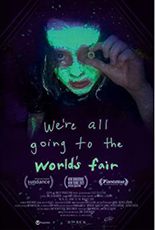
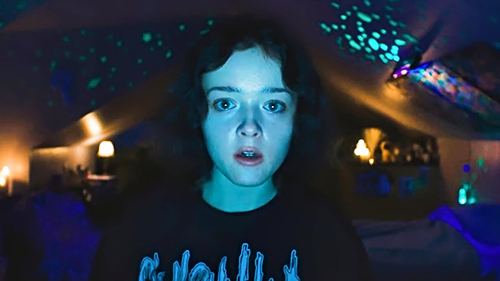
WTFAt the age where teens tend to feel most alienated, the short, spunky Casey (Anna Cobb) is further alienated by living in a dreary small town. Entertainment provides her escape. In fact, she loves scary movies so much, she’d like to live in one.

Wish granted.

Casey tells this to the camera — both the one on her phone and the one employed by Jane Schoenbrun to make We’re All Going to the World’s Fair. In doing so, Casey broadcasts every brooding thought of her boring life, often painfully and in real time, to the world — or, more realistically, about 50 followers.

The DIY ADD horror show opens with her taking “the World’s Fair challenge.” What it involves — a Candyman-style chant, a pricked finger and a trippy video — is of no importance against its supposed consequence: a gradual loss of self-control. Indeed, as she reveals via chat to a total stranger (predator?) known only as JLB (Michael J. Rogers, Beyond the Black Rainbow), she’s starting to feel … changes.

Cobb makes quite an impression and an assured screen debut as Casey, best exemplified when dancing to a pop song and … well, I won’t spoil it, but the moment is terrifying. Throughout, to say Schoenbrun implies more than shows or tells would be an understatement. Their picture is itself a challenge — so aggressively unconventional in all regards, it seems to dare viewers to like it. Given the fervent cult already forming around it and its experimental narrative, enough have taken that dare and urged others to do the same.

Feeling empty at its closing, I wondered: What had I failed to see? Turns out, a transgender subtext. As a heterosexual male, that completely escaped me, yet I still found chunks of the movie to be fascinating: the clip-based ones between the parts cast (purposely, no doubt) in a heavy shade of blah. The videos Casey lets play at random possess a peculiar, near-narcotic pull to her and us, knowing we can’t wait to see what might confront us next. —Rod Lott

Get it at Amazon.

Girl on a Chain Gang (1968)

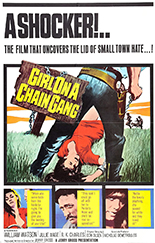
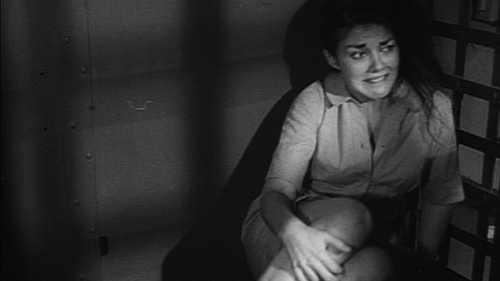
WTFNearly a decade before Macon County Line brought in bank, notorious exploitation producer Jerry Gross rounded up a few pennies to tread similar territory with his debut, Girl on a Chain Gang. Just as his Teenage Mother isn’t really about a teenage mother, Girl on a Chain Gang is equally misleading and just as scandal-minded.

In the (too-)simple story, three young activists driving through the Deep South get pulled over in Carson’s Landing, a backwater town of shallow-minded people. The corrupt, cigar-chomping sheriff (William Watson, 1978’s Stingray) steals their cash and tosses them in the hoosegow. He also sets traps for them, both metaphorical (using hooker Arlene Farber, the Teenage Mother herself, to pry a false confession) and physical (“forgetting” to lock the cell door so he and his deputies have justification to shoot if the youths escape).

What I haven’t mentioned yet is one of the trio is Black, the least favorite skin color of Carson’s Landing residents. Thus, Gross’ little black-and-white picture is a race-charged look at the antiquated-moralled. His heart is in the right place, but Girl on a Chain Gang, which he also wrote and directed, is as slow, meandering melodrama with only the scarce blip of activity. The proceedings look not unlike a local stage production.

The only memorable moment is an uneducated, bigoted presentation (read: “pree-zen-tay-shun”) to the already uneducated, bigoted law enforcement on the visual difference between Black and Caucasian “spermatozoa.” And that’s not nearly enough to merit the long sit. —Rod Lott

Get it at Amazon.

America’s Runniest Home Videos (2021)

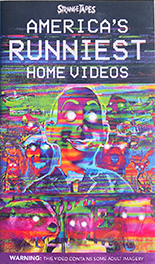
WTFWhat do you get when you cross schizophrenic singer Wesley Willis with an attack Schnauzer with an overflowing toilet with a white-trash pool party with a Jim Varney mask with dinner-roll shenanigans with a portly Boy Scout with a deep hole with a female ventriloquist with egg tricks with a remote-control biplane with a Pride parade with a baby-shower smoke break with a confident squirrel with a Pee-wee Herman doll with gratuitous carrot-eating with golfers in drag with a disembodied deer’s head with a testicle festival with low-calorie horseradish with 50-year-old tits with Howard Frum with a baby who totally sucks at swimming?

You get America’s Runniest Home Videos, a 20-minute mixtape of rapid-fire camcorder found footage from VHS tapes several dozen families will soon regret accidentally donating to Goodwill — all from the fine folks at the finer Strange Tapes zine. —Rod Lott

Get it at Strange Tapes.

Stardust (2020)

WTFMany critics have slammed the “fictional” David Bowie biopic Stardust for different reasons, ranging from the lack of any true Bowie music to the fact that lead Johnny Flynn’s accent goes strangely in and out. I understand all that, but working within the confines of the chameleon world of Bowie, it does quite an admirable job of shuffling in and out of reality, the way we believe the fictional alien would have.

It’s a year or so before Bowie will release The Rise and Fall of Ziggy Stardust and the Spiders from Mars. He’s still in his enchanted folkie period, coming to America for the first time to promote the failing record The Man Who Sold the World, shocking homophobic people with his gender-bending ways while personally dealing with the institutionalization of his brother.

He meets Mercury publicist Rob Oberman (an outstanding Marc Maron), who is eager to work with him, but Bowie is such a bona drag — especially to music reporters — even Oberman grows weary of him. I wonder if, because the film depicts Bowie in a usually unsavory way, that’s one of the reasons that it was so disliked; I am a huge follower of Bowie, but even I recognize that he was something of a jerk much of the time, especially to the media.

Following the duo on a cross-country tour of America — one where he can’t even perform — Bowie manages to piss off everyone, from a local newspaper writer to a supposed bigwig at Rolling Stone. Perfectly capturing the enigmatic brilliance of the games Bowie put these people through, as the film goes on, you feel this is quite fitting for what the man’s public persona was — or at least who we perceived him to be.

What I’ve mostly read though was the sheer displeasure at the absence Bowie songs, instead relying on things like Anthony Newley tunes. Being unauthorized by the family — probably because they want to make their own movie, of course — the film works, while being somewhat off-putting, because besides the actual fans of his music, how many people truly know about Bowie before Ziggy, the defining music and the supposed alien? —Louis Fowler

Get it at Amazon.