
Category Archives: Kitchen Sink

Gloria (2014)

WTFI’ve been in lust with notorious superstar Gloria Trevi since I first caught her film debut, Pelo Suelto, on a Spanish-language channel sometime in the mid-’90s. With her brazen sexuality and the willingness to exploit it, what better romantic icon for a lost boy with burgeoning erections and a love of catchy tunes?

What I didn’t know, however, is the hell she was being put through by her manager, Sergio Andrade. A music producer and sexual predator who ran his services like a religious cult, he constantly brought in scantily clad scads of young women to fill his hit-making coffers, as well as his eternal erotic pleasure.

The whole downbeat drama is documented in Gloria, featuring a highly praised performance by Sofía Espinosa as the acclaimed queen of Mexican pop. Starting as a street urchin looking for fame and fortune on the music charts, Trevi quickly comes under the spell of Andrade (Marco Pérez), grooming her into Latin America’s biggest star.

Eventually, it leads to a chaotic life on the run, filled with more perverse twists than a whole season of a telenovela, including dead babies, underage accusations and, ultimately, Brazilian incarceration. Answering many of the dirty rumors about what happened during this time, director Christian Keller does away with both sides of the story, instead telling Gloria’s version of the facts.

Espinosa miraculously becomes Trevi, with her raspy voice, torn shirts and intense demeanor; it’s horrific though to see this Mexican symbol of personal liberation and sexual freedom was actually a talented slave to the very life she sang both about and against. The film does her story absolute justice.

But, in case you’re wondering, she’s doing much better now, still making hits. —Louis Fowler
Get it at Amazon.

When the Wind Blows (1986)

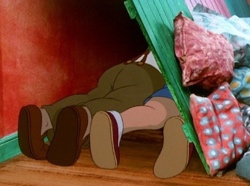
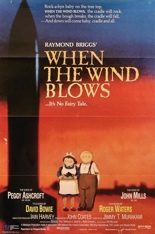
WTFWhereas the terrifying British film Threads is a nuclear story about the destruction of England made for adults, the animated British movie When the Wind Blows follows a similar path, but for children, apparently. I guess kids have got to learn about the ravages of bleeding gums and hair loss due to atomic warfare sometime.

Lovely couple Jim and Hilda are retirees who mostly piddle around in their quaint country home, drinking plenty of tea and arguing about which of the four radio stations is best. That serene life is torn asunder when an atomic bomb is dropped in nearby London, leaving them on their own as they struggle with no power, no water and no health care in the aftermath.

For 87 minutes, we are painfully forced to watch this charming elderly pair as they not only physically deteriorate in the worst ways possible due to radiation sickness, but hold out irrefutable hope that the government will come and rescue them any minute from the “Russkies.” They never do.

With a stellar title song by David Bowie and a decent end-credits tune by Roger Waters, this partly live-action film will hit hard for people my age (somewhere in our 40s) as an animated reminder of our own aging parents and how their blind faith in manmade doctrines could ultimately leave them to die alone and scared in a puddle of their own filth. —Louis Fowler

Get it at Amazon.

The Oscar (1966)

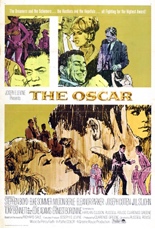
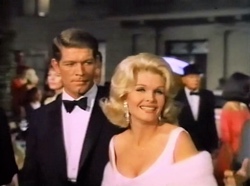
WTFFrankie Fane loves the limelight. As played by Fantastic Voyage’s Stephen Boyd in a big, barking dog of a performance, Fane — a mere one letter from “fame,” folks! — is the (self-)center of his own universe at the Academy Awards, where he’s up for his first Oscar as Best Actor, against such stiff competition as Burt Lancaster and Richard Burton. How he got to that big night plays out in feature-length flashback in — what else? — The Oscar.

We watch as Frankie goes from two-bit traveling stripper spieler to accidental actor to hot new thing to box-office poison to (gasp!) pining for a TV pilot before a from-nowhere nomination saves his bacon. Along the way, he uses and abuses everyone in his immediate orbit: the talent scout who discovers him (Eleanor Parker, Eye of the Cat), his agent (comedian Milton Berle, playing it straight), his bump-and-grinder of a girlfriend (a super-sexy Jill St. John, Diamonds Are Forever), his eventual wife (Elke Sommer, The Wrecking Crew) and his best friend and manager, Hymie (crooner Tony Bennett, in his one and only film role not playing himself). Forget The Oscar; the marquee should have read The Asshole.

Thanks to the books The Golden Turkey Awards, The Official Razzie Movie Guide, Bad Movies We Love and their ilk, The Oscar has carried the burden as one of Hollywood’s legendary stinkers since its release, which isn’t playing fair. Oh, the melodrama is overwrought, all right, but I suspect its tarnished rep is more a case of Tinseltown not appreciating the suggestion that all is not golden in the moviemaking biz — especially one with such a nut-kick of an ending!

Immensely entertaining, The Oscar effectively killed the upwardly mobile careers of Boyd and director Russell Rouse, who co-wrote the screenplay with his regular collaborator Clarence Greene (Academy Award winners themselves for Pillow Talk) and some new kid named Harlan Ellison. What’s a revolutionary sci-fi author like him doing in a star-studded pic like this? While not entirely sure, I wonder if he is to blame for Frankie’s lingo-laden hepcat dialogue — to wit:
• “You fat honey-dripper!”
• “I’m up to here with all this bring-down!”
• “You’ve gotta be shuckin’ me!”

More narcissistic viewers might read this cautionary tale as more of an instruction manual, like Valley of the Dolls. While the two don’t reside on the same level of camp, make no mistake: They fucked. —Rod Lott

Get it at Amazon.

Masked and Anonymous (2003)

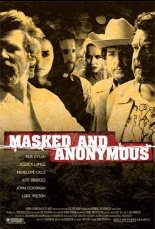
WTFOn an alternate timeline in an alternate America, a civil war with questionable sides rages on as everyday people try to survive by ignoring it. As the despot president begins to face his last few hours of life, the ubiquitous television network decides to hold a rather sketchy benefit concert for either the victims of the war or the promoter’s sizable debts, whichever comes first.

To play the show, they spring from prison the troubled troubadour of this timeline, Jack Fate. As he surveys the broken country with a wide array of name-brand actors, dropping abstract mantras and humanistic tantras, things continue to fall apart as Fate and his band perform some death-defying tunes in preparation for the last night of America as they seem to know it.

This remarkably prescient travelogue was conceived by (and starring) Bob Dylan, by the way.

One of the most woefully ignored films of the past 20 years, Masked and Anonymous is the dystopic present presented as a bitter song of broken hearts, hard-edged and mean-spirited in a way that refuses to give answers or, even worse, reasons for anything that it presents on screen and in theory.

And while that is usually something that might irritate most people, here, through Dylan and director Larry Charles’ acidic pen, it all seems like it was just two decades too early. With the threat of wars, pestilence, famine and death riding just over our own horizon, we don’t need to know the hows and whys anymore; we just gotta turn on the TV and figure out a way to survive it.

Dylan as Fate is, ironically, the movie’s Everyman; when he says, “I stopped trying to figure things out long ago,” it’s the only way to make sense of the shit that rolls down from on high, both in the film and in our own damnable lives, guaranteed no tomorrows. —Louis Fowler

Get it at Amazon.

The Assistant (2019)

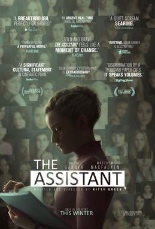
WTFFresh from a well-deserved Emmy win for the Netflix crime series Ozark, Julia Garner faces arguably more dangerous territory in — and as — The Assistant, set entirely within one workday. As the lowest rung of a Miramax-esque film company in New York City, her Mary stays busy making copies, fielding phone calls, washing dishes, balancing checks and fetching water — glass-bottled, of course. Across the movie’s 87 minutes, we watch her perform so many menial tasks, you may feel like you deserve three hours’ internship credit.

Most of The Assistant is as dull as Mary’s day, until signs of her boss – who’s heard but never seen — become more common. He’s the film’s ersatz Harvey Weinstein, a blustery, berating bully apparently more interested in chasing tail rather than talent. As Mary navigates this toxic environment, culminating in a futile meeting with an HR representative (Matthew Macfadyen, 2010’s Robin Hood), her soul slowly deflates like a balloon days after the party, air seeping from Garner’s perpetually sour pucker. Yet nothing really happens, in terms of story.

Unconventional documentarian Kitty Green makes her narrative debut with The Assistant, yet the pulse of her previous project, Casting JonBenet, cannot be located. Her film may have nailed the #MeToo timing, but is itself something of a quiet slog. In keeping the audience from hearing (except in select occasions) the other end of the movie’s many phone conversations, which constitute a good chunk of dialogue, Green keeps the viewer from engaging with her material. It’s an odd directorial choice — one I respect, although don’t necessarily like.

Make no mistake: The Assistant is not the finely tuned workplace thriller it’s expertly sold to be. Its themes of sexual harassment will attract the curious, only to yield wildly mixed results: cathartic for a few, a horror show to a few more, and baffling to most everyone else. —Rod Lott

Get it at Amazon.