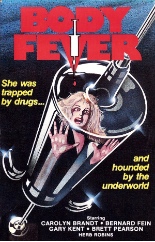
 Ray Dennis Steckler, the backyard multihyphenate whose psychotronic efforts have dealt famously with two-bit superheroes (Rat Pfink a Boo Boo) and mixed-up zombies (The Incredibly Strange Creatures), turns his lens to the world of crime in the private-eye procedural Body Fever. Aside from writing, directing and producing, Steckler takes the starring role — no surprise there — as Charlie Smith, an always napping detective for hire.
He’s hired by beefy crime boss Big Mack (Bernard Fein, Robin and the 7 Hoods) to locate one Carrie Erskine (Carolyn Brandt, then Mrs. Steckler), a sexy cat burglar — check out that snakeskin suit and Catwoman mask! — for snatching $150,000 of pure, uncut heroin from his safe. (Unbeknownst to Big Mack, the drugs immediately were stolen from her as well.) Charlie puts his feet to the Hollywood pavement and frequents local sleazy hangouts to determine Ms. Erskine’s whereabouts. When he finally does find her — dancing in his room, no less — she makes him an offer he can’t refuse: She’ll give Charlie half of the cut if he helps her get the smack back. They fall in love.
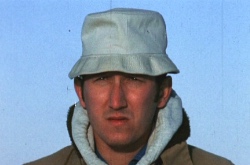 Wishfully titled Super Cool on some prints, Body Fever is neither exciting nor even suspenseful; nonetheless, there’s something enjoyable about watching Steckler — who looks like a dopier Kevin Spacey in a Gilligan cap — traipse around town in a connect-the-dots gumshoe plot of his own doing. He’s no actor — no one in his films ever is — but he does have more directorial talent than he’s given credit for; of course, he is to blame for much of that reputation, given that he could be his own worst enemy (see: The Hollywood Strangler Meets the Skid Row Slasher).
At the very least, his movies look interesting, and here, he gives himself a few arty sex scenes to direct the fuck out of. Clearly, he enjoyed it — hey, I’d give myself four sex scenes, too — so it’s hard not to be slightly charmed by this B-level potboiler. —Rod Lott