
Category Archives: Mystery

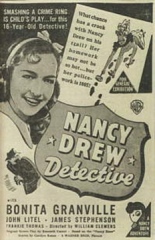
Nancy Drew — Detective (1938)

In her first screen outing, Nancy Drew — Detective, Carolyn Keene’s all-American teen she-Sherlock (Bonita Granville) is out to solve the sudden disappearance of an old biddy who was due to donate a bundle of cash to the local girls’ club to build a swimming pool. And Nancy sure as shit wants that swimming pool!

Getting no help from “that conceited tweet-tweet” police Capt. Tweedy (Frank Orth), Nancy enlists the help of platonic pal Ned Nickerson (Frankie Thomas), the clumsy neighbor boy with the side-swirly haircut and propensity to drop tools on his toes. He’s also a dud in overall social skills, according to Nancy: “You’re about as chivalrous as an oyster!”

In the climax, Nancy threatens the bad guys with a gun, holding it with disgust as if it were a penis.

The squeaky-clean, super-efficient mystery involves chasing a pigeon carrying a secret message; slapstick with a wrench; dressing Ned in drag, disguised as a nurse; and communicating via the cutting-edge technology of Morse code. Speaking of dated, the flick is filled with now-odd slang, like “Aw, stop disturbin’ the molecules!” Even when presented in context, that made no sense to me, but like the rest of the hour-long adventure, I sure did enjoy it. —Rod Lott

Buy it at Amazon.

Professor Layton and the Eternal Diva (2009)

Archeologist, puzzle solver and true gentleman Professor Layton jumps from the Nintendo DS to the movies in the animated feature Professor Layton and the Eternal Diva. The Japanese film is pegged as an early adventure of the prof (Christopher Robin Miller, who’s voiced the role in some of the games) and his “apprentice No. 1,” Luke (Maria Darling, ditto), the scrappy youth who handles his mentor’s letters and tea.

Beginning with a locked-room mystery for a prologue, the story takes shape as a concert hall full of performers and patrons alike — including a football player and an Agatha Christie-esque author — magically disappear and are thrown into a game of adventure, where the stakes are high and the winner gets — or so they’re told — the gift of eternal life.

Along the way, the group faces sharks on a ocean voyage, an island rife with hungry wolves, and a castle filled with labyrinthian tunnels, through which they’re pursued by phantom-masked henchmen. It’s cute, enjoyable and better than your average anime, for which director Masakazu Hashimoto has been responsible in the past.
Other than clean character and set design, two things set Eternal Diva apart, even if the movie is ultimately inconsequential. One is the element of steampunk that’s infused into its latter half. The other is, of course, the puzzles that Professor Layton and the others encounter. It makes the lead character appealing as a Sherlock Holmes for pint-sized audiences … and their parents. —Rod Lott

Buy it at Amazon.

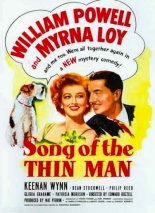
Song of the Thin Man (1947)  

I was worried, but the Thin Man series ends swell with a jazz-themed return to the formula and the kind of comedy that made the series great. Song of the Thin Man has Nick and Nora back in New York, again trying to solve a murder in order to prove the innocence of a friend. In this case, the friend is Phil Brant, who owns a gambling ship and has an argument with Tommy Drake, who leads the club’s jazz band. When Drake turns up dead in Brant’s office, Nick grabs his cocktail shaker and goes to work.
 
Instead of Nick drunkenly and good-naturedly suffering the company of snooty rich folk, Song shakes things up a bit by having him drunkenly and good-naturedly suffering the company of hepcats. It’s brilliant, because his reaction to both is nearly identical, but the hepcats are infinitely less irritating (and so, more entertaining) than wealthy snobs. Also, Nora’s even more of a treat than usual once she gloms onto the hepcats’ lingo and starts using it correctly, much to Nick’s befuddlement.
 
Nick Jr. appears again in this installment, but he’s about 10 or 11 years old and not played for cute anymore. Dean Stockwell (TV’s Quantum Leap) plays him and carries his own as a bona fide member of the wisecracking family. At bedtime one night, he asks for a story. “No story for you tonight,” Nick says, “You’ve got to get some sleep.” Says Stockwell, “But your stories always put me to sleep,” delivering the line almost as perfectly as William Powell reacts to it.
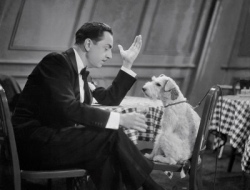
The Thin Man series is famous for presenting marriage as something that people might actually want to do. With Song of the Thin Man, it does the same thing for parenting. —Michael May

Buy it at Amazon.


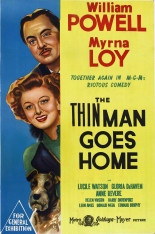
The Thin Man Goes Home (1945)

Five movies into any series and the novelty will start wearing off. Unfortunately, that’s as true of The Thin Man series as anything else. Nick and Nora are as charming as ever in The Thin Man Goes Home, but this entry doesn’t bring a lot that’s new in the way of laughs.

It tries. The story’s about Nick and Nora’s going to visit his parents in the small town where he grew up (the series titles having cleverly transferred the Thin Man nickname to Nick with Another Thin Man). His folks aren’t rich, but they’re respectable; especially Nick’s pop, who’s an influential doctor in the community. While the folks are pleasant and genuinely happy to see their son and daughter-in-law, Nick clearly has daddy issues right from the start. He’s giving up drinking for the duration of the visit and instead pulls swigs from a flask of apple cider. It’s a ballsy move to rob the main character of his funniest trait. Unfortunately, it doesn’t pay off comedically.

Nick’s best gags have always been his search for the next drink and his drunken endurance of insufferable people. Here, he soberly faces likable people and tries to get them to like him. It’s a sad position for the once great detective to be in.
At least the movie leaves Nick Jr. back in New York for the trip. And the mystery is a fun one featuring a mysterious painting and a murder that takes place literally on Nick’s doorstep. Murder mysteries of the 1940s are cheap, however. What sets this series above the others is Nick’s being at the top of his game, and The Thin Man Goes Home doesn’t offer that. I wish he’d stayed in New York. —Michael May

Buy it at Amazon.

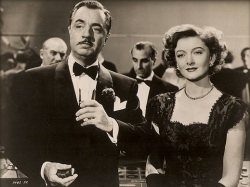
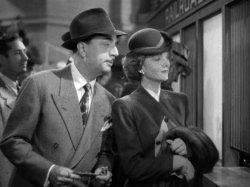
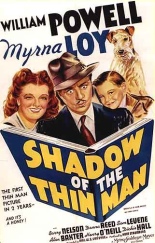
Shadow of the Thin Man (1941)

Four movies in, most series start to show signs of wear and tear, and the Thin Man series was no exception. It’s only partly the fault of Nick and Nora’s kid. He was all right in After the Thin Man, but he poses a bit of a problem in Shadow, as love and chemistry have been replaced with precociousness. That can be annoying, but fortunately, Nick Jr. doesn’t have a lot of screen time. Yay again for nannies! (On the other hand, boo for racially stereotypical ones: “Yas’m, Mrs. Charles! Mr. Charles knew you was makin’ that drink! He must have telegraphy!”)

On the other other hand, Junior does provide one of Shadow’s best bits when he refuses to drink his milk unless Daddy drinks some, too. That horrifies Nick Sr., who’s already on his 12th martini of the day. It’s funny, but it also brings up the real problem with having the tot around. Nick’s alcoholism was amusing before he had a son, but it’s frickin’ uncomfortable to watch him take the boy on a merry-go-round while needing to lean against a horse just to stand upright.

The mystery’s not particularly inspired, either. It has to do with organized crime and betting on sporting events. I yawned just typing that. Nick gets involved because a buddy of his is the prime suspect when someone turns up dead. Barry Nelson, the original James Bond, plays the friend, so that’s cool. And a very young Donna Reed plays Barry’s girlfriend.

Although things are starting to look tired, there are still plenty of laughs to be had. As usual, Nora gets in some great lines and even pitches in on the detective work more than she has before. There’s obviously still life in the series, but — like Nick’s drink — it needs some freshening. With two films left in the franchise, I hope it got some. —Michael May

Buy it at Amazon.