
Category Archives: Horror

Megalomaniac (2022)

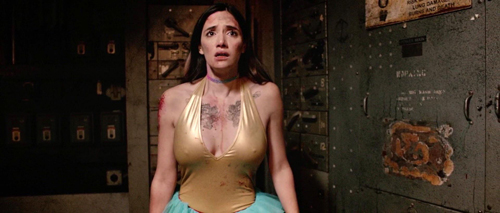
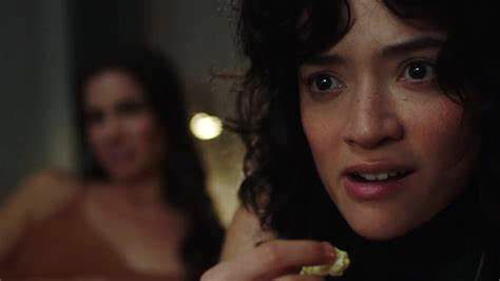
From Belgium, Karim Ouelhaj’s Megalomaniac finds inspiration in the Butcher of Mons — a real-life, never-found serial killer of five women in the mid-1990s — then toys with it fictionally. The film asks, if the Butcher had kids back then, what would his now-adult children be up to? Results are, duh, disturbing — and equally well-acted.

With their evil father deceased, siblings Martha (Eline Schumacher, Krump) and Félix (Benjamin Ramon, Yummy) live in a dingy mansion as grim as the film it calls home; the abode looks like prison of sorts from the inside. While the manipulative Felix has picked up Dad’s felonious hobby, the emotionally damaged Martha toils as a factory janitor. And we do mean toils, as she’s repeatedly bullied and raped by co-workers.

Perhaps due to its less lenient European origins, Megalomaniac is uncompromising. At first, Ouelhaj (Parabola) makes us pity Martha. Then, step by step, as he slowly reveals how horrible a monster she actually is, we realize he’s slyly manipulating us into wanting to see her exact the most gruesome revenge on her attackers. And we do. Even that doesn’t quite go as planned, unless your definition of “planned” begins and ends with “blood-drenched.”

Although vile and violent, Megalomaniac holds another aspect arguably more of an obstacle to mainstream audiences: the occasional, unexplained touch of the surreal, à la David Lynch. Don’t let Ouelhaj’s arthouse inclinations scare you from this desolate study of what passes for family these days, even if he wields his film’s allegories with the weight of sledgehammer. —Rod Lott

Get it at Amazon.

Nightsiren (2022)

In a village in the mountains of Slovakia, superstition long resides. It seems to live everywhere. This, Šarlota knows, having been on the receiving end for much of her life. The scorn started when, as a child, Šarlota accidentally knocked her little sister off a cliff and, ashamed, fled for the city.

Two decades later, called to accept an inheritance from her mother, Šarlota (Natalia Germani, The Devil Conspiracy) returns, only to find everyone in town thinks she’s a witch. (Even if they didn’t, odds are she’d be persecuted anyway, just for her gender.)

Are they superstitious because they fear “the other”? Nightsiren seems to suggest as much. Then it goes one better by pointing back at the accusers, suggesting these monsters we live with are more worthy of blame. Šarlota and Mira (newcomer Eva Mores), the young woman who befriends her, learn this lesson over and over again. Both actresses, it’s worth nothing, inhabit their parts really well.

From Filthy filmmaker Tereza Nvotová, Nightsiren has a lot on its mind, little of which it keeps to itself, even if could loosen its grip on subtlety. Although its feminist themes might scare some potential viewers off, that’s their loss; this is folk horror through and through, what with such elements as scythes, snakes, goats and rituals involving flames.

Like all good folktales, it’s presented in chapters. The literary touch of Nvotová and co-writer Barbora Namerova is palpable, but that hardly means visuals go ignored. On the contrary, Nightsiren pulls off some stunners, most notably as Šarlota experiences a DayGlo-painted nightmare of a forest orgy. —Rod Lott

Get it at Amazon.

Don’t Look Away (2023)

Don’t knock Don’t Look Away for using what amounts to a life-size Ken doll — naked, but sans genitalia — as its lead bugaboo. Praise it for making that smart economical choice. Not only is a stationary villain cost-efficient, but incredibly effective. Scaring while not moving worked for that celebrated 2007 “Blink” episode of Doctor Who, and it continues to work for Annabelle, several sequels later.

Also, it’s the only horror movie I know of to rely on a Roomba to deliver a jump scare.

New Jersey law student Frankie (first-timer Kelly Bastard) and half a dozen of her closest friends are stalked and menaced — and some killed — by the eerie, nonverbal mannequin with a permagrin. “Like a Bloomingdale’s mannequin?” asks a cop. Or, as suggested by her platonic pal (Okja’s Michael Mitton), “one of those Reddit creepypasta things, like Slender Man.”

Yes and yes. All Frankie knows is that once you avert your gaze, the doll will kill you. (Hence the title.)

Its blind owner, who has peppermint gumballs for eyes, shows up to fill in the runaway mannequin’s backstory. As played by director Michael Bafaro (5G: The Reckoning), he explains between sips of joe, “I was having it shipped to my estate where I could bury it forever. Spare others from suffering the same tragic demise as my loved ones. I swore on their graves I would put an end to this. And by God, I will. Good coffee.”

Moving swiftly, unlike its evil automaton, this 110% oddball pic is great fun, reminiscent of bananas mid-’90s cable fare like Kevin S. Tenney’s Pinocchio’s Revenge, but with total paralysis. With Mitton as his co-scribe, Bafaro leans hard into their concept’s built-in absurdity. They’re no dummies; they knows their movie is going to elicit chuckles, but they’re also confident it will elicit the creeps, too. The acting lands as Don’t Look Away’s weakest link, as news of friends’ deaths are brushed away like laundry lint.

Naturally, the end hints at further slaughter ahead for the pantsless model. Barbie may have no current box-office equal, but this living doll poses a threat in body count. —Rod Lott

Get it at Amazon.

Talk to Me (2022)

Horror hasn’t needed a hand for the past decade. Thanks to the likes of It Follows, The Babadook, Hereditary and too many more to reasonably list, the genre has been recognized lately for what it’s always been: clever metaphors that speak to our experience. It’s just a little less exploitative now. And, by extension, a lot harder to get a foot in the door.

Fortunately, Talk to Me from Danny and Michael Philippou (aka YouTubers RackaRacka) has pretty much nothing to do with feet. Still, despite exceptional acting and a refreshing take on possession, the film’s premise is spread too thin to be an instant classic.

As Mia (Sophie Wilde) grieves the death of her mother, her best friend, Jade (Alexandra Jensen), invites her to a party with their friendly neighborhood drug dealers. Naturally, this means Jade’s little brother (Joe Bird) tags along. Tragically, the gathering isn’t just a bunch of harmless Aussie teens doing whippets. Their drug of choice is instead an amputated, embalmed hand that lets a ghost possess anyone who holds it. The catch? Exposure to the hand for more than 90 seconds risks long-term possession.

Talk to Me shines in its possession sequences. The film showcases menace, perversion and everything else fucked-up from the great beyond in its first act. Powerful and involved performances ground this otherwise hokey jaunt through the backlog of vengeful spirits. Bird and Otis Dhanji stand out, the former becoming some kind of prophetic passenger from hell who’s eerily similar to Harvey Scrimshaw in The Witch.

Mia’s desperation and compulsion for the hand realistically carry the plot. Unfortunately, the film lets the rules of the hand overshadow an otherwise tragic and emotionally jarring arc. It doesn’t seem to realize its power comes from of its compelling cast of characters. Instead, Talk to Me backpedals into conventional approaches as soon as it loses anything more to say about addiction. To put it bluntly, it feels like the filmmakers understand addiction — maybe they even watched Requiem for a Dream — but they weren’t confident enough that it could sustain a full movie.

Instead, the Philippous lean hard into the franchise paint. Which mostly makes sense. It would be almost a shame not to explore the iconic hand in some other way, but that’s the beauty of a cursed object: You can move it into any number of situations and chances are, its presence alone is enough to justify what transpires. Instead, the protagonists can focus more on their very real, compelling problems, rather than how the thing — be it a monkey’s paw or a demonic puzzle box — connects to some ancient power.

Talk to Me is solid and its already announced sequel should be, too. Hopefully, the filmmakers will be more hands-off when it comes to the human drama already baked into the story. —Daniel Bokemper

Get it at Amazon.

Fatal Exposure (1989)

What do you think about when you hear the word “blood”? Are you obsessed with death and dying? Have you ever wanted to kill someone? Please answer carefully; you could win the right to beget the son of a serial killer!

With a mansion and a mullet, charismatic photographer Jack T. Rippington (Blake Bahner, Caged Fury) is new to the town of Prairieville. Minutes after a Baptist couple stops by to invite Jack to a church supper, he’s convinced them to model for a magazine shoot he’s doing on methods of murder. The husband (one-timer Gary Wise) sees no issue with being locked in a guillotine. Meanwhile, the homely wife (Holly Hunter soundalike Renée Cline, who appeared in four David A. Prior joints the next year) dons kinky lingerie so she can be tethered like a Thanksgiving turkey, then injected with an acid that turns her neck into a piping-hot pepperoni pizza.

See, Jack likes to kill. He also likes, as he breaks the fourth wall à la Ferris Bueller to share, to drink his victims’ blood. “You see, it’s blood that keeps a man potent. Sexually potent, that is,” he says, with the relaxed folksiness of Wilford Brimley shilling Quaker Oats.

After a daytime dump of their bodies in the cemetery, Jack and his wheelbarrow meet Erica (Ena O’Rourke, Molly and the Ghost). Because she looks just like his great granny — and correctly answers all three aforementioned test questions — Erica gets laid, not slayed. Their meet-cute immediately leaps to her agreeing to help Jack acquire bikini models from the big city. What she doesn’t know is he intends to, oh, give them live electrical cables to hold onto.

Only after getting pregnant does Erica start to suspect something’s up besides Baby Daddy Jack’s super-potent penis. That intuition puts her way ahead of Prairieville’s sheriff (Marc Griggs, also one and done), who earlier takes a big swig of blood from Jack’s Thermos and thinks nothing of it, because Mr. Rippington says it’s a Bloody Mary.

An amazing slice of shot-on-video sleaze shot entirely in Alabama, Fatal Exposure is hardly the only horror film about a homicidal shutterbug. I can say with certainty, however, it’s the only one:
• directed by the cinematographer of Faces of Death sequels, Peter B. Good (is he, though?)
• featuring a huge jug marked “CHLOROFORM” in handwritten lettering
• where the photographer is the great-grandson of Jack the Ripper. Oh, shit, did I spoil that for you?

Bearing a Herschell Gordon Lewis-does-Skinemax quality, which I say with love, the purposely gory, accidentally goofy Fatal Exposure deserves a wider reputation among SOV enthusiasts. As the nutso Rippington, Bahner comes off like a fifth-rate John Stamos, which is to say hardly a threatening descendant of the Whitechapel Murderer. Meanwhile, O’Rourke, née Henderson, exudes competence and confidence no one else in the cast dares match. Not that they try.

And not that Good asked! His stale direction seems focused on persuading O’Rourke and other genuinely attractive women to bare their bodies. That he gets Julie Austin (1989’s Elves) to undergo a super-handsy foreplay sesh in the woods has to count as something of a cinematic feat, considering payment couldn’t have been worth much more than a 2-for-1 coupon redeemable at your local participating Shoney’s. —Rod Lott

Get it at Amazon.