
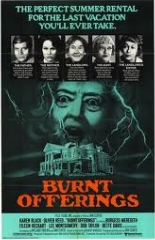
 Dan Curtis’ Burnt Offerings comes from that era in horror when the genre was a chic gig for Oscar winners and A-list talent, rather than any given season’s crop of young, cheap TV supporting players. This one has Oliver Reed, Karen Black, Burgess Meredith and even the grand bitch herself, Bette Davis.
Reed and Black portray the Rolfs, who — with son Davey (Lee Montgomery) and Aunt Elizabeth (Davis) in tow — rent a sprawling Gothic manse for the summer for $900. Seems too good to be true? It is, because there’s a catch: Thrice a day, they are to set out a plate for the unseen 85-year-old woman who never comes out of her room. RUN!!!
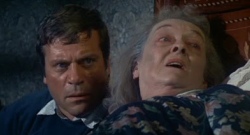 Not only do they not run, but Mrs. Rolf does what she’s warned not to do: entering the coot’s room. After doing so, she starts acting all weird. Her hubby also starts exhibiting strange behavior — well, if attempting to drown your own kid counts. (Is it? I can’t keep track of things like “laws.”)
You get the idea Reed was just doing this slow stepper for beer money, because he tends not to invest much in it beyond teeth clinching. No one told Davis, however, who overacts the hell out of things, to the point where you can feel her arrogance seething through your TV. At least the ending is kinda cool, if expected. Was that scripted or was Reed so tanked he slipped? —Rod Lott
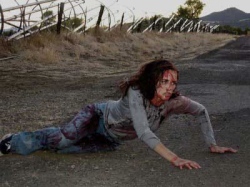 Everything goes well until the some big, bald man with scars all over his face tries to bust his way inside, recalling — how could it not? — John Carpenter’s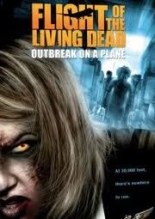
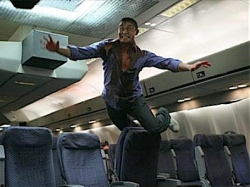 Soap actor David Chisum is no Samuel L. Jackson, but his FBI agent has a gun. So does Richard Tyson as a federal marshal with a beret that, at certain angles, make his hair look like Princess Leia. There are three super-hot flight attendants (that’s how you know it’s fiction) on the Paris-bound plane, one pro golfer whose carry-on is a golden putter, Kevin J. O’Connor in the John Malkovich role of kooky criminal, several douchebags and, eventually, a jumbo jet full of zombies that just seem to come out of nowhere, despite the confined setting.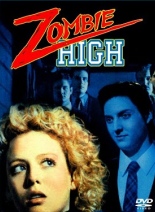
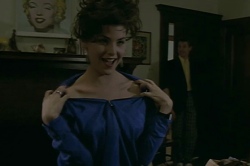 Despite acknowledging the comic possibilities of its plot in the third act, Zombie High ends up being a dry, flaccid movie that completely fails to take what it has and turn it into something entertaining. As a result, the few moments that do stand out seem to have happened more by accident than design. That it ends with a bizarre animated sequence apparently inspired by similar sequences found in Savage Steve Holland’s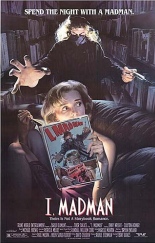
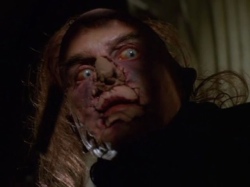 Much to the consternation of Virginia’s cop boyfriend (Clayton Rohner), the murders begin to play out in the real world. No one believes Virginia when she tells them it’s the work of this fictional Dr. Kessler, especially since he’s described as wearing a cloak over half of his face, and the scalp of a redheaded victim over his bald head.