

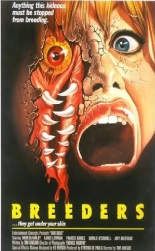
 Filmmakers like Tim Kincaid exist to prove to the world that it really does take more than a lurid plotline and a group of actresses willing to embarrass their families to make a decent exploitation movie. By that standard, Breeders would seem like a sure thing, but Kincaid’s incompetence is so persuasive and omnipresent, it robs the film of any guilty pleasure it might otherwise have allowed.
A group of H.R. Giger-wannabe aliens located beneath the Empire State Building have determined that only hot virgin female humans are capable of carrying their offspring to term without mutation, and proceed to impregnate a bunch of them by force. On their trail is a young detective and the female doctor tasked with treating the violated women. In a rather convenient plot contrivance, it turns out that — like every other female character in the movie — the good doctor has never known the touch of a man and, therefore, is a ripe subject for impregnation herself.
 Although the movie’s nonexistent budget does factor into its failure, the majority of blame rests squarely on Kincaid’s shoulders. While his filmmaking technique renders every frame in a squalid, ugly urban reality, his scripting sets the plot in a strange fantasy world where photographers tell bikini models they should eat before they continue their photo shoots, and 20-something city women spend their time snorting coke and exercising naked, but are still innocent enough to “save themselves” for marriage. Watching Breeders, it quickly becomes clear why Kincaid eventually gave up mainstream filmmaking for the much less demanding world of gay porn. —Allan Mott
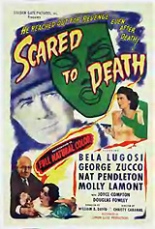
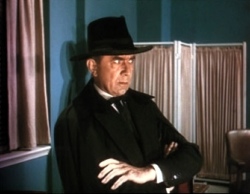 I know that filmmaking was still pretty antiquated back in 1947, but you’d think the filmmakers would have been smart enough not to begin with an autopsy if they wanted audiences to be surprised when the lead female dies at the end. You’d also think they’d have the foresight not to end with the line “She was … scared to death!” but they didn’t, and God bless them for it. —Rod Lott
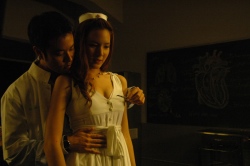 At this point, this goofy little film gets a bit more serious as directors Piraphan Laoyont and Thodsapol Siriwiwat go all surreal with the visuals. The hospital’s empty halls stop looking like ways to keep the budget down and start looking like corridors of the mind where bad things, and only bad things, ooze out of the walls or float along the ceiling.
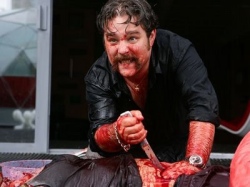 What sets it apart immediately is its concept, in that the housemates of UK’s Big Brother reality show are blissfully unaware of the zombie uprising outside their studio, until said uprising extends indoors. Suddenly, that week’s eviction ceremony is the least of the contestants’ worries.
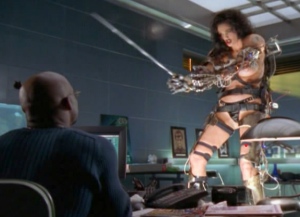 Deliberately cartoony, the movie makes no attempt at all to depict the authentic realities of game production, which wouldn’t be a problem if Huang hadn’t decided to rip himself off and use the film to re-tell the same story he told in his first and much, much, much better picture. By the time Monster ends with a newly jaded Clea DuVall (in the Frank Whaley role) schooling a new intern in the cold, cruel realities of the world, it becomes agonizingly clear that by his third film, Huang had already shot his entire creative wad, leaving him with nothing else to say.