
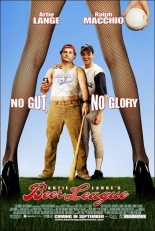
 What’s Tina Fey doing in a vehicle for a Howard Stern staffer? I know what Seymour Cassel’s doing — enjoying his face being planted in the giant breasts of a hooker — but Fey? The reigning queen of intelligent comedy? She has no business — not even at this one-line cameo level — being anywhere near a script that delights in throwing around “fucknuts” and “shitnuts.” Such is Beer League.
Also the co-screenwriter, Lange stretches to play a lazy schlub named Artie, who still lives with his mom (Laurie Metcalf), constantly smokes and drinks, and plays softball with his blue-collar Joisey friends — Ralph Macchio among them — in a two-bit league where he espouses such theories as “Practice is for fags.”
 On and off the field, Artie’s rival is mayoral candidate Mangenelli (Anthony DeSando, New Jack City‘s Frankie Needles), mostly because the guy once slept with the loose girl (Cara Buono, TV’s Mad Men) for whom Artie has a soft spot.
Beer League reeks of sitcom scripting, where every line is a pitch at which Artie is to swing. Whether he hits depends upon whether you find his shtick — potentially racist, sexist and homophobic, but certainly simple — to be funny; I don’t. The Lange litmus test may be the movie’s use of porn star Keisha as a slab of bachelor-party entertainment known as Pitching Machine, so named for shooting ping-pong balls from her vagina. Batter up? —Rod Lott
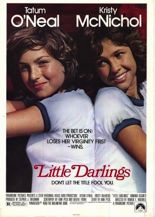
 In what amounted to a 1980 casting coup, the film stars Academy Award winner Tatum O’Neal and two-time Emmy winner, Kristy McNichol (who just happened to be my first celebrity crush when I was 8 years old) as the titular darlings. O’Neal is Ferris, the rich girl, and McNichol is Angel, the tough girl; they quickly become summer-camp rivals and compete to “become women” by pursing Armand Assante and Matt Dillon, respectively.
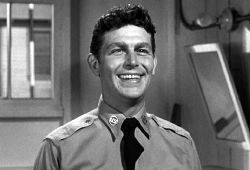 If this sounds familiar, it’s because Griffith used the concept as the basis for his Mayberry spin-off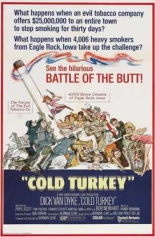
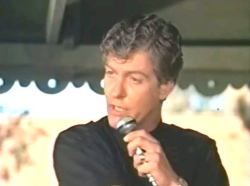 The locals are wary. The smokers are upset they’re the only ones asked to make a sacrifice, while the town’s right-wing coalition worries such a collective effort reeks of old-fashioned communism. Both groups eventually are persuaded by the reverend’s eloquence and — in the right-wingers’ case — the chance to form an authoritarian militia dedicated to keeping fellow citizens from lighting up. The town soon earns national media attention (as represented by the classic comedy duo Bob and Ray) and profits from the exposure, but at what cost?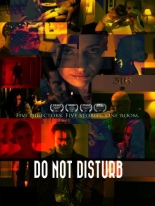
 During a student trip, a white gay guy has to room with a black straight guy. Nothing happens. I don’t mean sexually — I mean nothing happens. (At least the movie is consistent.) Finally, there’s a two-parter (seemingly to stretch the film to its big, bad feature length of 69 minutes) in which a guy thinks he’s going to get his rocks off, but instead gets his kidney stolen.