
Category Archives: Comedy

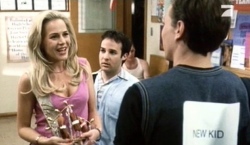
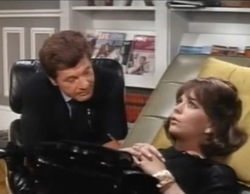
Little Darlings (1980)

Little Darlings is a film that could reasonably only have been made in the period that marked the end of the ’70s and the beginning of the ’80s. This is because, like American Pie, Little Darlings is a film about teenagers making a bet to see who will be the first to lose their virginity, but unlike American Pie, it’s teenage girls who are depicted making this life-lesson-in-the-making wager.

That distinction should be enough to scare studios away from remaking it, but what truly makes it a product of its time is an earnestness and sincerity that bears no relation to the kind of movies Hollywood makes in today’s cultural climate, where 15-year-olds are allowed to dress like porn stars, so long as their hands sport a purity ring. Little Darlings is a flawed film, but one which approaches its potentially icky plot with far more care and respect than you’d ever assume based on description alone.

In what amounted to a 1980 casting coup, the film stars Academy Award winner Tatum O’Neal and two-time Emmy winner, Kristy McNichol (who just happened to be my first celebrity crush when I was 8 years old) as the titular darlings. O’Neal is Ferris, the rich girl, and McNichol is Angel, the tough girl; they quickly become summer-camp rivals and compete to “become women” by pursing Armand Assante and Matt Dillon, respectively.

Darlings‘ two female screenwriters clearly were interested more in Angel, as her story gets much more screen time, to the point that Ferris almost becomes a supporting character, but that’s probably a good thing since McNichol’s performance is the highlight and by far the best reason to search for what has now become a difficult film to find, despite its original box-office success. —Allan Mott

Buy it at Amazon.

No Time for Sergeants (1958)

Thanks to his legendary TV portrayals of Andy Taylor and Ben Matlock, everyone associates Andy Griffith with the small screen, but movie buffs would be wise to make the effort to seek out the films he made before he became everyone’s favorite single dad/small-town sheriff. Chances are, you’re at least familiar with his dramatic debut in Elia Kazan’s A Face in the Crowd (where his dark performance as TV host Larry “Lonesome” Rhodes is more frightening now than it was in 1957), but you’d do just as well to begin with the following year’s service comedy No Time for Sergeants.

A film adaptation of a play based on a book, No Time for Sergeants casts Griffith as Will Stockdale, a poor Georgia farm boy drafted into the Air Force. Like Forrest Gump after him, Stockdale has a knack for transcending his ignorance and the cynicism of those surrounding him, jumping serenely from situation to situation with a goofy smile on his face, while everyone else in his vicinity suffers for their sins. No one suffers more than his sergeant, Orville King (Myron McCormick in an Oscar-worthy comedic performance), whose longing for a nice, quiet life is constantly shattered by Stockdale’s innocent shenanigans.

If this sounds familiar, it’s because Griffith used the concept as the basis for his Mayberry spin-off Gomer Pyle, U.S.M.C., in which Jim Nabors’ mechanic character assumed the Stockdale role. Watching No Time for Sergeants, however, it’s clear that Griffith was better-suited to play the part.

The movie’s stage roots remain evident throughout, but this does little to lessen its enormous entertainment value. The talented cast (which includes Don Knotts in one scene that pairs him for the first time with his future TV partner) easily rises above some of the film’s more predictable set pieces, earning genuine laughs. —Allan Mott

Buy it at Amazon.

Cold Turkey (1971)

The first and last directorial effort of legendary TV producer Norman Lear (All in the Family), 1971’s Cold Turkey lacks the bite of Robert Altman’s Nashville or the verisimilitude of Michael Ritchie’s Smile, but it suggests Lear could have become as gifted a cinematic satirist as either, if he had wanted. Like the best comedies of the era, the movie mixes genuine laughs with incisive social commentary, much of which feels even more relevant now than it must have 40 years ago.

Dick Van Dyke stars as an ambitious reverend stuck in the dying town of Eagle Rock, Iowa. His only hope for escape is that the government might open a munitions plant in the area, but that’s dependent on the town significantly improving itself to deal with the influx of people such a project would bring. Desperate, he and the town’s mayor (Vincent Gardenia) jump at the offer dreamed up by Big Tobacco lobby ad man Bob Newhart to pay $25 million to any town that can convince its entire population to quit smoking for a whole month.

The locals are wary. The smokers are upset they’re the only ones asked to make a sacrifice, while the town’s right-wing coalition worries such a collective effort reeks of old-fashioned communism. Both groups eventually are persuaded by the reverend’s eloquence and — in the right-wingers’ case — the chance to form an authoritarian militia dedicated to keeping fellow citizens from lighting up. The town soon earns national media attention (as represented by the classic comedy duo Bob and Ray) and profits from the exposure, but at what cost?

Lear mines comedy gold out of his characters’ greed and uniquely American political views. As darkly absurdist as the climax may be, it seems like a mild stretch away from what actually would happen if this scenario played out in real life — his only real misstep being the inclusion of an actor in a truly terrible Richard Nixon mask in place of a fictionalized president. Beyond this, Cold Turkey is significant for featuring the first musical score composed by Randy Newman, whose beautifully cynical theme song, “He Gives Us All His Love,” sets the tone perfectly. —Allan Mott

Buy it at Amazon.

Do Not Disturb (2010)

Do Not Disturb is a microbudgeted, all-hands-on-deck affair in which some actors dabble as directors and whatnot for an anthology film. Furthermore, the structure is experimental and even improvisational. They should not have bothered. Despite a fine concept — five stories set in Room 316 at a hotel — it’s one of the worst-executed films I’ve ever seen, making Four Rooms look like The Four Feathers by comparison.

First, a sad sack of a man (Harris Goldberg) hires an escort (Maureen Flannigan, Teenage Bonnie and Klepto Clyde) to read his eulogy while he lay in bed. Hysterical, no? No. Next, skeevy, flight-suited Eric Balfour (Skyline) meets his love, Lindsay Pulsipher (the girl in True Blood who looks like she’s 12), and it turns into nonsensical sci-fi with lizard tongues and marked impatience for the viewer.

During a student trip, a white gay guy has to room with a black straight guy. Nothing happens. I don’t mean sexually — I mean nothing happens. (At least the movie is consistent.) Finally, there’s a two-parter (seemingly to stretch the film to its big, bad feature length of 69 minutes) in which a guy thinks he’s going to get his rocks off, but instead gets his kidney stolen.

Wrapping this ball of bullshit from start to finish are interludes with Diva Zappa as a new maid. The actors really aren’t the problem — it’s all in the writing. Not a single joke is funny. Not a single story is interesting. Not a minute went by that I wished I were doing anything else but suffering through this. Do Not Disturb? Do not watch. —Rod Lott

Buy it at Amazon.

The Uh-Oh! Show (2009)

Herschell Gordon Lewis, aka the Godfather of Gore, has still got it! By “it,” of course, I mean goofy jokes, amateurish acting, not-much-better direction, loads of gross-out shots and generally dirt-cheap production values, but if it all adds up to pure entertainment, who cares? The Uh-Oh! Show is the end of that equation. I kinda loved it.

Only Lewis’ second film since 1972, The Uh-Oh! Show is a schizophrenic comedy centered around a demented game show of the same name, in which correct answers garner priceless prizes for its contestants, but also in which incorrect answers take limbs away from them, courtesy of one Radial Saw Rex, a large, African-American man who uses his electric tool like a phallus. The body part to go is chosen by a spin of the Wheel of Misfortune. No anesthetic is offered.

Producers want to bring the hit cable series to network prime time, but not without changes that greatly upset host Jackie (Brooke McCarter, Thrashin’). Meanwhile, a nosy reporter (Nevada Caldwell) wants to expose the show for the people-killin’ vehicle it truly is, and Uh-Oh! somehow morphs into a quasi-anthology that turns fairy tales into splatter stories.

Supplemented with boobs, boners and buckets of blood, The Uh-Oh! Show also comes packed with oodles of Lewis’ charm, evident from the start as he essentially hosts the film itself, sometimes commenting on how terrible it is. But his brand of terrible is different from other kinds of terrible, in that it translated to insanely watchable. I laughed a lot in its 88 minutes, all with it, as opposed to at it. Those with strong stomachs and an affection for his glory days of Blood Feast should do the same. —Rod Lott

Buy it at Amazon.