Category Archives: Action

Fantomas (1964)

While based upon the French anti-hero created in 1911, the 1964 incarnation of Fantomas seems more influenced by 007. As portrayed by Jean Marais (Jean Cocteau’s Beauty and the Beast), the master criminal trades the top hat for a proto-Blue Man Group visage as a man-of-a-thousand-faces supervillain set to rival Dr. No and Auric Goldfinger in all things deadly and dastardly.

Arriving with a pair of OSS 117 secret-agent flicks already under his belt, director André Hunebelle gets the hardly gauche Gaumont picture going with a prologue ripped straight from the pulps, as a disguised Fantomas makes off several million francs of jewelry by “paying” with a check written in disappearing ink.

Two people in particular are intrigued by this brazen crime. One is the hotheaded, bald-headed Commissioner Juve (the delightful Louis de Funès, The Mad Adventures of Rabbi Jacob), eager to bring the madman to justice. The other is Fandor (also played by Marais), a newspaper reporter eager for a good story — eager enough to make it up, complete with fake photoshoot, with the help of his decorative girlfriend (Mylène Demongeot, The Giant of Marathon).

Unamused at the front page that follows, Fantomas has the journalist kidnapped and brought to his underground lair, laden with high-tech spy-fi gadgetry (where do these evil masterminds find their contractors?), and explains a few things to his captive:
• He wants to control what the press writes about him. (How prescient!)
• He can re-create human skin, from face to fingerprints, which he dons to perpetrate felonies under the guise of upstanding citizens — like, say, Fandor.
• He “may kill people, but always with a smile.”

For fans of crime thrillers coated in camp, that smile may prove contagious throughout, as Fantomas-as-Fandor pulls a daring diamond heist during a rooftop beauty contest in broad daylight. As Fantomas-as-Juve terrorizes Paris with acts of random violence. As Fantomas gives Tom Cruise a run for his face-switching, Mission: Impossible money. As James Bond-ian submarines and helicopters come into play. As a silly slapstick car chase grows increasingly inventive until it’s nearly worthy of Buster Keaton.

Full of action, light of heart and swift of feet, Fantomas begins and ends as a good caper should: fun. One could argue it doesn’t end at all; rather, it presses pause on its own cat-and-mouse tale, as if awaiting the projectionist to switch reels and start the sequel (Fantomas Unleashed, unleashed the next year by the same team), but assuming you’re already “in,” you’ll hardly mind the inconvenience. —Rod Lott

Get it at Amazon.

Dixie Dynamite (1976)

In the Deep South, because where else, Tom Eldridge (Mark Miller, Blonde in Bondage) runs a moonshine business on his 7.5-acre property … until the town sheriff (Christopher George, Mortuary) shows up to throw a wrench in the works. As Tom panics and tries to flee Johnny Law, he’s shot dead by a lummox of a deputy (Wes Bishop, who wrote and produced the film).

Daddy’s death is the first domino in a string of troubles in motion for Tom’s two daughters, Dixie (Jane Anne Johnstone) and Patsy (Kathy McHaley). They face eviction from their home, thanks to the local greedy banker (R.G. Armstrong, Evilspeak), and can’t find a job — cue the montage of the ladies walking past multiple “NO HELP WANTED” signs. When close family pal Mack (Warren Oates, Stripes) fails to win the $1,000 grand prize at The Moto-Cross Big Race — seriously, that’s what it’s called — the Eldridge girls decide to resort to the ol’ standby. No, not prostitution: revenge.

A knee-jerk reaction would be amazement that Dixie Dynamite works as well as it does. But Bishop and frequent director Lee Frost made B-movie magic almost every time at bat in their long and fruitful partnership, which included horrors that shocked (Race with the Devil), schlocked (The Thing with Two Heads) and stripped (House on Bare Mountain). This proto-Dukes of Hazzard entry into the hicksploitation contender is no different. In fact, it’s one of the better ones, comfortably forming a wheel-centric companion to Chrome and Hot Leather, Frost/Bishop’s 1971 biker pic.

Plus, with Oates as something of a third-lead ringer, Frost/Bishop were able to anchor the film with more talent than the duo’s lesser efforts. If Dixie Dynamite holds any sort of surprise, well, it actually has two. The first is that one of the racing cyclists is Hollywood legend Steve McQueen; don’t bother looking for him, because he’s hiding uncredited underneath a helmet. The other, larger surprise is not that Johnstone and McHaley had zero movie credits before this, but that they had zero afterward, as both women are radiant. The screen clearly adores them, making their vanishing act from it all the more criminal. And speaking of, the final reel’s heist sequence cleverly pulls a Quick Change/Inside Man trick years before either had the chance. —Rod Lott

Get it at Amazon.

The Real McCoy (1993)

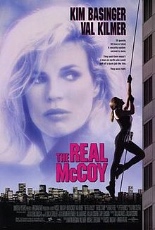
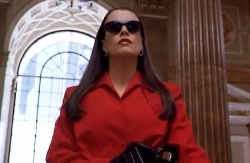
One of the great good films to come out of the 1990s action boom, this Russell Mulcahy caper stars Kim Basinger as Karen McCoy, quite possibly the hottest felon ever to walk out of a woman’s prison, complete with makeup and hair did. After a multiyear rap for a botched burglary of an Atlanta bank — complete with high-tech gear that must’ve cost more than she would’ve made from the heist – she’s now looking to reconnect with her son and walk the straight and narrow.

But, of course, because Kim Basinger is so hot, every man she comes across wants to wrap their slimy tentacles around her, especially her grimy parole officer, who I’m pretty sure was in plenty of Ernest P. Worrell flicks. Add in the equally slimy Terence Stamp, as a crime lord clad mostly in a terrible Southern accent, who kidnaps her kid, leaving her with no other option but to return to the robbing life. Along the way, she meets affable J.T. (an affable Val Kilmer), a bumbling driver who seems out of place in this movie, but oh, well, it was the ’90s and we threw caution to the wind and hired Val Kilmer whenever we could.

Watching The Real McCoy for the first time in 20 or so years, it’s a bit strange now to watch these Joel Silver, Andrew Vajna, Don Simpson or, in this case, Martin Bregman-produced flicks in the era of #MeToo, because throughout most of the movie, Basinger takes beating after beating from various men and never once fights back — until the very end, of course, when she all of a sudden unleashes kung-fu kicks left and right.

A lot of this probably wouldn’t fly today and you’d have to wonder if Basinger, whose star has waned a bit, would do it all differently today. And while it would be easy to call for a remake, this was quite the bomb at the box office, earning about $6 million in receipts. Maybe it didn’t fly so well back then, either? —Louis Fowler

Get it at Amazon.

Texas Detour (1978)

Don’t mess with Texas, as the state’s motto goes. Which is not to say Texas won’t mess with you.

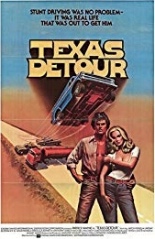
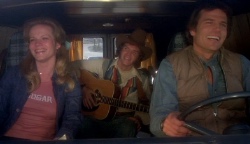
So it goes for Clay McCarthy (Patrick Wayne, Sinbad and the Eye of the Tiger), driving from California to Tennessee in his souped-up van so he can do his stuntman work on a location shoot in Nashville. Tagging along are brother Dale (Mitch Vogel, The Reivers), because he wants to be a country music star, and sister Sugar (Lindsay Bloom, Sixpack Annie), because the primary antagonist needs someone to leer at and harass. Unfortunately, no sooner have the opening credits finished when a truck of redneck prison escapees forces the McCarthy siblings off the road and robs them of their wallets and wheels. Welcome to the Lone Star State, ya hear? Texas Detour might as well point them to Macon County.

Help — and eventual trouble — arrives in Beau Hunter (Anthony James, Soggy Bottom U.S.A.), a lanky, petulant rich kid who gives them a ride and a roof while they wait for the town’s apathetic sheriff (R.G. Armstrong, White Line Fever) to locate Clay’s van, provided he ever starts searching. Beau introduces the McCarthys to his sis (Priscilla Barnes, Mallrats), who goes gaga for Clay, and his dad (Cameron Mitchell, Gorilla at Large), who does not. Needless to say, the West Coasters learn about Southern-fried “justice” the hard way — none more so than the sweet Sugar, but judging from the weight writer/director Howard Avedis (Mortuary) gives various misdeeds, the theft of Clay’s van ranks higher than sexual assault.

Given that Texas Detour is an action movie from the era in which American culture fetishized vans, color us nonplussed. Story doesn’t propel Texas Detour forward, and yet Avedis keeps it moving in that direction, straight and steady. As immensely pleasurable as its leads are genial, the hicksploitation pic comes vacuum-packed with such drive-in-friendly confections as a motorcycle race, a car chase, Barnes’ bare chassis, a decent-enough Flo & Eddie soundtrack, a bar decorated with clown paintings this side of John Wayne Gacy and — what else? — Cameron Mitchell being all Cameron Mitchell, cigar ash on his shirt like so many flecks of Cheetos. —Rod Lott

Deadly Trigger (1985)

Real-life not-twin sisters Audrey and Judy Landers play respective twin sisters Polly and Ruth Morrison in Deadly Trigger. It also features special guest star from Das Boot, Jan Fedder. Mind you, that’s how the actual movie actually credits him in its actual opening moments, which is one of your first signs that something about this double-vanity project is … off. Another tell is that a script credit is nowhere to be found.

Many more red flags unfurl; please be patient.

No sooner are happy, sexy sisters Polly and Ruth picnicking in a New York park and talking about moving to Germany to work in a bank and take pictures, respectively, and — bam — they’re in Germany and wearing sparkly dresses and singing in a local nightclub, allowing for music numbers that you just know the Landerses had written into their contract. One night, the girls are attacked in a parking garage, have their shirts ripped off and are raped, all at the behest of laughing thug Harry DeRomeo (aforementioned special guest from Das Boot, Jan Fedder) and his coke fingernail. Making this all the more is tragic is that Ruth, three months pregnant, miscarries and tries to kill herself by jumping out the hospital window. In the fall, Ruth is paralyzed, confined to a wheelchair and presumably testing the bonds of sisterly love by putting Polly on wiping duty.

Alternately known as Deadly Twins, the movie then becomes a rape-revenger — or at least once-and-only-once director/producer Joe Oaks’ approximation of the exploitation staple. Polly teams with a police detective to frame DeRomeo for stealing a cash payroll from a steel mill. Their plan does not make sense, but does DeRomeo flee, kidnap a kid at gunpoint and shout “It’s April Fools’ Day, guys. Off with your pants! Off!” at two cops? He does.

Does he chase an army man with a bulldozer? Yes.

Is said army man outwitted by said bulldozer and deposited into a lake? Most certainly.

Will you see DeRomeo duke it out with a guy while going through an automatic car wash? You will, but don’t get your hopes up — Oaks did not spend the extra two bucks for a spritz of tire sheen.

In fact, despite Deadly Twins being shot on video, Oaks somehow didn’t spring for recorded sound. This entire enterprise in VHS Eurotrash is not only dubbed, but dubbed very, very poorly, digging to a level of incompetence that is nearly indescribable.

But I’ll try: It’s as if Oaks had never seen a movie before, and only had heard about the concept in passing, yet decided to give it the ol’ community-college try. Then he either forgot to mic everybody or accidentally erased the soundtrack while playing with a RadioShack magnet kit too close to the camera. Thus, he was forced to re-create all the audio, but by then, everyone long had thrown away the script, so they went off memory, but everyone had received at least two concussions in the interim.

You have no idea how close that explanation is.

Lovely and talented, the Landers sisters were TV mainstays in the late 1970s and early ’80s — prime time to be a vital part of my pre- to pubescent dreams. I was partial to Judy (Hellhole) purely for curvaceous reasons, but Audrey (Bachelor Party 2: The Last Temptation) is the better actress, which may be why she gets the lion’s share of screen time. However, their infamous Playboy spread from 1983 exhibits more life than either sibling does here.

Where was Andy Sidaris when the Landers sisters — and the world — needed him? —Rod Lott

Get it at Amazon.