
All posts by Louis Fowler

Pervertissima (1972)

As much as it sounds like a ribald musical notation, Pervertissima instead takes us into the world of sleazy French journalism as a comely young girl with a possible herpes sore on her upper lip and absolutely no reporting skills is sent into Gay Paree for a piece on “Love in Paris.”

Admitting she’s a virgin to the overt sexaholics on the paper’s staff, she is sent to brothels, dance clubs and an avant garde sex ritual, none of which has anything to do with love, but I guess I see the point. What I don’t see the point of is how she ends up in the clinic of a mad scientist who dreams of ruling the world like a god — his words — through ineffectual mating experiments.

And as jarring as the switch from a low-rent skin flick to a no-scares horror movie is, even that is nothing compared to the horrendous sexual harassment the females of the film go through, from the boss randomly kissing secretaries quite passionately to a rapist reporter who, in the middle of a meeting, tries to get off on our lead actress. Maybe Mad Men was right?

Regardless, this bizarre mélange of fragrant trash is best credited to director Jean-Louis van Belle, known for equally de-rousing flicks like Forbidden Paris, The Lady Kills and Made in Sex, all of which sounds like great names for terrible New Romantic bands. —Louis Fowler

Get it at Amazon.

Gemini (1999)

When I was around 12 years old, almost every weekend I’d walk the mile up the road to the closest Blockbuster and rent three or four movies, with its cult selection the best thing I had ever since Sound Warehouse shut its doors forever.

As basic as the small group of movies were, it did have the Shinya Tsukamoto film Tetsuo: The Iron Man, a cyberpunk masterpiece of gray-matter metal, complete with a massive drill as a penile substitute. Shocked and awed, I copied the film on my VHS setup and watched it repeatedly for the next year, becoming a big fan of Tsukamoto in the process.

While I have seen many of his films since, the pseudo-period piece Gemini has always escaped my eyes until now, ultimately revealing his most challenging film yet. Based on the short story by Edogawa Rampo, it is set in the Japan of 1910 as former military doc Yukio (Masahiro Motoki) has settled down, now practicing private medicine and married to the charming amnesiac, Rin (Ryo).

With a plague destroying the surrounding slums, Yukio finds his upper-crust world crumbling when he saves a drunk politician instead of a poor mother and her baby. As a somersaulting man in dirty robes invades his house and kills his parents, Yukio soon finds himself stuck at the bottom of a well as the homeless villain — who looks exactly like him, by the way — takes over his life above.

While trapped, Yukio reverts to an animal-like state while the interloper, named Sutekichi (also Motoki), seduces said wife as we learn of the impoverished life and lusty connection they once had as well.

Utilizing a well-versed combination of classic filmmaking skills and industrial know-how, Gemini is an uncomfortable film, possibly more than any of Tsukamoto’s other kinetic flicks, if only for his ability to have his already-unlikable characters mechanically transform into even worse human-sized kaiju who can do more destruction than Godzilla and Gamera combined.

It’s something that, unexpectedly even for this type of film, is on full display here, both physically and emotionally. It’s pure grotesquerie that, if you’re able to connect with it, can leave anyone fully unsettled, just as much when I saw Tetsuo all those maggot-riddled years ago. —Louis Fowler

Get it at Amazon.

Strong Arm (2020)

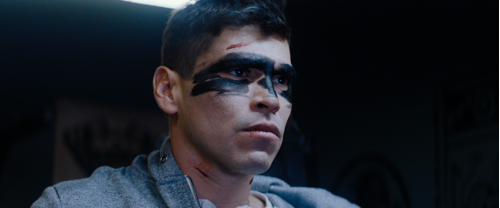
At the risk of earning a Motor City-style ass-kicking from the assorted toughs who make up the cast and crew of the independent film Strong Arm, I have to publicly admit that, to me, the movie is not very good.

While the plot regarding a woman found raped and murdered — only to have her brother track down the three random gang members and their porn ring — should be enough to fill a 70-minute movie, I was surprised how much of the running time is actually filled with scenes of the street whizzing by outside a car window as a D-level group plays on the soundtrack.

What story there is revolves around war vet Jake Ramsey, a guy with apparent PTSD and constant heavy breathing when moving around, often grunting “shit” under his breath. From what I could gather, his sister is found raped and possibly murdered on the mean streets. His Detroit PD buddy fills him in on the possible perps: three gang members who stand around talking in badly recorded conversations.

There’s a bloody final battle that is a real downer, but I feel that was kind of the point of the flick. From grindhouse upstart Independent American Pictures, the film is given a faux-’70s look, with computer-generated film scratches and a plot full of violence, but with a very first-day-of-film-school need for a decent script or, at the very least, one where something actually happens.

That being said, I do applaud these guys for getting the movie done and look forward to seeing what B-movie madness they come up with next, hopefully improving on their formula. So please don’t beat me up. —Louis Fowler

Get it at StrongArm.com.

Sukiyaki Western Django (2007)

Takashi Miike (Audition) has always been an extremely divisive filmmaker, so it makes sense this ramen Western’s opening scene features Quentin Tarantino — America’s own cinematically disruptive director — gutting a raw egg fresh out of the belly of a snake before gunning down a few overacting varmints.

And even though this whole introduction does little for the rest of the film, it does provide a red-stained and sin-staged sense of Japanese theatrical weirdness that anyone with the drawn-out wherewithal will experience over the next 98 or so minutes, Gatling gun and all.

A cynical homage to Sergio Corbucci’s Django — and the many nameless spaghetti flicks that came before it, as well as their Japanese originals — Sukiyaki Western Django stars Hideaki Ito as the nameless gunman who wanders into a small Nevada town ruled by two gangs: the white-clad Genji and the red-emblazoned Heike, both obsessed with the area’s gold and the power it brings.

Both sides want the expert marksman for their own purposes, but he’s playing them for his own vengeful needs and purposes, with Miike borrowing from the best of Western flicks and samurai films to tell his head wound of a tale. As you could guess, it all explodes in an extended final battle that practically tears the town to bloody shreds, save for a little boy who becomes … Django.

The only thing about this film is you have to have a bit of cooled patience to get to that bombastic ending. At times, Sukiyaki can drag itself down under the pitch-black weight of its own gory self-importance, but for me at least, that’s somewhat typical of many — and I do mean many — of Miike’s films. But here, it really seems more deserved than others. —Louis Fowler

Get it at Amazon.

Ozone (1995)

As a teenager, while most of my peers thought that George Lucas or Steven Spielberg were the end-all, be-all of filmmaking, I instead spent most of my free time repeatedly renting and always watching the shot-on-video flicks of Todd Sheets, Tim Ritter and, my personal favorite, Ohio’s J.R. Bookwalter.

Perhaps best known for the zombie epic The Dead Next Door, it was the 1995 movie Ozone where I believe he came into his own, crafting a hallucinogenic tale of clean cops and dirty mutants in their own war for the titular designer drug Ozone and its nightmarish effects.

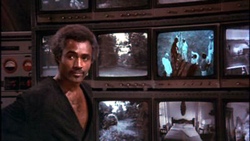
During an ambush with some drugged-out creeps, plainclothes policeman Eddie (former Cleveland Brown James Black) is injected with the mysterious narcotic. As he tries to track down the manufacturer, he begins to experience horrific drifts in and out of reality, including that of an underground fight club filled with Ozone-addicted monsters.

Designed by a grotesque blob in a basement with vague worldwide ambitions, the real reason why the drug has become so popular with maniacally obsessive users is more nefarious than expected, edging into dark religious territories I wasn’t anticipating.

While many of these backyard horror movies sitting on rental shelves were often more laughable than anything else, Bookwalter always seemed to strive for a look and feel that suited the very low budget instead of hindering it, oftentimes coming up with audacious films that played better than they really had any right to; Ozone exemplifies that.

In addition to Bookwalter’s direction, much of the film sets on Black’s broad football-player shoulders, forging an unheralded action hero plagued by demons, both literal and figurative. And while the film just exudes a ’90s sense of camcorder-based nostalgia, I realized it’s something that is sorely missed in these heady days of high-definition flicks shot and edited on a computer. —Louis Fowler

Get it at Amazon.