All posts by Louis Fowler

Jo Jo Dancer, Your Life Is Calling (1986)

In the midst of a freebase freakout, famed comedian Jo Jo (Richard Pryor) blows up his living room, as you typically do. Somehow, he’s taken to the hospital where, as he lays dying, his astral form steps out of his dying body and he wanders naked through the parking lot; good thing a limo is there to pick him up and, I suppose, clothe him.

Over the next 90 minutes, we’re taken through Jo Jo’s (nonfictional) life, starting as a child growing up in a whorehouse, to a teenager leaving home to work in a comedy club. By this point, it’s easy to see that Jo Jo Dancer, Your Life is Calling is semi-autobiographical, as then we’re treated to the drink, the drugs and the women plaguing and, ultimately, destroying Jo Jo’s (and Pryor’s) life.

While this would be a disastrous hour-and-a-half funeral dirge for many, Pryor makes sure there are just as many laughs as there are tears — a real feat, especially given the sensitive subject matter. Towing the dreamlike line between real life and real fantasy, Jo Jo Dancer, Your Life is Calling was a remarkably entertaining way for Pryor to tell his tale of comedic woe, especially in the wake of his self-immolation.

The lone film directed by Pryor, from a screenplay co-written with comedian Paul Mooney, it’s a lost cult classic that will probably never receive the timely due it truly deserves; as a matter of fact, I had to pick up Time-Life’s Ultimate Richard Pryor Collection to find a good copy of it. To be fair, I was going to get that anyway. —Louis Fowler

Get it at Amazon.

Fritz the Cat (1972)

Fritz the Cat, a countercultural icon based on the work of Robert Crumb, kind of proves that the counterculture really didn’t have that extremely large of a foot to keep on truckin’ through the ’70s. Ostensibly about a liberally fraudulent cat who loves to have as much unsolicited intercourse as possible, this animated film made — I’m willing to bet — far more Republicans than Nixon ever could.

In the typical fashion of director Ralph Bakshi, an extremely hit-or-miss filmmaker, we find Fritz hanging out in an anthropomorphized variation of New York City, getting high, having group sex and, I think, dropping out of school.

After a series of New York-based adventures, we follow him and a female dog (a bitch, get it?) to the deserts of California where, after a Nazi rabbit brutally beats a horse prostitute, Fritz hooks up with a terrorist organization to blow up a power plant, blowing himself up, with unsettling sexual results.

More a collection of art pieces than an actual linear story, Fritz the Cat seems to be made up of barely connected vignettes, done in the artistic stylings of early ’70s greeting cards. In between all of the horribly unsexual sex, the use of constant racial figures is most troublesome — for example, Black people are jive-talking crows — taking the film into Song of the South territory.

But that was the ’70s in America, I guess.

The first cartoon to be rated X, Fritz the Cat shouldn’t be banned, but it’s probably right where it deserves to be: a misfire and multicolor oddity that, honestly, could be mostly ignored and, thankfully, is. —Louis Fowler

Get it at Amazon.

Career Opportunities (1991)

While many people look to 1990’s Home Alone as the height of John Hughes’ Hollywood power, I look to the next year, filled with unsung flicks like Only the Lonely, Dutch and, at the top of my list, Career Opportunities, directed by TV’s Bryan Gordon; don’t worry, I haven’t heard of him, either.

The ultimate hipster by today’s standards, Jim Dodge (Frank Whaley) is the ultimate loser: Although over 21 years of age, he lives as home, is the town liar and, worse, starts a job at Target as the overnight janitor. As expected in these studies of arrested development, he goofs off at work, mostly by roller-skating in his boxers while wearing a wedding veil.

This all changes when he meets the alarmingly beautiful Josie (the alarmingly beautiful Jennifer Connelly), an emotionally impoverished rich girl who, apparently, fell asleep in the dressing rooms. Against all rhyme and reason, they fall in love. (Hey, it was the ’90s.)

The movie kind of falls apart in the third act when we’re introduced to two redneck crooks who are there to rob (?) the Target. As annoying as that might be for those who missed the pristine Hughes of the ’80s, it’s easy to forget the coasting Hughes of the ’90s, when comical crooks were a must.

Regardless, I’ve always loved this movie; even though it proved to be a Home Alone for the Gen X crowd that, obviously, had no time for it. Still, much of it worked, mostly due to the likable presence of Connelly and the sheer hope that, if I worked at Target, too, maybe I’d meet a girl like her.

Sadly, I worked at the local library instead, missing my chance. —Louis Fowler

Get it at Amazon.

Roh (2019)

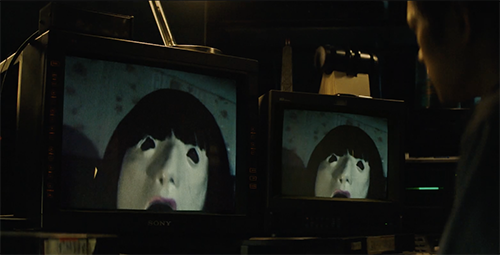
From the first few frames of the Malaysian horror film Roh (which translates to Soul), you’re surrounded with an intense form of backwoods dread that something is definitely not right. It continues throughout the entire running time, creating a beautiful form of subtle terror few films are able to keep up for as long.

A small girl with decaying features follows a brother and sister — who’ve just seen a deer hanging by its necks, mind you — to their ramshackle hut. Though suspicious, the sister tries to help the girl. But after the child gives a freaky warning that the whole family will die in a couple of dies, she expires herself in a cascade of blood, leaving the family to bury her and keep the whole thing a secret.

A secret, that is, until a creepy woman and an even creepier man are, well, creeping around their house, both closer to the dead-eyed dead girl than they will ever admit. As the family tries to desperately fight the sincerely spooky hauntings, by the end, we don’t know if we’re looking into a nightmarish daydream or a brutal reality you can never wake up — or worse, die — from.

In Roh, the scares easily move between wholly atmospheric surrounding to absolutely terrifying jump cuts — something that should be impossible for a first-time feature director. The so-called masters of horror in the West could take plenty of lessons from Emil Ezwan, because in the delicately scant running time of 83 minutes, he’s crafted a horrific new legend I’m surprised Americans haven’t tried to rip off yet. —Louis Fowler

Get it at Amazon.

Half Baked (1997)

Even though I am not a pot smoker and more than likely never will be, I have to admit I find marijuana comedies pretty dang funny.

Growing up on the starter drug of Cheech and Chong movies when I was a toddler, I have found the predicaments and solutions by cinematic stoners and their kind bud to usually be one of the seven rings of true comedy, with 1997’s Half Baked fitting in there nicely, a truly stupid film packed with truly stupid laughs.

Thurgood Jenkins (Dave Chappelle) is the quintessential weed enthusiast with a janitorial job and a circle of bros who practically stay stoned. When one of his crew gets arrested for accidentally killing a police horse, they decide to become drug dealers themselves, thanks to a special strain of sativa they get from Thurgood’s job at a laboratory.

Becoming the hottest dope dealers in the New York City area, they soon gain the unwanted attention of notorious criminal Samson Simpson (Clarence Williams III), leading to an absolutely minor gang war — the kind that’s probably expected in a movie like this, i.e., the pot-influenced equivalent of a Three Stooges pie fight.

Produced by Robert Simonds (the money man behind SNL-related classics like Billy Madison, Joe Dirt, and, uh, Corky Romano), Half Baked is definitely a product of the illegal times. With legalization only blocks from my house now, it seems almost quaint; still, the scenarios, some 20 or so years later, bring the laughs.

Although, I imagine if I did smoke weed, I’d probably be one of the pot archetypes in the movie, finding all of this stupid — and not in a good way. —Louis Fowler

Get it at Amazon.