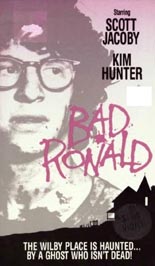
 The first thing I noticed when I first watched the cult made-for-TV thriller Bad Ronald was that its catchy and evocative title isn’t entirely apt. While the titular character does a bunch of stuff that accurately can be described as the opposite of good, he is also — as portrayed by Scott Jacoby (Return to Horror High) — far too sympathetic to dismiss as just another horror villain, which ultimately gives the movie a sense of pathos you don’t usually find in the genre.
A sensitive, imaginative young man with a fiercely loyal and protective mother, Ronald finds himself wanted by the police after he angrily lashes out at a taunting young neighbor girl and causes her accidental death. Terrified that he might be sent to prison, his mother (Planet of the Apes’ Kim Hunter in a typically great performance) hatches a plan that involves their turning their downstairs bathroom into a secret hiding place where Ronald can stow away until its safe for the two of them to leave town.
 The plan goes awry when she dies during a necessary gall bladder operation and the house is sold to Dabney Coleman, Pippa Scott and their three cute blonde daughters. Already a bit loopy from his enforced isolation and the news of his mom’s death, Ronald becomes convinced that the youngest daughter is the princess of Atranta, the fantasy kingdom that has become his escape away from his terrible reality.
At just 70 minutes, Bad Ronald never has time to be boring and, in fact, probably could have benefited from an extra 10 minutes of character development to better justify the act of violence that sets the plot in motion. Beyond that, it is a surprisingly moving film with a highly effective premise and definitely one worth seeking out. —Allan Mott
 On its surface, it may be easy to confuse
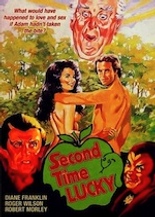
 Director Michael Anderson’s career had come a long way since he was nominated for a Best Director Oscar for 1956’s
  Ultimately, it is this young woman (Diane Franklin) who ends up giving the movie its only reason to exist. Indifferently directed by Anderson on an Australian sex-comedy budget, Second Time Lucky is less a cohesive narrative than a good excuse to see a very attractive lady-person in some state of undress every 10 minutes.
 Unfortunately, as written, the victims are all so clearly guilty of their “sins,” it’s hard not to assume the filmmakers are on the killer’s side, which is especially disturbing when you consider that the “pervert” The Redeemer punishes is simply a woman in a normal (albeit clandestine) lesbian relationship.