All posts by Rod Lott

Dawn (2022)

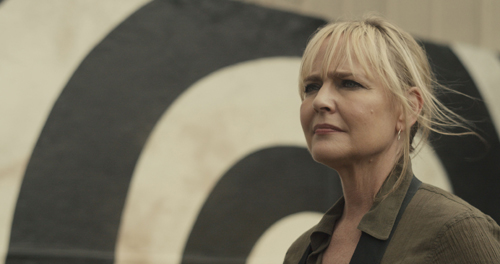
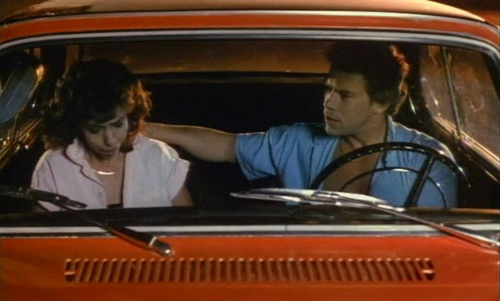
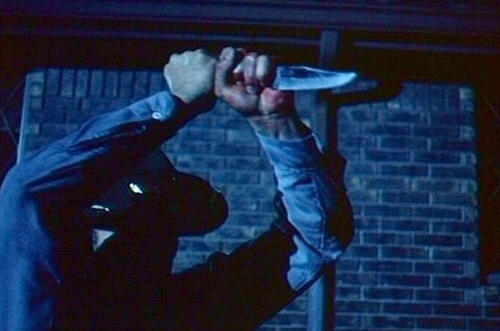
As the near-robotic, deplorable driver-for-hire Dawn of Dawn, Jackie Moore (Verotika) is all crazy-eyed and lead-footed, picking up rides and taking their lives as her fare. (Among her early victims is Eric Roberts, in one of 37 movies he’s made as I wrote this sentence.) Then she uploads the homicidal results to her dark-web channel, as one does.

Nearly all of Nicholas Ryan’s directorial debut follows the backseat travails of a newly engaged couple: salesman (Atlantic Rim: Resurrection’s Jared Cohn, redefining “simpering”) and a first-grade teacher (Sarah French, Death Count). Dawn menaces them with mind games — not to mention schools them on wealthy white privilege — before threatening bodily harm. Neither spouse-to-be (Cohn especially) is interesting enough to follow for a feature. Nor is Dawn.

“The audience loves tension and drama,” says Dawn, yet her namesake film, despite a slick look, is inert. Unless you’re Locke, constant talking in a moving car makes for sluggish, über-dull cinema. Halfway through, respite looks to arrive when Dawn pulls into a gas station, where a demented fan (Nicholas Brendon, Psycho Beach Party) asks for the honor of being stabbed to death, but it’s a nonsensical scene. Dawn fulfills his wish, but not ours. Later, she’s pulled over by a sheriff (Michael Paré, Puppet Master: The Littlest Reich). He’s the best part of the movie, so of course he’s swiftly dispatched.

For a raucous rideshare gone wrong that achieves everything Ryan aims for — thrills, dark humor, social commentary — see Spree. —Rod Lott

Get it at Amazon.

Unmask Alice: LSD, Satanic Panic, and the Imposter Behind the World’s Most Notorious Diaries

In 1981, my fifth-grade homeroom teacher postponed class to warn us about a clown seen around Oklahoma City school playgrounds. “If he offers you candy or stamps with cartoon characters on it, don’t take it!” she said sternly. “It’s laced with acid.”

We were scared straight, plus downright scared. Children, parents, teachers and authority figures nationwide were. The clown didn’t exist, but the “satanic panic” did, and kid-friendly tabs of LSD were one whispered method of indoctrination. As Rick Emerson delineate in his new nonfiction book, we have the bestselling “diary,” Go Ask Alice, to thank. Or “thank,” because while the book helped some YA readers, its anonymous author, Beatrice Sparks, lived on lies to fuel a delusional ego and desperate need for attention, no matter the lives she destroyed and discarded along the way.

I’ve never read Go Ask Alice or seen the 1973 Emmy-nominated telepic it spawned, starring William Shatner and Andy Griffith. But being familiar with both and living through the resulting hysteria that pilloried everything from rock music to Dungeons & Dragons, Emerson’s Unmask Alice: LSD, Satanic Panic, and the Imposter Behind the World’s Most Notorious Diaries held an undeniable lure. It’s unmissable.

Published in 1971, Go Ask Alice recalled a normal suburban teenage girl’s descent into drugs and ultimately death, via the journal entries she left behind. America was horrified — and gripped. The big problem is, it was all made up, which Sparks failed to inform her publisher, not that the publisher did anything about all the red flags. The bigger problem is, she didn’t stop there.

Emerson uses Unmask Alice as a triple-purpose biography, charting three lives: that of Sparks; her book, formed from such external cultural forces as Art Linkletter, Charles Manson and Richard Nixon; and poor Alden Niel Barrett, whose abrupt existence was essentially stolen by Sparks for her family-wrecking follow-up. While Emerson does a terrific job in chasing each inexorably linked strand to its end, sharing Barrett’s story — and restoring the reputation of him and his parents — appears to hold the most amount of passion for the author.

Emerson’s hit-the-pavement research keeps Unmask Alice grounded in facts while a fiction-like knack for storytelling never fails to drive you forward. He employs what I call “the Dan Brown method” of structuring chapters, often limiting them to a super-short three or four pages. That way, to paraphrase Lay’s Potato Chips tagline, betcha can’t read just one. I sure couldn’t. —Rod Lott

Get it at Amazon.

Bigfoot or Bust! (2022)

Exclamation his, Jim Wynorski’s Bigfoot or Bust! packs three scenarios — note I didn’t call them “stories” — into one lame-brained comedy. So similar are they, “Never the twain shall meet” need not apply:
• A large-breasted woman whose father died in a Bigfoot hunting expedition embarks on a Bigfoot hunting expedition.
• A large-breasted doctor and her large-breasted friends embark on a Bigfoot hunting expedition.
• Three large-breasted women from the future embark on a Bigfoot hunting expedition. But mostly for his giant turds.

Across all, the “joke” is Bigfoot (some guy in a Harry Knowles costume) is always around, usually peepin’! And the ladies don’t notice on account of their large breasts, ha!

For this sad, tired exercise, Wynorski has cast The Expendables of top-heavy starlets: Becky LeBeau, Gail Thackray, Rocky DeMarco, Cindy Lucas, Christine Nguyen, Tane McClure, Antonia Dorian and Deborah Dutch. All but Lisa London hail from booby movies of his past, including but by no means limited to Sorority House Massacre II, The Bare Wench Project and Sharkansas Women’s Prison Massacre.

While Bigfoot or Bust! digitally blurs out any instances of nudity, it remains T&A-minded, costuming the women in bikinis, bras and other push-up, skintight contraptions designed to ac-cent-tchu-ate the positive. Because having no story requires heaps of padding, the shot-on-video flick asks them to jump on a trampoline (shown in slow motion, revealing an unforgivable frame rate) and perform endless stripteases, one of which begins in a row of Coldwater Canyon Park port-a-potties.

If you believe Thackray and LeBeau doing childish impressions of apes will be the most embarrassing moment, hang tight for Bigfoot bustin’ a move as the girls DJ some rockin’ tunes. And for the sped-up film. And for the cartoon sound effects. And for the fart noises. And for Wynorski pausing the movie to get pied in the face. And for the laugh track. (Speaking of, I found one genuine laugh: a surreal, single-shot throwaway cameo by internet urban legend Momo.)

Many online reviews and comments object to the women being “old” and, therefore, “unattractive.” That’s ridiculous. If you’re going to knock them for anything, it should be their acting. That said, Lucas possesses real comedic timing, and I think Nguyen actually can act. Among all 77 minutes, a great deal feels improvised. I long for the days when Wynorski made real movies with real plots, like — as the cover art reminds — Chopping Mall and The Return of Swamp Thing. As he proved right out the directorial gate with 1985’s The Lost Empire, he’s perfectly capable of making a feature that’s sexy, funny and, yes, written.

Although not a Bigfoot movie completist, I don’t exactly turn one down when a screening opportunity arises. Following Bigfoot or Bust!, I may need to enact a no-go policy for any made after the 1980s. I’m sure everyone had a blast shooting this one, but it doesn’t translate to the viewer. The finale could not come soon enough. When it does, it taunts, “THE END?” Yes, Jim, yes. —Rod Lott

Get it at Amazon.

Kolobos (1999)

A classified ad seeks a quintet of participants for an experimental film. The project entails the five living together in a suburban house, their every move and conversation recorded “for VHS.” Selected are a narcissistic actress (Nichole Pelerine), a woman-hating hack stand-up (Danny Terranova), an academic sweater guy (John Fairlie), a socially withdrawn artist (future WWE Diva Amy Weber) and a riot grrrl type (Promise LaMarco). The latter works at Hot Diggity Dog, where she pees into the lemonade of impatient customers.

The most annoying among them — it’s not even close, even with all being unlikable — gets killed pretty quickly. Immediately, the house goes into lockdown mode, sealing the contestants inside for some devious Big Brother shit. See, the home is equipped not only with cameras, but traps, from a razor ’frigerator to ankle pinchers popping outta drywall. The Property Brothers would shit!

Sounds sweet, right? Agreed, Kolobos does. Yet in co-directing their own script, Daniel Liatowitsch and David Todd Ocvirk are unable to get their immense ambition to pay off. The biggest factor of dissatisfaction is the amateurish acting — some so poor, I cringed. The gore effects made me cringe, too, but because they’re good; particularly brutal is the unfortunate meeting of a character’s face and the harsh corner of a bathroom countertop.

While the death sequences (and a resulting disco-ball head) are inspired, the whole of the Nebraska-shot indie is not. Even the starting credits rip off Goblin’s Suspiria score as brazenly as Richard Band did Bernard Herrmann for Re-Animator. Worse, the killer is exactly who you expect. —Rod Lott

Get it at Amazon.

Love Crime (2022)

For Love Crime, Nicole D’Angelo blamelessly jumps aboard today’s true-crime gravy train with her telling of Jodi Arias’ 2008 murder of boyfriend Travis Alexander. Not only does D’Angelo (The Awakening of Emanuelle) direct, but brings her irresistibly wispy lisp and chameleon-like quality to portray Arias as well. Barely over an hour, the movie does more time-shifting than a full season of Quantum Leap.

Her Jodi is devout, virginal and clingier than flypaper soaked in Gorilla Glue. After a couple of dates with seminar-bro Travis (Amateur Porn Star Killer’s Shane Ryan-Reid), she’s convinced the Lord’s holy matchmaking has brought them together. Travis isn’t 100% sold on divine intervention. In response, she pulls down her shirt to show her cups floweth over; immediately, his tune changes to hallelujah, He is risen, pass the plate, where do I tithe and all that. I get it.

Life-affirming cleavage aside, no scene allows an understanding of what made their relationship tick, much less tock; overall, more attention is placed on her breakfast egg preferences, a bartender’s war scars and a waiter’s cheesecake recommendation than to the nuts and bolts of their ultimately fatal attraction. However, every scene is fragmented into a montage. Reflective of the hand of frequent collaborator Gregory Hatanaka (here, producer and cinematographer), D’Angelo is unable to resist cutting to another time and place — or times and places, plural — often slowed and involving dancing and/or smooching. Love Crime has to contain more kisses than actual minutes.

Utters a police detective played by H.O.T.S. vet Lisa London, “That darkness inside of her … it operates on its own logic.” I would suggest the same is true of the film, if not for the film proving it seconds later when London adds with no certain cynicism, “If truth is bitter, my coffee should be.”

Indeed it is: Love Crime is so scattershot and undercooked, it hasn’t got a prayer. But I recommend the cheesecake. —Rod Lott

Get it at Amazon.