All posts by Rod Lott

Express to Terror (1979)

Don’t judge a movie by its cover. In the case of Express to Terror, the reason is because it’s actually the feature-length pilot of NBC’s legendarily colossal failure of a television series, Supertrain, which lasted all of nine episodes. (Okay, now you can judge it.)

Possessing a boner for rail travel, the CEO of TransAllied Corporation (Keenan Wynn, The Crowded Sky) accepts the U.S. Department of Transportation’s request to construct an atomic-powered choo-choo train with unlabeled gumdrop-button controls to make it go coast to coast in 36 hours. The end result, aka Supertrain, is so luxurious, it has everything: a bar, a gym, a sauna, a swimming pool, a discotheque, red carpet, an elevator, Nina Talbot and a flaming hairstylist with two electric dryers!

Well, almost everything — as we learn, it lacks ashtrays, Maalox and suspense.

Add “competent security” to the list, considering Supertrain’s maiden voyage is fraught with repeated attempts on the life of Mike (crooner Steve Lawrence), a gambling-addicted passenger in debt to the mob. Meanwhile, Mike falls for the ditzy, abused wife (Char Fontane, The Night the Bridge Fell Down) of his would-be assassin (Don Stroud, Slaughter’s Big Rip-Off). Mike’s dandy, Peaky Blinders-capped pal (Don Meredith, Mayday at 40,000 Feet!) condemns the romance, because she looks like she “reads Corn Flakes boxes.” (To be fair, he’s not wrong.)

Also aboard Supertrain are Stella Stevens, George Hamilton, Robert Alda, Vicki Lawrence and Fred Williamson. None sticks out because all play second fiddle — if not relegated to last chair — to Steve Lawrence’s pickle of a primary storyline. He brings all the intensity and nuance he would to his finest performance: as himself, hosting TV’s Foul-Ups, Bleeps & Blunders. Only if director Dan Curtis (Burnt Offerings) were helming a game show could his leading man fit snugly in the role’s demands.

By comparison, The Love Boat looks like James A. Michener. Strangely, this disaster-adjacent pilot is written by two people who should have known — or typed — better: soon-to-be Oscar-winning scribe Earl W. Wallace (Witness) and crime-fiction icon Donald E. Westlake. Whether they were just taking a check or network interference gummed up the works, Express to Terror is, ending aside, slow enough to qualify as a sedative. All a-snore! —Rod Lott

Get it at Amazon.

Moonfall (2022)

When I read Michael Crichton’s 2002 killer-nanotech novel, Prey, I thought it would make a great movie. Now that I’ve seen Roland Emmerich’s Moonfall, featuring a similar villainous swarm, I second-guess my decision.

Ten years ago, while arguing over Toto lyrics, Space Shuttle astronaut Brian Harper (The Conjuring patriarch Patrick Wilson, born to look the part) lost a fellow crew member to an attacking cloud of sentient particles that put the “AI” in “hentai.” Now a disgraced former space cowboy and current deadbeat dad, Harper gets a shot at redemption when British and bearded conspiracy theorist KC Houseman (John Bradley, 2018’s Patient Zero) notices something NASA has not: The nanotech has forced the moon’s orbit outta whack!

Corralling Harper’s former partner (a wasted Halle Berry, Catwoman), they embark on a world-saving mission: Nuke the nanotech. All they need is a Space Shuttle; good thing a decommissioned one sits in an abandoned museum, if you don’t mind “FUCK THE MOON” graffitied on the fuselage. They don’t.

As stupid as all of this is, Moonfall is fairly watchable in its first hour, wringing a money shot out of the orbital shift triggering an L.A. flood. The second hour — the one in space — is where the movie becomes one big Moonfail. Emmerich sends our heroic trio into the moon’s craters, where what they find makes Mission to Mars’ much-derided “PowerPoint” climax look distinguished by comparison. Emmerich stretches his reveal into full-blown prequel potential with unneeded mythology that unspools like Stargate fanfic.

Meanwhile, back on Earth, family members in Colorado flee inbred rednecks in a chase sequence so overblown, it’s remarkable F9 hadn’t already laid claim.

Hoping to relive his box-office glory days of Independence Day and The Day After Tomorrow, Emmerich recycles every page from his playbook: fractured family drama, meteorological porn, a melting-pot cast, regular-dude heroics, unspeakable dialogue (“I’m an astronaut, not a soldier!”) and, of course, upturned U.S. monuments. It’s all too much and yet not enough. —Rod Lott

Get it at Amazon.

TV Gothic: The Golden Age of Small Screen Horror

Two things about the title of TV Gothic: The Golden Age of Small Screen Horror could limit the trade paperback’s potentially fervent audience. First, “TV Gothic” suggests it only covers Gothic horror, whereas author Howard Maxford covers horror in general.

Second, “The Golden Age” suggests it covers only a finite range of years — possibly the 1970s, based on the Salem’s Lot image adorning the front — but in truth, Maxford truly scours tube history for seemingly every relevant show to hit the airwaves shortly after the medium’s inception. A boo show here and a boo show there, everywhere a boo show — many more exist than you think, and while some may merit a mere sentence or two, inclusion is the name of Maxford’s game. If the subject interests you, roll the dice!

Now, if you’re hoping for an episode guide of the genre’s most prominent series, don’t, because TV Gothic is not that book. (However, that book already exists, as John Kenneth Muir’s Terror Television, highly recommended and also from McFarland & Company.) It’s also not an encyclopedia as Maxford’s 2018 book, Hammer Complete: The Films, the Personnel, the Company (yep, McFarland again), was.

So what is this one? Reading TV Gothic is akin to sitting Maxford in the comfiest chair possible and asking him to tell you the complete story of the previous millennium’s cathode-ray chillers. The result: a fact dump that might annoy if it weren’t so damned thoroughly, meticulously researched. He includes everything you expect: Dark Shadows, those wonderful ’70s made-for-TV movies, Kolchak: The Night Stalker, all the anthologies, The X-Files, the UK Christmas ghost stories and the kiddie cartoons. Each short-lived show I recall from my youth — Cliffhangers, Darkroom, et al. — is covered.

Along the way are more shows since forgotten, if you noticed them at all — Shirley Temple’s Storybook, anyone? TV Gothic is such a wealth of information, it should be unbelievable … yet here it is. My largest point of dissent is that Maxford stops at 2000, other than including a list in the appendix. Certainly I’m not the only one wanting to reminisce about Garth Marenghi’s Darkplace and Harper’s Island? —Rod Lott

Get it at Amazon.

Two Witches (2021)

Pierre Tsigaridis makes a knockout directorial entrance with the two-fisted Two Witches, a wickedly delightful pair of interlocked tales involving the devil herself — yes, her — and the titular women who do her bidding. To paraphrase the kid at the Gas ‘n’ Sip on a Saturday night in Say Anything …, “Witches, man!”

Not since Rosemary’s Baby has a young, pregnant woman gone through as much trimester trauma as Sarah (Belle Adams, The Manor), the center of chapter one. After an unkempt “boogeywoman” (Marina Parodi) gives her “the evil eye” in a restaurant, Sarah grows more anxious and nauseated, not to mention plagued by nightmarish visions. It’s all made worse by a visit to friends who dig out the Ouija board.

The second chapter illustrates why having roommates is a living hell. For grad student Rachel (Kristina Klebe, 2007’s Halloween reboot), her difficulties amount to the waifish Masha (Rebekah Kennedy, 2011’s Season of the Witch) being needy, manipulative and, well, a witch.

One of Two Witches’ strengths is Tsigaridis’ script isn’t concerned about explaining the witchery, which makes it all the more chilling. Another is how far mere facial expressions can go in creating fright in viewers; he relies on that as much as the ol’ standby of contact lenses that make its wearers look as though their eyeballs have been swapped with freshly peeled hard-boiled eggs. (I only wish he had more trust in his audience; we don’t need flashbacks to understand characters appearing in the second story are the same key supporting players we just saw a few minutes before in the first.)

Highly influenced by Eurohorror, the witches are terrifying, fitting alongside the coven from Dario Argento’s Suspiria. Going further, in emphasizing scares over style, this is the witch movie you likely hoped Luca Guadagnino’s 2018 remake would be. I can see it becoming a perennial favorite from Halloween to Christmas, given the second half takes place at that supposed most wonderful time of the year.

From subliminal flashes to unflinching scenes of violence and the vile, Two Witches works hard and pays off, begging to be seen in a crowded theater. Bow to the new queen. And stick around after the credits. —Rod Lott

Get it at Amazon.

Miracle Valley (2021)

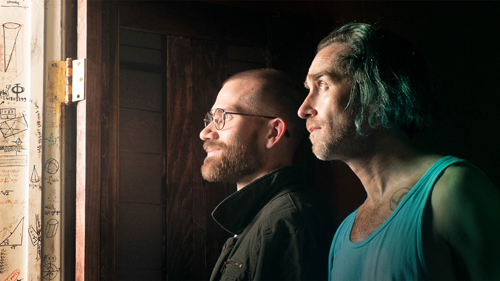
As Infrared recently showed, with the right role, The Room sidekick Greg Sestero can act. While Miracle Valley isn’t his greatest showcase, he proves he can direct, too — on his first outing, no less.

With girlfriend Sarah (model Angela Mariano, doing just fine in her acting debut) down in the dumps due to a gravely ill mom, David (Sestero) takes her on a weekend road trip to an out-of-the-way ranch in the unforgiving Arizona desert. Besides, he’s trying to snap a pic of the elusive, never-before-photographed “silver hawk.”

Birds should be his least concern, given the area’s bats: the members of a cult settled in the area. When a menacing motorcyclist (scene-stealing live wire Rick Edwards, Skatetown U.S.A.) invites them to an event — Father Rick’s Awakening — a spiritually thirsty Sarah talks David into going.

Upon their departure, David’s pal jokes, “Don’t drink the Kool-Aid!” As we’ve established before, the noxious beverage he’s referencing was Flavor Aid. Still, the sugar-powder shoe fits; with Miracle Valley being about a cult, the friend’s barb soon no longer lands as funny.

So you think you know where Miracle Valley is going. And you’re right … but also not. Sestero’s script follows the well-tread path of all krazy-kook movies before it, until he chooses where to head next seemingly by throwing a stack of old Marvel Comics in the air — The Incredible Hulk and The Tomb of Dracula in particular — and letting the fallen pages guide him.

That’s largely a compliment. While he doesn’t always make the right choice, he at least makes a different choice. In doing so, Miracle Valley upends your expectations while fulfilling your hunger for exploitation, and leaves a good-looking corpse. With the epilogue at Frank Lloyd Wright’s iconic Fallingwater home, how could it not? —Rod Lott