
All posts by Rod Lott

Trauma Therapy: Psychosis (2023)

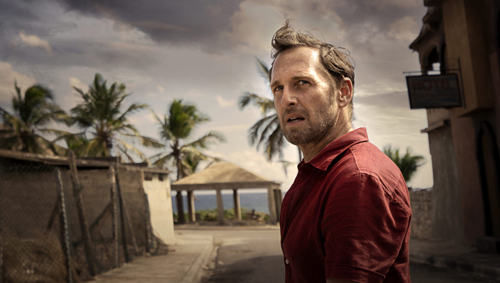
Dubiously, Trauma Therapy: Psychosis bills itself as “the very final film for the late Tom Sizemore.” Yet at press time, IMDb shows he has 28 forthcoming titles in various stages of production, an alarming number of which co-star Bai Ling. But please don’t take any of that as a reason to watch this wretched sequel, easily one of 2023’s worst movies.

“Wait, sequel?” you say. I get it; I never heard of the original Trauma Therapy, either, but IMDb confirms its existence since 2019. Prior viewing is unnecessary, in part because Trauma Therapy: Psychosis appears to be templated: same scenario, different setting.

A few losers are chosen to attend an advanced-treatment retreat of The Vance Institute. It’s named for Tobin Vance, the world-leading self-help guru, so Zig Ziglar can go fuck himself. Many harboring unresolved Daddy/Mummy issues, the participants are yelled at by a scowling Vance (Tom Malloy, The Alphabet Killer) to face their fears in order to be the person they want to be. It’s basically like every episode of Oprah, if Oprah were a histrionic dude-bro in a hoodie.

The anti-Hippocratic challenges Vance puts his patients through involve hallucinogenic drugs and hungry leeches before escalating to being poisoned and forced to chase a rabbit with antidote-infused blood. If you haven’t already guessed, yes, Vance’s “therapy” methods play for keeps.

Trauma Therapy: Psychosis feels it exists because co-writers Malloy and David Josh Lawrence (who plays an undercover Vance Institute enforcer) caught Squid Game on Netflix and got really jelly: “We can afford half a dozen matching track suits, too, right?”

Flat, unoriginal and so listlessly paced it often appears actors are either waiting for their cues or counting to 10 between lines, Psychosis has some interesting imagery, but dreadful execution — perhaps the most botched since Mary, Queen of Scots. Speaking of bad head, in spliced-in interview segments, Sizemore’s talk-show host sports a Mohawk by way of Travis Bickle. You deserved better, Tom.

We all do. —Rod Lott

We Kill for Love: The Lost World of the Erotic Thriller (2023)

Danger, romance and seduction: the holy trinity of a now-extinct film subgenre that kept beautiful, busty women named Shannon employed for the better part of the 1990s. Besides the obvious visual attributes, what made those flicks tick? Where did they come from? More importantly, why did they disappear?

Filmmaker Anthony Penta answers all in his remarkable documentary, We Kill for Love: The Lost World of the Erotic Thriller, a penetrating deep dive into a VHS and Cinemax mainstay. From bioluminescence to tumescence, Zalman King to Jim Wynorksi, and Eyes belonging to the Bedroom and the Night, Penta explores wide terrain across an astounding number of movies, including Irresistible Impulse, Virtual Desire, Deadly Embrace and others with names seemingly spit out by the Tweed-O-Matic Instant Erotic Thriller Title Generator (see page 427 of Flick Attack Movie Arsenal: Book One). It’s anything but a surface-level look, surpassing what easily could have been a promotional puff piece.

In laying the foundation of the erotic thriller’s history, Penta’s main thrust draws a direct line from 1940s film noir to these sensibly financed suspensers of simulated sex. Don’t know why I never thought that before, but I’ll be damned if he isn’t right! The difference being I never wanted to see Barbara Stanwyck without clothes.

While it’s clear Penta loves these straight-to-video pictures, his perspective is hardly the only represented. In addition to heavy hitters like Kira Reed Lorsch and Athena Massey, we get a panoply of voices, resulting in filmmakers’ examinations, participants’ set reminiscences and academics’ feminist readings, both for and against. Clips abound as Penta and company discuss tropes you might have missed (overhead fans) and those impossible to escape your notice (“so many candles”). With Andrew Stevens, who deserves props for jump-starting the trend, and Monique Parent, who looks better than ever, among the storytellers, We Kill for Love continually fascinates. The research and grunt work behind its eight-year gestation period is all on the screen.

Personally, I found most erotic thrillers to be boring, but finding the occasional gem — say, Private Obsession, Animal Instincts and Body Chemistry — more than made up for the time spent getting dirty in the mines. We Kill for Love is never boring, and we’re talking about a cup that runneth over with 163 minutes. The documentary is so well-built and cut, viewers will be engaged for its entirety. Besides, it’s not the length that matters, right?

In the grand scheme that is film history, these movies were as fleeting as an orgasm. The big-budget icons like Fatal Attraction and Basic Instinct still enjoy life in our pop-culture conversation, yet the hundreds of sadly ephemeral imitators not constructed as star-studded blockbusters — your Sexual Roulette and your Turn of the Blade — are what Penta celebrates, because who else would? As Samantha Fox once sang, naughty girls need love, too. —Rod Lott

Get it at Amazon.

Don’t Look Away (2023)

Don’t knock Don’t Look Away for using what amounts to a life-size Ken doll — naked, but sans genitalia — as its lead bugaboo. Praise it for making that smart economical choice. Not only is a stationary villain cost-efficient, but incredibly effective. Scaring while not moving worked for that celebrated 2007 “Blink” episode of Doctor Who, and it continues to work for Annabelle, several sequels later.

Also, it’s the only horror movie I know of to rely on a Roomba to deliver a jump scare.

New Jersey law student Frankie (first-timer Kelly Bastard) and half a dozen of her closest friends are stalked and menaced — and some killed — by the eerie, nonverbal mannequin with a permagrin. “Like a Bloomingdale’s mannequin?” asks a cop. Or, as suggested by her platonic pal (Okja’s Michael Mitton), “one of those Reddit creepypasta things, like Slender Man.”

Yes and yes. All Frankie knows is that once you avert your gaze, the doll will kill you. (Hence the title.)

Its blind owner, who has peppermint gumballs for eyes, shows up to fill in the runaway mannequin’s backstory. As played by director Michael Bafaro (5G: The Reckoning), he explains between sips of joe, “I was having it shipped to my estate where I could bury it forever. Spare others from suffering the same tragic demise as my loved ones. I swore on their graves I would put an end to this. And by God, I will. Good coffee.”

Moving swiftly, unlike its evil automaton, this 110% oddball pic is great fun, reminiscent of bananas mid-’90s cable fare like Kevin S. Tenney’s Pinocchio’s Revenge, but with total paralysis. With Mitton as his co-scribe, Bafaro leans hard into their concept’s built-in absurdity. They’re no dummies; they knows their movie is going to elicit chuckles, but they’re also confident it will elicit the creeps, too. The acting lands as Don’t Look Away’s weakest link, as news of friends’ deaths are brushed away like laundry lint.

Naturally, the end hints at further slaughter ahead for the pantsless model. Barbie may have no current box-office equal, but this living doll poses a threat in body count. —Rod Lott

Get it at Amazon.

Beaten to Death (2022)

Think about all the things that would be difficult to do if you no longer had sight: Run. Climb. Avoid barbed wire.

All these are encountered by the protagonist of Sam Curtain’s Beaten to Death, a jarring Australian film that packs 48 hours of hell into a tight 92 minutes. Prepare to feel pummeled.

Barely surviving an assault his wife does not, the horrifically injured Jack (Thomas Roach of Curtain’s Blood Hunt) seeks help in rural Tasmania. The first person he comes across, Ned (newcomer David Tracy), an imposing side of beef, drives Jack back to retrieve his dead spouse. There, Ned sees the man Jack was forced to kill in self-defense: Ned’s brother. Awkward!

To say Ned hungers for vengeance — and gets it — is an understatement, as Jack spends much of the time blindfolded, bloodied and muddied. While Beaten to Death isn’t a case of wall-to-wall violence, its many sequences of brutality certainly knock those walls down. If any piece of Curtain’s movie will live in infamy, it’s going to be the most immersive ocular-trauma shot the screen has witnessed. Prepare to wince and cringe.

Reliance on the sparse outdoors gives the film a mythic quality. In fact, remove the smartphones, cars and other minor bits of set dressing and it’s not hard to imagine this tale taking place in the Old West, whether in a spaghetti Western or from the pages of Jonah Hex. To his credit, Curtain chops up the timeline so certain aspects of the story aren’t revealed right away. We don’t need to immediately see this cat-and-mouse survival thriller’s ignition point to get caught in its considerably tangled net. —Rod Lott

Get it at Amazon.

Fatal Exposure (1989)

What do you think about when you hear the word “blood”? Are you obsessed with death and dying? Have you ever wanted to kill someone? Please answer carefully; you could win the right to beget the son of a serial killer!

With a mansion and a mullet, charismatic photographer Jack T. Rippington (Blake Bahner, Caged Fury) is new to the town of Prairieville. Minutes after a Baptist couple stops by to invite Jack to a church supper, he’s convinced them to model for a magazine shoot he’s doing on methods of murder. The husband (one-timer Gary Wise) sees no issue with being locked in a guillotine. Meanwhile, the homely wife (Holly Hunter soundalike Renée Cline, who appeared in four David A. Prior joints the next year) dons kinky lingerie so she can be tethered like a Thanksgiving turkey, then injected with an acid that turns her neck into a piping-hot pepperoni pizza.

See, Jack likes to kill. He also likes, as he breaks the fourth wall à la Ferris Bueller to share, to drink his victims’ blood. “You see, it’s blood that keeps a man potent. Sexually potent, that is,” he says, with the relaxed folksiness of Wilford Brimley shilling Quaker Oats.

After a daytime dump of their bodies in the cemetery, Jack and his wheelbarrow meet Erica (Ena O’Rourke, Molly and the Ghost). Because she looks just like his great granny — and correctly answers all three aforementioned test questions — Erica gets laid, not slayed. Their meet-cute immediately leaps to her agreeing to help Jack acquire bikini models from the big city. What she doesn’t know is he intends to, oh, give them live electrical cables to hold onto.

Only after getting pregnant does Erica start to suspect something’s up besides Baby Daddy Jack’s super-potent penis. That intuition puts her way ahead of Prairieville’s sheriff (Marc Griggs, also one and done), who earlier takes a big swig of blood from Jack’s Thermos and thinks nothing of it, because Mr. Rippington says it’s a Bloody Mary.

An amazing slice of shot-on-video sleaze shot entirely in Alabama, Fatal Exposure is hardly the only horror film about a homicidal shutterbug. I can say with certainty, however, it’s the only one:
• directed by the cinematographer of Faces of Death sequels, Peter B. Good (is he, though?)
• featuring a huge jug marked “CHLOROFORM” in handwritten lettering
• where the photographer is the great-grandson of Jack the Ripper. Oh, shit, did I spoil that for you?

Bearing a Herschell Gordon Lewis-does-Skinemax quality, which I say with love, the purposely gory, accidentally goofy Fatal Exposure deserves a wider reputation among SOV enthusiasts. As the nutso Rippington, Bahner comes off like a fifth-rate John Stamos, which is to say hardly a threatening descendant of the Whitechapel Murderer. Meanwhile, O’Rourke, née Henderson, exudes competence and confidence no one else in the cast dares match. Not that they try.

And not that Good asked! His stale direction seems focused on persuading O’Rourke and other genuinely attractive women to bare their bodies. That he gets Julie Austin (1989’s Elves) to undergo a super-handsy foreplay sesh in the woods has to count as something of a cinematic feat, considering payment couldn’t have been worth much more than a 2-for-1 coupon redeemable at your local participating Shoney’s. —Rod Lott

Get it at Amazon.