
 Well before the end-of-Bush-era housing market collapse, I had the damnedest time trying to sell a perfectly good home. We had spent thousands of dollars in updates; the neighborhood was safe; and the school district was solid. Took me 16 agonizing months.
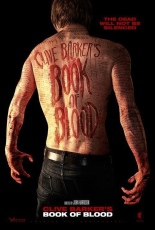
But in Book of Blood, a young woman gets her face ripped clean off by an unseen force of malevolence in her parents’ home, and professor Mary (Sophie Ward, the little girl from Young Sherlock Holmes, all growed up!) is all like, “Huh, I think I’ll move in and see whassup. So long as it passed inspection!” She invites her hunky new student, Simon (Jonas Armstrong), to move in, too.
 This being based on two Clive Barker stories, all is not well. Writing appears all over the walls of the upstairs bedroom, warning not to “mock us.” Plus, flesh carving (just how rough does it Barker like it, I wonder?) and forbidden sex, in which Ward’s nipples are so erect and pencil-eraser elongated, her partner risks ocular trauma.
Adapted and directed by John Harrison of the underrated Tales from the Darkside: The Movie, it has an ending that makes you think, “Who wrote this? Jeane Dixon?” It’s also not scary, unless you’re terrified of dragonflies, in which case you’re totally fucked. It’s no Candyman or even Midnight Meat Train, but it’s decent enough, if senseless. —Rod Lott
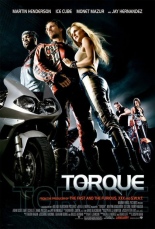

 Nice try. With its saturated, slightly washed-out colors, I liked the way Torque looks. I just didn’t like how it sounds, feels, tastes or smells. Every frame is jacked-up and pimped out to resemble a Mountain Dew commercial. Every character lacks peripheral vision and a hearing range beyond two feet so that people and motorcycles can sneak up on them all the time, yet the dudes have no trouble communicating with one another during their loud rides.

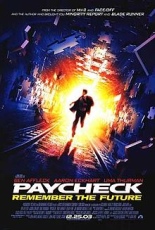

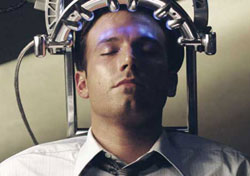 It’s not a terrible idea for a film, but director John Woo and company have steered it down that road. Woo’s Asian sensibilities simply do not translate well to American film; his direction is needlessly showy, making for choppy editing, awkward pacing and poor performances. Plus, when he manages — even in a sci-fi thriller — to throw a shot of his beloved white doves, I had to groan.
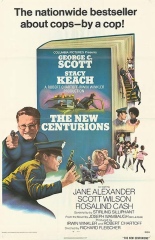
 No one writes a cop novel like Joseph Wambaugh, so it’s no wonder Hollywood has adapted so many of them, starting with
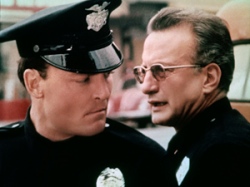 There’s a reason they call it a beat: because it wears one down. Like Wambaugh’s excellent, reality-based novels, Richard Fleischer’s film pulls back the veil of being an officer, presenting a portrait that’s not at all gussied-up, revealing the repercussions of making an honest but deadly mistake, and the toll the job takes at home. A scene in which the wrong guy is fatally shot is powerful, but most tense is when the police attempt to wrest an abused newborn from its drunk mother.