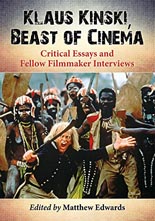
 Curiously, two new books are about the idiosyncratic and ill-mannered German cult actor Klaus Kinski. The one to get is Klaus Kinski, Beast of Cinema: Critical Essays and Fellow Filmmaker Interviews, edited by Matthew Edwards and including the perspectives and talents of several others. (It takes a village, people!) Edwards — whose excellent 2007 collection, Film Out of Bounds, also was published by McFarland & Company — separates the book into thematic thirds: essays, interviews and reviews. In doing so, he and his contributors approach their subject from a variety of angles and points of accessibility. Covering everything from his iconic collaborations with Werner Herzog to his late-in-life residency in B-movie hell, the essay portion finds Beast of Cinema at its most buttoned-up, whereas the book loosens up considerably for Edwards’ Q&As with those who worked with Kinski and lived to tell about it — most notably, Schizoid director David Paulsen and actress Flo Lawrence, both rife with tales of the actor’s bad behavior, physical and sexual. By the time Beast hits the section of approximately 50 reviews, it has its shirt unbuttoned and feet on the table. Pour yourself two fingers of your hard liquor of choice and peruse the reviews, heavy on spaghetti Westerns, sexploitation, spy adventures and scary fare — unsurprisingly the reason I’ll return to this text in years to come.
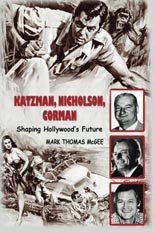 Having written the history of American International Pictures in 1984’s Fast and Furious, it makes sense the ridiculously knowledgeable Mark Thomas McGee would be the one to write Katzman, Nicholson, Corman: Shaping Hollywood’s Future. Available from BearManor Media, the book spotlights the careers of “three pioneers in bargain basement entertainment,” primarily in the 1950s: producer Sam Katzman, AIP co-founder James Nicholson and multihyphenate content machine Roger Corman. Rather than tie them together in one narrative — which would make sense, given their crossed paths — he handles each man separately. In his usual easygoing style, McGee is less interested in sharing their stories than he is leaping from one anecdote to another, not always stopping to ensure transitions for smooth sail-through. The result is highly conversational, as if you’re seated at the corner of a bar with the author, but he’s a good drink or two ahead of you, so forgive him if and when he rambles. While I would have preferred a tighter-told work — or at least one with consistency in presentation among its thirds — fans of the AIP era should find enough behind-the-scenes nuggets to chew on, not to mention capsule reviews of select films and a smattering of photographs. KNC is not bad, but it’s not essential, either.
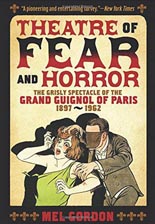 Few things have influenced the horror film more than the Grand Guignol, aka that theater in France in which characters were rather graphically tortured and killed onstage; it’s not uncommon to see “Grand Guignol” used as a descriptive adjective in film criticism today. Short of catching some brave local theater troupe in your area staging a tribute show, Mel Gordon’s Theatre of Fear and Horror: The Grisly Spectacle of the Grand Guignol of Paris, 1897-1962 is as close as we can get to experiencing this late, great art form. (And having sat through one of those tribute shows, I much prefer this book.) Gordon quickly but satisfyingly dispenses with the origins and history of the place so he can dig into the real meat of the piece: single-paragraph descriptions of 100 Grand Guignol classics, supplemented with a more-than-generous helping of photos, playbills and revealed tricks. Originally published in 1988, this expanded edition from Feral House arrives with an additional script (“Orgy in the Lighthouse”) and, in the trade paperback’s center, 14 color pages, all but the last of which reproduces the original illustrated posters, both lavish and ghoulish. Thriving on visual stimulation throughout, the volume is a gorgeous package of garish content. Following Sin-a-Rama: Sleaze Sex Paperbacks and It’s a Man’s World: Men’s Adventure Magazines, Feral House continues to knock these new-and-improved reissues out of the park.
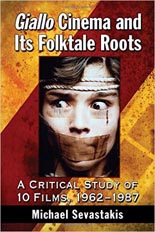 The genre of the giallo is so voluminous by now, it is all too easy to fire off a bad book in search of a quick buck. Mind you, Michael Sevastakis’ Giallo Cinema and Its Folktale Roots: A Critical Study of 10 Films, 1962-1987 is not that book. (This is.) With each chapter devoted to a particular film, the McFarland book makes the case for the giallo’s artistic merit — an idea most mainstream critics scoff at once the blood runs running. Rather than focus on the usual suspects (in titles and directors), Sevastakis spreads the wealth, with no filmmaker repped more than once; while the names you expect are indeed here (Dario Argento, Mario Bava, Lucio Fulci, etc.), the work chosen for each is not necessarily the anticipated default selection — for instance, Umberto Lenzi is featured by neither Eyeball nor Spasmo, but Seven Blood-Stained Orchids — and damn, does the author break it all down with aplomb. His discussion is detailed, insightful and intelligent — perhaps a deeper dive than you’d like for leisurely reading, but hey, it backs up his point that there’s much more to these films than meets the (gouged) eye. —Rod Lott
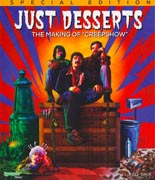
 So deep is my love for 1982’s
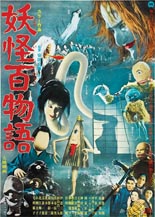
 In the village of Edo, a corrupt businessman conspires with the local magistrate to tear down its shrine and tenement house, in order to make way for a brothel.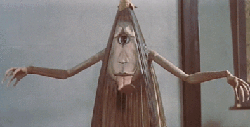
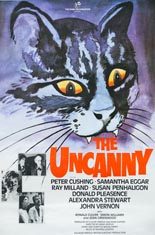
 If horror masters from