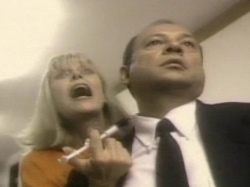
What has eight legs and a man shoving a lit Bunsen burner to his neck? The Legend of Spider Forest, far from legendary.
While staying at a pub in a supposedly quaint English village, ascot-rocking painter/photographer Paul (Simon Brent, Love Is a Splendid Illusion) runs across an unusual young woman walking carefree through the woods. Named Anna (Neda Arneric, Shaft in Africa), she says little, screws lots and is often nude — all the better to tease you with, what with her left shoulder’s distinctive spider-shaped birthmark.
Paul excepted, the men who make love to her don’t survive the encounter, thanks to her summoning into action the forest’s breed of spiders, both highly venomous and immune to chemicals. Wouldn’t the arachnids make an effective weapon for a resurgent Nazi party? Director Peter Sykes (Hammer’s To the Devil a Daughter) sure thinks so.
Or so one may assume, since he doesn’t do much with it — and what he does do is muddled to a point of incomprehension. This Eurohorror oddity will tangle viewers in a web not of intrigue, but internment. At least its tarantulas — underused, sadly — are real. —Rod Lott
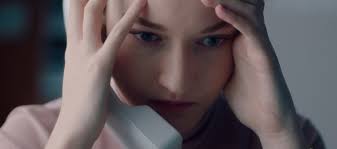
Fresh from a well-deserved Emmy win for the Netflix crime series Ozark, Julia Garner faces arguably more dangerous territory in — and as — The Assistant, set entirely within one workday. As the lowest rung of a Miramax-esque film company in New York City, her Mary stays busy making copies, fielding phone calls, washing dishes, balancing checks and fetching water — glass-bottled, of course. Across the movie’s 87 minutes, we watch her perform so many menial tasks, you may feel like you deserve three hours’ internship credit.
Most of The Assistant is as dull as Mary’s day, until signs of her boss – who’s heard but never seen — become more common. He’s the film’s ersatz Harvey Weinstein, a blustery, berating bully apparently more interested in chasing tail rather than talent. As Mary navigates this toxic environment, culminating in a futile meeting with an HR representative (Matthew Macfadyen, 2010’s Robin Hood), her soul slowly deflates like a balloon days after the party, air seeping from Garner’s perpetually sour pucker. Yet nothing really happens, in terms of story.
Unconventional documentarian Kitty Green makes her narrative debut with The Assistant, yet the pulse of her previous project, Casting JonBenet, cannot be located. Her film may have nailed the #MeToo timing, but is itself something of a quiet slog. In keeping the audience from hearing (except in select occasions) the other end of the movie’s many phone conversations, which constitute a good chunk of dialogue, Green keeps the viewer from engaging with her material. It’s an odd directorial choice — one I respect, although don’t necessarily like.
Make no mistake: The Assistant is not the finely tuned workplace thriller it’s expertly sold to be. Its themes of sexual harassment will attract the curious, only to yield wildly mixed results: cathartic for a few, a horror show to a few more, and baffling to most everyone else. —Rod Lott
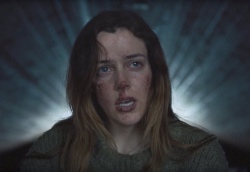
One otherwise sunny afternoon, Richard (Ocean’s Eight’s Richard Armitage) deserves a World’s Worst Estranged Husband award for telling his wife he wants to finalize their divorce and marry his new girlfriend — a one-two punch of info that drives the spouse to suicide. Six months later, over Christmas vacation, he earns a World’s Worst Dad trophy to add to that hypothetical mantle by forcing his two kids to spend time in their snow-covered mountain cabin with said girlfriend, Grace (Riley Keough, Logan Lucky), and then leaving them with her for a few days.
Not only is Grace a stranger, but they blame her for their mom’s death. Furthermore, they know she’s literally a psychopath, being the daughter of a Christian cult leader (played by her real-life dad, Danny) whose members killed themselves in a mass suicide à la Heaven’s Gate. Only Grace, befitting of her name, survived, yet bears heavy emotional scars, all of which Keough rightly and consistently plays in the key of dour.
What begins to happen in The Lodge once Richard temporarily vacates is best left to audiences to discover on their own. More eerie than scary, the picture marks just the second narrative feature for the Austrian duo of Veronika Franz and Severin Fiala, following up the acclaimed twin terrors of Goodnight Mommy. This one is even better; call it Goodnight Stepmommy-to-Be. Just when you think Franz and Fiala are pulling pages from their 2014 film for recycling, the course of events changes wildly, and viewers might not be willing to follow if the actors weren’t so good.
Keough is, in particular, excellent, but let’s not diminish the two other equally tricky roles of Richard’s children, played by Jaeden Martell (Knives Out) and Lia McHugh (Along Came the Devil). They interact like real siblings, with McHugh believably conveying grief for which Martell, in turn, provides the big-brother support she needs. And far from Clueless, Alicia Silverstone is terrific in a brief appearance that neither requires nor allows her to lean on her trademark charm.
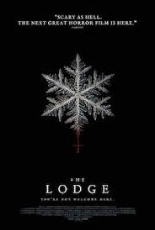
As was the case with Goodnight Mommy, one important character goes unbilled: architecture. Franz and Fiala build so many shots starting from that foundation, giving The Lodge a touch of delicate elegance even in its darkest corners. Their compositions are crisp and symmetrical, much like the microscopic snowflake of this arthouse horror’s poster. —Rod Lott
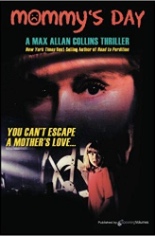
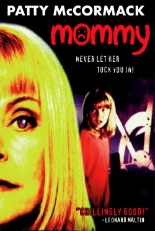
As the direct sequel to his 1995 Mommy movie, Max Allan Collins’ Mommy’s Day is the superior effort on every level. This achievement is reached despite its love-to-hate lead meta-quipping, “Don’t you know the sequel is never as good as the original?” Then again, this is uttered one moment before pushing a character’s head through a plugged-in computer monitor, so perhaps she didn’t mean it.
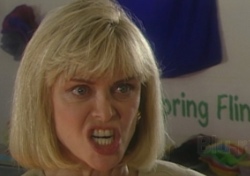
Yes, Patty McCormack is back and The Bad Seedier than ever as murderous matriarch Mrs. Sterling — still preppy, still malicious and still xenophobic! She’s an hour away from getting the needle in death row when she’s selected to be a guinea pig for a “revolutionary antipsychotic drug” implanted within the arm, making her — in her own words — “new and improved, like a laundry detergent.” Although sprung from the pokey and into an experimental halfway house, Mommy is banned from seeing her beloved teen daughter, Jessica Ann (Rachel Lemieux, who only acted again in Collins’ next and best film, Real Time: Siege at Lucas Street Market), now in braces and deep in training for an ice-skating competition.
Oh, and homicides soon happen.
Pulp-fic legend Mickey Spillane and scream queen Brinke Stevens reprise their supporting roles, alongside comedy improv legend Del Close and WKRP in Cincinnati program director Gary Sandy, respectively joining this second go-round as the warden and a nose-pokin’ police sergeant. Jessica Ann cedes the spotlight as Collins makes Mommy the focus. Perhaps with her coronation to front and center, McCormack dials the hysteria up one notch, and is more fun to watch as a result.
Apparently, her spirit was infectious; Collins seems more engaged with the material this time around. In particular, he adds a subplot as Mrs. Sterling appears on a daytime talk show, allowing him to satirize (if only mildly) the “trash TV” format popular at the time, à la Ricki Lake, Jenny Jones, Jerry Springer, Maury Povich and their collective ambush techniques. Shot on higher-definition video, Mommy’s Day boasts a sharper picture throughout and a well-earned twist in the third act. With a meatier mélange of kill scenes than its predecessor, Mommy’s Day is often mischaracterized as a slasher film, but it remains a thrifty thriller — albeit one with a shower-set murder via ghetto blaster — from the good ol’ days when America made it a Blockbuster night. —Rod Lott
Although Mommy isn’t officially a sequel to 1956’s classic The Bad Seed, the idea for the shot-on-video thriller sparked from a “what if?” scenario in writer/director Max Allan Collins’ mind — namely, what would Patty McCormack’s killer-kid character be like as a grown-up … y’know, if she hadn’t been fatally fried by a bolt of lightning and all? Mommy knows best. Call it The Bad Seed: The Cougar Years.
McCormack’s titular matriarch, Mrs. Sterling, is a 40-something, double-“widowed” single woman dripping in pearls, entitlement and racism. She enters the Iowa-lensed movie like a boss, strutting into school after final bell to have a word with the teacher (Majel Barrett, 1973’s Westworld) who has decided to give this year’s outstanding student award to someone other than her daughter, Jessica Ann (newcomer Rachel Lemieux). Only one woman leaves the conversation alive, thus making Mrs. Sterling the ultimate stage mother.
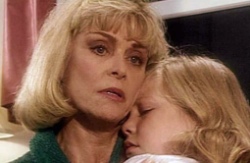
As the body count increases, 12-year-old Jessica Ann’s distrust in her mom grows, boosted by the elder’s ability to open jars with minimal effort. When the girl goes snooping in Mommy’s bedroom, Collins cooks up genuine suspense, with viewers nervously looking at the open door in the far right of frame, for any sign Jessica Ann is about to get busted.
A prolific novelist — and a damned good one — Collins based Mommy on his same-named short story from the 1995 horror anthology Fear Itself. On the page, you can write anything, but on the screen, everything comes with a price tag; this being Collins’ first feature, his ambition sometimes gets reality-checked. Nowhere is this more evident than the night scenes, lit with saturated red, blue and orange gels … that get washed out on video (but are more visually pleasing than the credits’ use of Comic Sans and other egregious fonts). Collins acknowledges this limitation on the 25th-anniversary “widescream” Blu-ray set (which also contains the 1997 sequel, Mommy’s Day). By his third movie, Real Time: Siege at Lucas Street Market, he expertly had reversed the equation to make minuscule resources work in the flick’s favor.
Luckily, McCormack’s performance doesn’t depend upon a line item. She’s clearly having a ball. As much of a hoot she is to watch, not everyone else aligns to her frequency of camp. Having no acting experience at the time, Lemieux isn’t up to that challenge as Mommy’s distrustful daughter, but she does a decent job in what is the true lead. Famous faces also in the cast include The Exorcist’s Jason Miller, Mike Hammer creator Mickey Spillane and B-movie scream queen Brinke Stevens (The Jigsaw Murders), here completely clothed. —Rod Lott

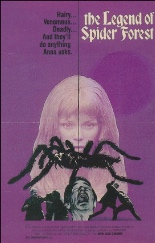
 What has eight legs and a man shoving a lit Bunsen burner to his neck? The Legend of Spider Forest, far from legendary.
 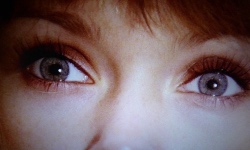 Paul excepted, the men who make love to her don’t survive the encounter, thanks to her summoning into action the forest’s breed of spiders, both highly venomous and immune to chemicals. Wouldn’t the arachnids make an effective weapon for a resurgent Nazi party? Director Peter Sykes (Hammer’s To the Devil a Daughter) sure thinks so.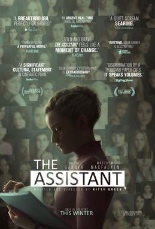
 Fresh from a well-deserved Emmy win for the Netflix crime series Ozark, Julia Garner faces arguably more dangerous territory in — and as —