All posts by Rod Lott

Color Out of Space (2019)

H.P. Lovecraft’s short story “The Colour Out of Space” has been filmed several times since its 1927 publication, but none more imaginatively than Richard Stanley’s Color Out of Space. Despite its title being shorn of one vowel and an article of speech, it best captures the cosmic terror of Lovecraft’s classic.

One night, from the stars above the Gardners’ isolated alpaca farm, a meteorite comes crashing into the front yard. The media attention it brings, however limited, is unwanted by family man Nathan (a naturally unrestrained Nicolas Cage), yet a breeze compared to the threats that soon sprout — some quite literally. Infecting the water well — shades of George A. Romero’s The Crazies — the meteorite spreads madness and mayhem, inside and outside the Gardner home, and beyond. To fully align with the movie’s slow-burn cloak of impending dread, viewers are better off not knowing the details of the “how.” Suffice it to say, one late revelation is twisted into such a Cronenbergian knot, it may disturb even the desensitized.

While many will see the meteorite’s invasion as the catalyst for an allegory of American familial dysfunction, it is more interesting to view the object as a representation of cancer — one with fast-spreading reach — as Nathan’s wife (Joely Richardson, Red Sparrow) is herself recovering from the disease as the film opens. That is at least more in line with the ecological bent of Lovecraft’s tale, here embodied by a visiting hydrologist (Elliot Knight, aka TV’s Sinbad) who never changes his Miskatonic University shirt.

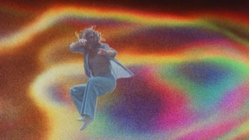
That said, you also can enjoy Color Out of Space for its surface-level lysergic trippiness, of which Stanley supplies plenty, making the film a magenta-saturated companion piece to Cage’s Mandy. Returning for his first feature in more than 20 years after his unceremonious firing from 1997’s The Island of Dr. Moreau remake (a whale of a tale told in 2014’s gotta-hear-this Lost Soul documentary) Stanley finally has the opportunity to make good on the enormous promise of his 1990 debut, Hardware. Not only does he not disappoint, but he also finds a way to film the unfilmable aspects of Lovecraft’s story, turning pulp into art. —Rod Lott

Get it at Amazon.

Dolittle (2020)

If man could talk to the animals, what conversations would we have? Personally, I’d like to engage my family’s nearly blind, nearly deaf Shih Tzu, Emmy, in a discussion of the hole she has scratched into the side of her neck. We didn’t notice it until the smell of death wafted from across the living room; upon closer examination, we discovered a nauseating, John F. Kennedy half-dollar-sized crater of flesh and blood and gunk of unspeakable coloring, with a newly burst abscess that screamed infection. Frankly, four rounds of antibiotics later, I’d like to ask her what the hell she was thinking.

To get metaphorical, that damn dog’s neck hole — reeking with an ungodly, unforgivable stench of nostrils-torn-asunder rot — is the Robert Downey Jr. vehicle Dolittle.

Remember how much Eddie Murphy’s cachet suffered by wallowing in family-friendly dreck like 1998’s Dr. Dolittle? Downey must have forgotten, in the process tainting the Iron-clad reputation he worked so hard over the last decade to rebuild. With Murphy now enjoying the crest of career resurgence, and Downey stuck chatting up and trading barbs with stunningly unfunny CGI animals, the two superstars appear to have switched places. Who saw that coming?

Downey’s venereal-looking veterinarian is called out of retirement to retrieve a faraway fruit to save the life of a comatose Queen Victoria (Jessie Buckley, TV’s Chernobyl). Attempting to foil Dolittle at every turn, Boris Badenov-style, is Dr. Müdfly (Michael Sheen, 2016’s Passengers). Aiding Dolittle just as often are anthropomorphic members of his mobile menagerie, voiced by some supremely talented people — including John Cena, Emma Thompson, Kumail Nanjiani, Octavia Spencer, Ralph Fiennes and, immortally, “Rami Malek as Chee-Chee” — all of whom have the blessed fortune to be only heard and not seen, especially since their jokes land as neatly as elephant feces.

Who else to helm this artificially sunny, PG-rated ego project/confection of fauna, folly and fantasy? Almost any director but the one who got the job: Stephen Gaghan, he of the suicide bombers and electrocuted children of the political-corruption drama Syriana. His nonmusical remake of 1967’s Doctor Dolittle emerges as a soulless, artless, witless, “cash, please!” corporate enterprise — one in which no one had the guts to even suggest to Downey that his Jack Sparrow-style accent was not the least bit cute, but thoroughly repellent. In which computer rendering of the sometimes-disproportionate animals appears to have been halted around 65% completion and deemed “good enough.” In which poor Antonio Banderas is reduced to parading around in genie pants.

In the opening-weekend matinee I attended, an audience full of kids — kids, for chrissakes, comedy’s easiest lay! — could not be bothered to laugh, except when a dragon ripped a massive fart in Downey’s face. He deserved it.

Dolittle? Most certainly do not. But if you are forced? Do nap. —Rod Lott

Get it at Amazon.

Mayday at 40,000 Feet! (1976)

Made for television just before the disaster subgenre began to collapse, Mayday at 40,000 Feet! — exclamation theirs — is as you would expect: a transparent wannabe member of the Airport franchise. Robert Butler, who later directed a bigger-budgeted plane-in-peril flick in 1997’s Turbulence, certainly works Mayday’s soapy suds into a lather.

On the film’s L.A.-departing flight in question, the cockpit is chock full o’ chaos. The pilot (David Janssen, Two-Minute Warning) is distracted AF with his possibly cancerous wife (Jane Powell, The Female Animal) undergoing breast surgery. The co-pilot (Christopher George, Enter the Ninja) is distracted AF after spontaneously proposing to an old flame (Margaret Blye, The Entity) among the clouds after reconnecting during the Salt Lake City layover. And the navigator (“Dandy” Don Meredith, Terror on the 40th Floor) is distracted AF by the sexy new stewardess (Airport 1975 stew Christopher Norris), even though the guys note, “she still has her baby fat.” More attentive to measurements than coordinates, he and his acts of sexual harassment make a great case for a retitling of Horny at 40,000 Feet!

And yet, the crew cries “Mayday!” after a handcuffed prisoner (Marjoe Gortner, Earthquake) manages to wrestle the gun from the old, crusty, heart attack-prone U.S. Marshal (Broderick Crawford, The Private Files of J. Edgar Hoover) escorting him to NYC, and promptly puts a bullet through a couple of people, as well as the lavatory wall. Oh, if only an alcoholic asshole doctor (Ray Milland, Cave In!) were aboard!

Adapted from Austin Ferguson’s novel Jet Stream, the efficiently entertaining telepic greatly benefits from Gortner’s crazed performance, closely lifting it to the theatrical atmosphere in which it wants to be. (Although I’m uncertain how Butler snuck Gortner’s uttering of the N-word past CBS’ standards and practices.) Mayday shows its seams most whenever the camera moves about the cabin, as the aircraft appears to house maybe 20 passengers. Its prime-time conception further reveals itself in external shots of the fuselage, where the production half-assedly added the fictional Transcon Airways brand with such inconsistent kerning, it reads “T R A N SCON.” Perhaps some foxy flight attendant walked by? —Rod Lott

Get it at Amazon.

Odd Jobs (1986)

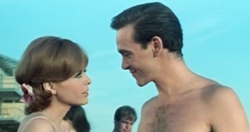
After ill-fated summer gigs caddying, waiting tables and selling nuclear vacuum cleaners door to door, four guys join fellow frat bro Max (Paul Reiser) in the moving business, in Odd Jobs. In less than 15 minutes, the lowbrow ’80s comedy offers almost everything we’ve come to expect from a lowbrow ’80s comedy: racial stereotypes, drug references, homophobia, syrupy saxophone music, zany sound effects and that surefire laff-grabber we now call sexual assault.

Essentially a showcase for stand-up comedians Reiser, Robert Townshend, Paul Provenza and Rick Overton — plus teenpic second-stringer Scott McGinnis (Secret Admirer, Making the Grade, et al.) — the movie is initially shapeless as one-time director Mark Story presents what is essentially a meandering series of setups for jokes not worth setting up, from a sheep-fucking redneck to a Elvis-wannabe trucker from whose rearview mirror hangs a lucky rabbit’s dick. These come courtesy of first-time writers Robert Conte and Peter Wortmann (who didn’t fare much better with their next one, the painful John Candy vehicle Who’s Harry Crumb?), but they do score with two pretty decent golf gags, which, to be fair, is two more than the whole of Caddyshack II.

Only in the second half, when Max and the boys start Maximum Moving (get it?), does Odd Jobs begin flirting with a plot, however flimsy, with a rival moving company involved in a car-theft ring. As a charisma-free Reiser (the same year as Aliens) tries to regain the heart of his girlfriend (Fletch Lives’ Julianne Phillips) from a douche named Spud (Richard Dean Anderson, then seen weekly as TV’s MacGyver), we also get fitness guru Jake Steinfeld playing jacks, would-be second daughter Eleanor Mondale in a nudity-free sex scene, radio host Don Imus and future supermodel Jill Goodacre in don’t-blink cameos, Provenza doing a cringeworthy Ebonics bit — riffing on Rice Krispies and Roots — at the Townshend family’s dinner table, and in an uncredited supporting part in all the slapstick-driven moving sequences, gravity! The sofa stuck in the stairwell is a metaphor for any viewer subjected to such prolonged stupidity. —Rod Lott

Get it at Amazon.

The Game (1984)

In Bill Rebane’s accidentally entertaining The Game, three bored and elderly millionaires named Maude, George and Horace (Carol Perry, Stuart Osborn and Don Arthur, respectively) recruit nine healthy adults to gather at an island hotel to play the fogies’ annual overnight “Game of Fear.” That just means the old folks creep around at all hours in an attempt to scare the contestants into leaving, with the last man (or woman) standing the next day to be awarded $1 million, essentially making this Rebane’s Lake Resort on Haunted Hill.

After sharing the rules, either George or Horace — it doesn’t matter whom — tells his assembled players, “We’re quite proud of the creativity that went into this.” What else to call flashing lights, dry-ice fog, “bwa-ha-ha” sound effects, dummies hanging on rope, a locked sauna, a fake shark fin in the swimming pool, real tarantulas in the soup bowl, a jail cell filled with rats, a grounds-roaming hunchback and — yikes! — nonflushing toilets? There’s also a round of Russian roulette, but the scariest element of all actually arrives pregame: a gratuitous disco sequence in which the spinster Maude wipes her hand up the butt of the skeeziest contestant (Jim Iaquinta from Rebane’s Rana: The Legend of Shadow Lake).

However, the best scene in The Game (findable here and there as The Cold) occurs when a young lady in silky undergarments is spread out on the bed as Rebane’s immortal The Giant Spider Invasion plays on TV. Her slumber is interrupted as a worm-like hand puppet bursts through the sheets, then vomits. I can’t tell you which character it is, because they are nigh indistinguishable, save for two: Pamela Rohleder’s Southern belle, whose voluminous bra size surpasses her IQ, and the aforementioned Iaquinta’s human form of gonorrhea, ready to take advantage.

While the script by William Arthur and Larry Dreyfus (who later co-wrote the director’s 1988 talking-truck movie, Twister’s Revenge!) is born from a legitimately good idea, Rebane artlessly bungles it. Foremost among his errors is scoring the horror film with ragtime ditties as the merry, maniacal and masked millionaires dance down the hallways toward their latest scheme. At one moment late in The Game, Maude, George and Horace sing — and then debate — that folk nugget “Jimmy Crack Corn.” And I don’t care. —Rod Lott

Get it at Amazon.