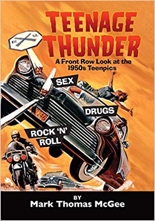
 In the same vein as his book on sci-fi and horror films of the same era, Mark Thomas McGee covers a decade’s worth of JD and other teenage-targeted movies with Teenage Thunder: A Front Row Look at the 1950s Teenpics. After a meaty introduction to the subgenre, McGee gets to the main course: full A-to-Z reviews of enough movies to fill a few swell jalopies, with Elvis Presley, Mamie Van Doren and Roger Corman turning up everywhere. Rather than quoting other critics to give context on the films’ reception, McGee instead quotes the actual exhibitors, which yields some lines as vicious as any from a poisoned pen; says one of Teenagers from Outer Space, “better to leave the house dark for three nights.” The BearManor Media paperback squeaks through with a few glaring errors (one “Capital” Records is forgivable; multiple instances of Dick “Clarke” are not), but the book is so much fun, it’s nearly essential. To borrow the tagline from the poster for Rock, Pretty Baby!, it’s the most! The greatest! It’s crazy, man, crazy!
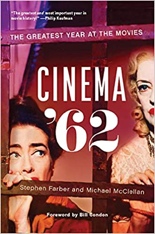 Where were you in 1962? If you were alive, perhaps in a theater watching To Kill a Mockingbird, The Manchurian Candidate or any number of landmark films the year brought. With Cinema ’62: The Greatest Year at the Movies:, Stephen Farber and Michael McClellan make the case for those 12 months being an absolute peak for Hollywood celluloid. We’ve all heard similar claims laid for 1939 and, more recently, 1999, but 1962? Nope, never — not until right now. They don’t convince me — every year brings its share of four-star winners — but they do succeed in crafting a credible, critical narrative of an art form in transition, with chapters covering the foreign-film revolution, the loosening of sexual morals onscreen, the increasing influence of psychoanalysis and, naturally, the move from black and white to glorious Technicolor. In hardcover from Rutgers University Press, Cinema ’62 registers as a brainier take on Peter Biskind’s style, but not nearly as breezy and boisterous.
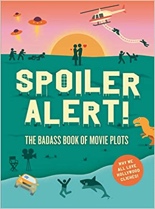 Spoiler Alert!: The Badass Book of Movie Plots is part screenwriting manual, part humor title and part graphic novel. From the minds of Stephen Espinoza, Kathleen Killian Fernandez and Chris Vander Kaay (the latter two of whom co-authored 2018’s Indie Science Fiction Cinema Today), the Laurence King Publishing paperback is nothing if not colorful. But it’s more than that, too, breaking down the beats of 38 film subgenres — e.g., Teen Sex Comedy, the Disaster Movie, the Superhero Origin Film, the Erotic Thriller, the Animal Attack Horror and so on — in three acts. The result is like a bunch of Mad magazine parodies of movies that don’t exist … except they kinda do! The authors have nailed the hundreds of clichés still permeating the pictures produced today. While the book is well-designed, its cutesy-verging illustrations belie the mildly wicked humor to be found in the word balloons. —Rod Lott


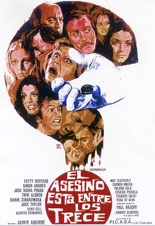 Two years after her spouse’s suspicious death, Lisa Mandel (Patty Shepard,
 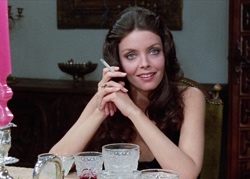 Featuring Paul Naschy in a small role as part of Mrs. Mandel’s help, The Killer Is One of Thirteen comes from Javier Aguirre in the same productive year he and Naschy collaborated on