
 I’ve been a fan of Jason Bailey’s work for several years. To tie me over waiting for his next “real” book, I bought both of his self-published books — extended essays, really; physically thin, figuratively meaty — on Richard Pryor and private-eye pictures of the 1970s — sight unseen.
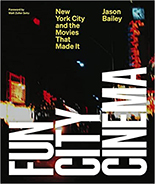
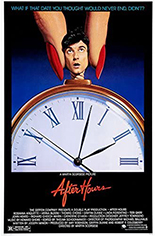
Now, Fun City Cinema: New York City and the Movies That Made It is finally here! Bailey’s such a terrific writer, the book’s magnificence is a foregone conclusion. But upon its arrival, when I opened the book to a random page, only to find my second-favorite film in history, Martin Scorsese’s After Hours, staring back from a dedicated spread, I have to acknowledge this may have been destined in the stars.
Hyperbole? Yes and no. This book couldn’t, wouldn’t exist if NYC were “just” a city; it’s an icon. As Frank Sinatra crooned, if you can make it there, you can make it practically anywhere. When it comes to capturing the city that never sleeps on celluloid, however, you must make it there. (Just ask Rumble in the Bronx, the Jackie Chan actioner actually shot in Vancouver, as the Canadian mountain skyline fails to disguise.)
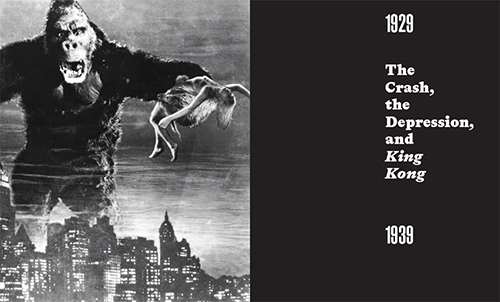
The movies Fun City Cinema examines and celebrates employ New York City as not merely a setting, but a supporting character. Would Taxi Driver feel as threatening in Dallas? Would the grandeur of Gershwin translate if Manhattan were, say, Boston? Would the suspense of Dog Day Afternoon tick with such piercing intensity if the bank stood in Boise?
All three questions are rhetorical; you didn’t need to be told that. But maybe you don’t know how Bailey goes about managing about 100 years worth of material. Starting with the 1920s, he provides an alarmingly cogent essay of how each decade’s movies reflect the Big Apple at that moment in time — and in grime and in crime, economically, politically, sexually — weaving reality and fiction like an expert tailor.
 While he’s picked one film as the encapsulation of the city’s era to front each chapter (not always the title you’d expect), dozens upon dozens of others are recruited to complete the full picture: big and small, commercial and indie, beloved and unknown, Criterion and not Criterion — nary a one is shoehorned in to check a box or fulfill some fan obligations. Not even cult items like Maniac Cop, which other authors would dismiss outright; each serves a purpose.
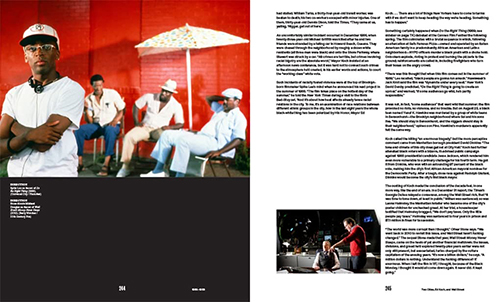
Like the aforementioned placement of After Hours, a select few films earn end-of-chapter honors for dedicated two-page looks. While this is where you’ll find such top-of-minders as Ghostbusters and The Taking of Pelham One Two Three, you’ll also be wowed by some real left-turn choices, from Ramin Bahrani’s Man Push Cart and Claudia Weill’s Girlfriends to Allen Baron’s Blast of Silence. (While I’m slinging plaudits, let me point out if you haven’t heard The Projection Booth podcast’s interview with an irritated and irascible Baron on Blast of Silence, you simply must. It’s all kinds of awkward and hysterical.)
If Bailey’s words alone didn’t already make Fun City Cinema the essential book on New York Movies and the Movies That Made It, the exquisite design work of Eli Mock would push it over the edge. Abrams, the publisher, could have let this project be a “coffee table book,” where the text is secondary to imagery, included to be skimmed if read at all. That’s not the case here; they complement one another to form an irresistible whole. (Intentional or not, Mock’s choice to use sans-serif text for body copy reminds me of the signage for the arterial subway system.) This isn’t one you’ll want to leave on any coffee table, lest it encounters a spilled cup — greatest in the world or otherwise. —Rod Lott
Get it at Amazon.


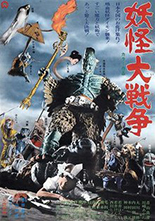 When treasure hunters disturb Babylonian ruins not to be disturbed, lest ye wish to unleash a demon, a reptilian beast appears to prove the prophecy true. Bearing vampiric features and the power of flight, the demon Daimon (Chikara Hashimoto, the Daimajin himself) possesses bodies à la The Hidden by biting people’s necks, starting with the local magistrate and staff.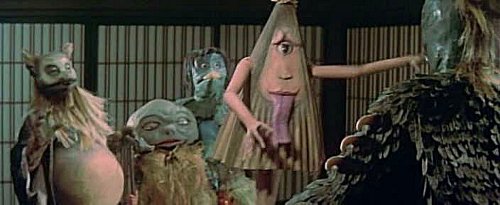


 It’s Friday night at the offices of the cash-strapped Click Clique website, where the employees have been summoned to a pitch meeting. For Halloween, with layoffs looming, they’ll run a clickbait listicle on the 13 most frightening viral videos, so the staffers take turns passing the wireless keyboard around the conference table to queue up their ideas, and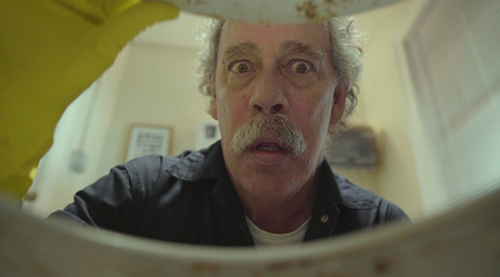
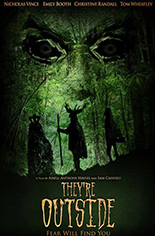 In indie horror’s digital DIY era of today, everyone who wants to make a horror movie can and does. This floods the market with dreck — and because even dreck has a minute’s worth of good parts to craft an appealing-enough trailer and inspire an eyeball-grabbing cover — the market is rewarded with rental dollars from viewers left wanting. They’re Outside offers the opposite experience: File the trailer and poster art under “no great shakes,” but the movie itself is that increasingly elusive, rough-’round-the-edges gem.