
Category Archives: Sci-Fi & Fantasy

Color Out of Space (2019)

H.P. Lovecraft’s short story “The Colour Out of Space” has been filmed several times since its 1927 publication, but none more imaginatively than Richard Stanley’s Color Out of Space. Despite its title being shorn of one vowel and an article of speech, it best captures the cosmic terror of Lovecraft’s classic.

One night, from the stars above the Gardners’ isolated alpaca farm, a meteorite comes crashing into the front yard. The media attention it brings, however limited, is unwanted by family man Nathan (a naturally unrestrained Nicolas Cage), yet a breeze compared to the threats that soon sprout — some quite literally. Infecting the water well — shades of George A. Romero’s The Crazies — the meteorite spreads madness and mayhem, inside and outside the Gardner home, and beyond. To fully align with the movie’s slow-burn cloak of impending dread, viewers are better off not knowing the details of the “how.” Suffice it to say, one late revelation is twisted into such a Cronenbergian knot, it may disturb even the desensitized.

While many will see the meteorite’s invasion as the catalyst for an allegory of American familial dysfunction, it is more interesting to view the object as a representation of cancer — one with fast-spreading reach — as Nathan’s wife (Joely Richardson, Red Sparrow) is herself recovering from the disease as the film opens. That is at least more in line with the ecological bent of Lovecraft’s tale, here embodied by a visiting hydrologist (Elliot Knight, aka TV’s Sinbad) who never changes his Miskatonic University shirt.

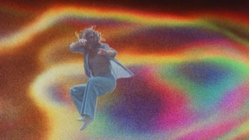
That said, you also can enjoy Color Out of Space for its surface-level lysergic trippiness, of which Stanley supplies plenty, making the film a magenta-saturated companion piece to Cage’s Mandy. Returning for his first feature in more than 20 years after his unceremonious firing from 1997’s The Island of Dr. Moreau remake (a whale of a tale told in 2014’s gotta-hear-this Lost Soul documentary) Stanley finally has the opportunity to make good on the enormous promise of his 1990 debut, Hardware. Not only does he not disappoint, but he also finds a way to film the unfilmable aspects of Lovecraft’s story, turning pulp into art. —Rod Lott

Get it at Amazon.

RoboCop (1987)

Dead or alive, Hollywood is set to make a new entry in the cybernetically stifling RoboCop franchise in the next year or so; thankfully it won’t be a sequel to the lamentable 2014 remake, but instead a direct sequel to the 1987 original. So … yay?

With the mainframe of direct hope that this could be the sequel that we’ve all hoped for — even though RoboCop 2 really isn’t all that bad — I plugged in and had a bowl of high-protein mush as I watched, for the first time in nearly 20 years, RoboCop, directed by the masturbatory filmmaker of Showgirls, Paul Verhoeven.

Sometime in the near future, the city of Detroit is a rabid hellhole of violence and oppression; the only difference between then and now is that the guns can blow entire limbs off in one shot. To help control the unrest on the streets, megacorp Omni Consumer Products takes the body of blown away (and blown apart!) cop Alex Murphy (Peter Weller) and turns him into the law enforcement of the then-future, RoboCop.

Aided by his spunky partner (Nancy Allen), this metal-plated pig takes to cleaning up Old Detroit, including the violent criminals who murdered him, led by total dirtbag Boddicker (Kurtwood Smith); he’s a classic ’80s villain who uses the phrase “Bitches leave!” to clear out a room of high-haired hotties about to have a threesome with corporate scum Miguel Ferrer.

Viewed with a far more socially bitter set of eyes than when I was an idealistic youth, RoboCop is one brilliantly hilarious film, riding the thin line between sharp satire and flat-out comedy. Inspired by the British comic-book lawman Judge Dredd, the American RoboCop is definitely given a comedic Reagan-era spin, a fascistic fantasy that fuels a supremely macho parody — one of the reasons why it still feels mostly undated.

But is it a cohesive mélange of conservative criticism that can work in the stranger-than-fiction 2020s? Probably not, but I’ll buy it for a dollar to watch anyway —Louis Fowler

Get it at Amazon.

2019: After the Fall of New York (1983)

The year is 2019. America is under the rule of a tyrannical despot that will, without mercy, capture and kill those who don’t meet his idea of genetic perfection simply to attain his primarily dark goals of world domination. No, it’s not the long-awaited Donald Trump biopic — give it a few years, though — instead, it’s the Martin Dolman Sergio Martino flick 2019: After the Fall of New York.

In a now-alternate timeline devised by the unusually prescient Martino (Hands of Steel), the world is currently a radiated cesspool that is under the dubbed thumbs of the megalomaniacal Eurax conglomerate, a united league of unspecified evil that rounds up the deformed humanity that roams the wastelands to do far-fetched cybernetic experiments on them. At least I think so.

Meanwhile, in the vastness of the desert that now resides outside of New York City — I’m thinking New Jersey — a Snake Plissken-type that goes by the name of Parsifal (Michael Sopkiw, Blastfighter) rules most of the primitive sporting events of the time — including the demolition derby, unsurprisingly — winning dirty coins and dirtier women; he’s very much a serviceable anti-hero with a five-o’clock shadow, a kicky headband and one questionable quip after another.

Hearing of his somewhat heroic deeds in the field, a rival confederacy called the Federation tells him that not only is the only fertile woman in the world hidden somewhere in the Big Apple, but that he needs to rescue her before a (completely obvious model of a) rocketship shoots the few chosen survivors into space in order to, I’m guessing, restart the human race on the moon.

Once in New York, however, there’s no time for sightseeing, as a rather pathetic group of dwarf-killing mutants who rope and wrangle rats for various barbecued meals are looking for an unnecessary fight; it’s here where Parsifal meets his smudgy ladylove, Giara (Valentine Monnier, Devil Fish), as well as the wily little person Shorty (Louis Ecclesia) and a monstrous big person named, suitably enough, Big Ape (George Eastman, Warriors of the Wasteland).

It’s Big Ape, by the way, who, when they find the working womb sleeping in a hyperbaric chamber, proceeds to have unconscious sex with her, spreading his diseased genes even further and hopefully into space; it’s a bit of sexual assault that Parsifal makes a cool aside about as his armored station wagon makes it past some of the worst traps that the obviously dense Eurax army has to offer.

Widely regarded to be one of the best spaghetti rip-offs of John Carpenter’s Escape from New York — and it is — 2019: After the Fall of New York is actually far more entertaining than its original source material, from the lonely jazzman who blows a golden trumpet among the ruins to the Eurax leader who has his eyes ripped out and cybernetic ally re-implanted. By the time the open ending came around, I was kind of wishing that 2020: After the Fall of L.A. were a real thing. —Louis Fowler

Get it at Amazon.

The New Gladiators (1984)

In 2072, the TV networks’ biggest shows are reality competitions like Killbike and The Danger Game, both as nihilistic as they sound. (Isn’t that crazy? I don’t mean those shows, but the idea that TV networks will exist in 2072. Oh, that Lucio Fulci — such a kidder!) The webs’ ante gets upped when the floating station WBS makes plans for The Battle of the Damned!

To be played in Rome’s Colosseum, where the bread-and-circus gladiators once sparred, this surefire ratings grabber forces death-row inmates to participate in games of mortal combat that update Ben-Hur-style chariot races with motorcycles. Among the first round of The New Gladiators (to borrow the film’s title) are Drake (Jared Martin, Fulci’s Aenigma), in the clink for killing the three guys who killed his wife, and Abdul (Italian post-apocalyptic flick staple Fred Williamson, Warriors of the Wasteland), who practices kung fu under disorienting strobe lights.

It’s a terrific idea, not fully realized until the release of the Arnold Schwarzenegger vehicle The Running Man three years later. The New Gladiators gets too caught up in prepping for the games, as Drake and friends — including Doctor Butcher M.D. himself, Donald O’Brien, as a severely burned ol’ pal with fiber-optic eyes — plot to destroy the show and WBS from within.

Known alternately as Warriors of the Year 2072, the movie certainly bears appeal, yet has more ambition than director and co-writer Fulci (The New York Ripper) has means. This is evident from frame one, when a pan across the cityscape at night aims to evoke the “wow” factor of Blade Runner — unachievable when said cityscape clearly is a model in miniature, akin to a backdrop from your cousin’s Lionel tabletop train set. Fulci gets in one good effect, when a woman’s face melts like a candle. —Rod Lott

Get it at Amazon.

Turbo: A Power Rangers Movie (1997)

The intergalactic pirate Divatox — whose name kinda sounds like a feminine hygiene product of some sort — is chasing a little person dressed in an ill-fitting troll costume through the woods on a swirling green planet; back here on Earth, however, a young kid named Justin is feeling a little blue because his mom is dead. It doesn’t help when a random Power Ranger, right in the middle of a training sesh, spin-kicks himself right out of the ring and into a broken back. Ouch!

Meanwhile, the typical mutants-on-ice monsters are cutting off their hands and such as the caustically attractive Divatox explains the film’s main plot points for those who walked in too late to catch the opening Star Wars-esque crawl as Lerigot, the mini-wizard who reminds me of Gwildor from Masters of the Universe, sadly, shoots himself to Earth and lands in a wildlife preserve in, presumably, Africa; he immediately meets a lion and shoots pleasant-enough fireballs from his hand. Also, monkeys throw feces at him, which I can fully understand.

As area losers Skull and Bulk are kidnapped by Divatox’s fish-shaped pirate ship, Power Rangers leader Tommy wrestles somewhat convincingly with a rubber anaconda in the jungle. Once they find Lerigot and take him back to PR HQ, that spazzy robot Alpha gives the Rangers new powers which, if you can believe it, turns out to be some new cars … turbo cars, but still.

Now, it’s up to the Power Rangers to not only stop Divatox before she marries an incarnation of Satan, but also rescue retired Rangers Kimberly and Jason before they are sacrificed to said demonic being. Mind you, this is just the first 30 minutes of the movie; sure, it sounds like a lot going on, but keep in mind that the next hour is just wholly repetitive fight scenes, with the mostly basic cars offering very little turbo-charged power for these anonymous Rangers.

While the budget has definitely been given quite a bit of high-octane Nos, this new cadre of superheroes is, sorry to say, an unlikable crew that might have worked well on the small screen, but in a movie theater, lacked the personality that made the original team so much fun. But, then again, I am a 40-year-old man that just watched Turbo: A Power Rangers Movie, so what the hell do I know? —Louis Fowler

Get it at Amazon.