
Category Archives: Horror

Ghost Month (2009)

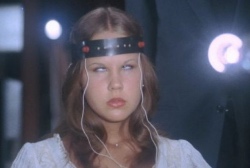
Watching Ghost Month kind of feels like it takes that long.

The rather rote horror flick finds young Alyssa (Marina Resa, Roadside Massacre) fleeing an abusive boyfriend and finding work as a housekeeper in the desert home of one Miss Wu (Shirley To, Crank: High Voltage), a Chinese woman who lives with her elderly aunt. Little time passes before spooky things start happening around the place, and Miss Wu blames them on the spirit of her former maid.

In the same haunted-house realm of The Grudge, that angry specter keeps popping up, in several scenes with scares so telegraphed, William Castle would have superimposed a countdown clock in the corner. If one of the ghost’s forms looks like a science-class skeleton with a wig on its head, well, that’s because it is. The movie has an extremely low budget, some of it going toward some computer-animated effects that fall under “decent enough.”

Ghost Month’s story is too bare-bones, unenhanced by the Chinese “rules” Miss Wu relates (and from which the flick earns its love-it-or-hate-it title), but its chief problem is the all-around amateur acting, particularly by Resa, who resembles a poor man’s Jennifer Connelly both physically and in performance, making for a rather unappealing (and thus, unsympathetic) lead. If Connelly couldn’t keep us interested in Dark Water, how could Resa be expected to here?

One can admire writer/director Danny Draven’s persistence in even getting the film made, but not the end result. For proof that the man is capable of better work, plant your tongue firmly in cheek for the marginally better DeathBed or Reel Evil, his bid for a found-footage breakthrough. —Rod Lott

Get it at Amazon.

Jungle Trap (2016)

Whether working together (The Executioner Part II) or separately (Don’t Go in the Woods), actress Renee Harmon and director James Bryan never disappoint me in disappointing me. The last of their seven collaborations, Jungle Trap is the only one to have been considered lost, which is where it could inflict the least amount of harm. The duo wrote the script — yes, there is one — and commenced camcorder shooting in 1990, yet the movie remained unfinished until more than a quarter-century later, when the Bleeding Skull powers that be provided a meaningful assist.

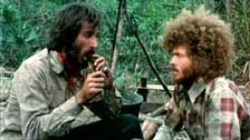
Anthropologist Chris Carpenter (Harmon, Frozen Scream) prepares for a return expedition deep into the Amazon rainforest, although she’s hardly over the experience of losing two people on the previous trek. This mission takes her to the supposedly luxurious Palace Hotel, built over sacred burial ground of the indigenous tribe, whose members were slaughtered to make way for this “millionaire’s playground.” For some reason, Chris and her fellow white explorers fail to recognize any potential negative ramifications that might present.

Located in the middle of the jungle, the hotel — which looks like a semi-decorated, summer-seasonal corner of your local Pier 1 Imports — is haunted. A snake slithers up someone’s bed (pay no attention to the crew member’s hand giving the serpent a good shove at the upper-right edge of the frame). Shrunken heads and full-sized spectres appear willy-nilly. Members of the Carpenter party get decapitated. Feather-laden ghosts of the tribesmen attack, as does stock footage that would not match even if Bryan tried — not least because said clips were shot on film, whereas Jungle Trap could afford only VHS, as if you’d want it any other way.

I would not, because I fear that might jeopardize the movie’s most surreal touches, like the elderly bellhop who appears in the brush as if it’s the most natural thing in the world. Or that the production values might rise in turn, denying us such sights as cast members cramped together in what appears to be a box crudely pinched into a shape approximating the interior of the elderly bush pilot’s airplane. Or that Harmon would be costumed for the evening “horror con” party in something other than her pointy Kleenex dress. At least we know that no matter how many nickels Bryan put into this thing, Harmon still would be rocking her inscrutable, in-need-of-decoding German accent. —Rod Lott

Nightmare Beach (1989)

Umberto Lenzi’s Nightmare Beach is the movie I wish Harmony Korine’s Spring Breakers had been: one that did away with all the annoying narcissists posing as characters. Also known by the uninspired, T&A-leering title of Welcome to Spring Break, Lenzi’s Beach depicts what would happen if, during that week of collegiate revelry and bacchanalia, a freshly charred Death Row inmate appeared to come back to life to get the ol’ from-the-grave revenge — and did so while clad in motorcycle gear. You may laugh, readers, but it could happen to you!

In scene one, greasy biker gang leader Diablo (Tony Bolano, Band of the Hand) is executed for the murdering a young woman, but vows from the electric chair that he was framed and he’ll return to make ’em all pay — you know, the usual garbage threats. Yet shortly thereafter, as beer-guzzling, sex-hungry breakers descend upon Fort Lauderdale, a helmeted mystery man in black rides into town. He’s kind of like Grease 2’s Cool Rider, but with a crotch rocket whose backseat is jerry-rigged to give his passengers an ass-frying, heart-stopping mass of high voltage.

A cop named Strycher (John Saxon, Wes Craven’s New Nightmare) investigates, as does fallen football hero Skip (Nicolas De Toth, The Invisible Kid) when his walking STD of a best bud (Rawley Valverde, Made in America) vanishes while on the prowl for a quick birth-canal rental. Helping Skip out in the hunt — and his potential love life — is a bartender named Gail (Primal Rage’s Sarah Buxton, she of the bee-stung lips), who happens to be the sister of Diablo’s victim.

As the man behind the infamous Cannibal Ferox, Lenzi unsurprisingly shoots this film’s “shocking” death scenes with glee, almost as if he can’t wait to harm the worst of his story’s worst as quickly as we’d like to see them go. Bolstering my theory: The most obnoxious character of all takes a savage beating, courtesy of Diablo’s biker buddies … and then gets killed by the moto-villain. I’m also guessing Lenzi knew the movie’s big “mystery” was as solvable as a Highlights for Children puzzle page, because he attempts to distract with subplots that have nothing to do with anything, from multiple wet T-shirt contests and a serial pickpocket to Nightmare Beach’s idea of running joke: an enterprising young woman (Christina Kier, in her only role ever) separating old, fat guys from their cash by turning tricks in her hotel room. —Rod Lott

Get it at Amazon.

Orloff Against the Invisible Man (1970)

That Awful Dr. Orlof gains a second “F,” but loses usual director Jess Franco, in Orloff Against the Invisible Man, fifth or so in the loosely bound sex-science series, depending on whom you ask.

Having received vague word that someone has fallen ill at Professor Orloff’s castle, Dr. Garondet (Paco Valladares) wants to get there to render aid, yet requires assistance. Complicating matters is that damn near every villager shudders at the mention of Orloff’s name and refuses to help. Once the good doctor finally arrives, he learns that Orloff’s daughter, Cécile (Brigitte Carva, in her one and only role), sounded the medical alarm under false pretenses: No one there is sick.

Well, not physically, perhaps …

Cécile is concerned about her father’s mental state. However, when Dr. Garondet consults Orloff (Howard Vernon, The Diabolical Dr. Z), the professor says essentially the same about her! Orloff then proceeds to sell Dr. G a lengthy explanation, which we see play out in extended flashback. It involves his latest and greatest experiment: making an invisible man!

Orloff created him out of revenge for his colleagues’ years of scorn and insults; director and co-writer Pierre Chevalier (The Panther Squad) created him because having a transparent foil sure cuts down on your monster movie’s budget. Alternately known as Dr. Orloff’s Invisible Monster and too many other titles, the film is full of such rudimentary effects as floating household (castlehold?) items and, increasingly, more prurient ones, like ripping off ladies’ clothing. The only thing more unintentionally amusing than a young women’s roll in the hay with an unseen partner comes at Against’s end, when we get a peekaboo at that see-through rascal. You’ll laugh at the reveal.

You also wouldn’t know Franco was not involved if you happened to miss the credits, because not only does Vernon reprise his Awful role, but Chevalier (purposely or not) imitates Franco through awkward pauses, out-of-focus close-ups, OB-GYN-style gazes and general nonsense. As a nearly harmless lark, this Eurohorror flick of suspect aptitude packs a nutritionally empty wallop to the ol’ pleasure sensors. —Rod Lott

Get it at Amazon.

Hunchback of the Morgue (1973)

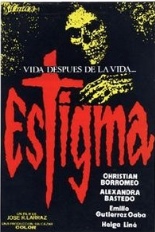
You’ve gotta give it to Paul Naschy. In Hunchback of the Morgue, the Spanish horror icon casts himself as a hideous freak reviled by all, and yet still finds a way to write his character into a nude bed-down with a ready and willing hot lady, per his usual.

Naschy’s sympathetic Gotho lives in a tiny town, where he clerks for the local hospital morgue. Everybody in the village seems to hate him — kids pelt him with rocks, doctors openly make fun of him and then Rodney King him — everybody, that is, except Ilse (María Elena Arpón, The House That Screamed), his friend from childhood. And she promptly dies.

For safekeeping, Gotho carries Ilse’s lifeless body into the bowels of the place, suggesting that Naschy and director/co-scribe Javier Aguirre (who partnered that same year for Count Dracula’s Great Love) have drawn influence not just from Victor Hugo’s The Hunchback of Notre-Dame, but another great of Gothic literature: Gaston Leroux’s The Phantom of the Opera. Splayed across a slab of rock and open to the cave’s fetid air, her face is feasted upon by rats; when Gotho limps in to discover this ghastly sight, he torches them. Set aflame for real, the shrieking vermin cry hop about like Mexican jumping beans. (PETA would be most displeased.)

And that’s just scratching the oily, sleazy surface. Soon, one Dr. Orla (Alberto Dalbés, The Erotic Rites of Frankenstein) enters the picture and enlists Gotho in obtaining the bodies of dead female prisoners for an experiment in creating artificial life. Orla succeeds, resulting in a growling, primordial poop monster that we don’t see until the final scene and seems to have shuffled in from a neighboring set. In other words, this movie has everything: the fabulous Maria Perschy (Five Golden Dragons); the equally fabulous and fleetingly naked Rosanna Yanni (Two Undercover Angels); brutes of men who spill beer all over their chins, as if their lips contain no working nerves; and ace detective work like this: “According to our investigation, he’s retarded mentally.” —Rod Lott

Get it at Amazon.