

 For some R&R after wrapping a movie, mustachioed prick actor Michael (Stefano Patrizi) takes his girlfriend, Deborah (Silvia Dionisio), and select fellow cast and crew members to the spooky, middle-of-nowhere mansion where he grew up. His ailing mother (Anita Strindberg) still lives there, despite the home being the spot where Michael, as a child, fatally stabbed his maestro father for beating up Mom.
Mom’s happy to see Michael (take a drink every time you feel an incest vibe; you’ll die before the end) and wishes he’d visit more often, but he refuses: “I’m always on the move, you know. Like a gypsy.” That’s probably a good thing, because Michael’s friends start getting killed. Who’s the black-gloved killer? It may be tough to tell at first, because everyone but the dog wears black gloves.
 The final film for The Horrible Dr. Hichcock director Riccardo Freda, the so-nasty-it’s-nice Murder Obsession colorfully plays with all the elements that make a giallo great, from a bloody beheading to showcasing the nude body of Black Emanuelle herself, Laura Gemser, no less than three times, including her first encounter with the unknown psychopath, who attempts to drown her in the bathtub.
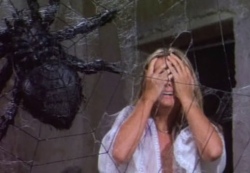
The best scene, however, is an extended nightmare sequence, which we see as Deborah relates its surreal details to her uncaring boyfriend. Among other things, she runs into a giant spider web, complete with giant spider; gets her chest scratched by bushes she pushes her way through; finds snakes at her feet; becomes tied to a post by some white-robed crusty faces who vomit green froth; and then is felt up by that oversized arachnid — all while she’s wearing a tissue-thin nightie. That’s commitment, kids. —Rod Lott

 The trouble starts when super-cute Goth girl is sacrificed by a quartet of pathetic Satanists, which causes the demons that necessitated the previous massacre to rise up from wherever they went the last time this all went down. In the end, the only person who can stop the demons from raising the Antichrist is the hot, 50-something version of the hot schoolgirl who took care of the problem the first time.
 They enter the shuttle wreckage and then the bowels of the secret base, only to find themselves trapped and menaced by this very angry, very aggressive, big-ass spider, who seems to be growing in size at an alarming rate. The U.S. Army’s also running around looking for the thing, so the movie quickly becomes a mix of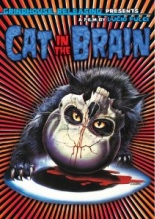
 Pretty quickly, Fulci goes mad as the felonious behavior of his films seeps into his daily life and he experiences disturbing visions, like the slaying of a whore in broad daylight (and a nipple-muncher under the cloak of darkness), and an orgy in which a billiards player redefines “corner pocket” with the nude woman draped across the pool table. Many, many clips from his previous films — from
 Urich is forced to watch helplessly as his wife (Joanna Cassidy) and kids (Barrett Oliver and Soleil Moon-Frye) are corrupted by Jones’ influence and sell their souls to her behind his back. Without any other option, he does what any good father would do: Don his experimental space suit and go down straight to Hell to rescue them. It goes without saying that he is able to do so by defeating Lucci through the eternal power of love.