
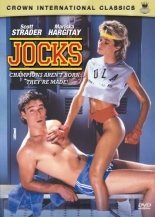
 Based on its title and its inclusion of Revenge of the Nerds’ Donald “Ogre” Gibb in its cast of protagonists, you might think that Jocks represents an attempt to subvert the ’80s teen-comedy genre by making heroes out of the characters who were typically portrayed as villains in these films.
It doesn’t. Yes, its main characters just happen to be a group of asshole athletes, but they’re a group of poor misfit asshole athletes who like to party and have a good time, and their program faces cancellation if they can’t beat the group of rich douchebag asshole athletes who only care about winning at any cost.
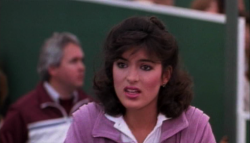 Our nominal hero here is “The Kid” (Scott Strader), who’s supposed to be a wildly charismatic party animal, but more closely resembles a crude, lazy, narcissistic prick with severe emotional problems. We’re led to believe he’s the glue required to keep his ragtag tennis team on their improbable winning streak, but all we actually see him do is take them out to a series of increasingly sleazier bars. At some point, future Emmy/Golden Globe-winner Mariska Hargitay shows up in order to be his love interest, but you’ll be too pre-occupied trying to figure out if she’s had any plastic surgery between then and now to notice how superfluous her character actually is.
That said, if you’re on the lookout for a desperately unfunny comedy that features a lot of poorly shot tennis; really bad acting; slumming guest stars on the level of Christopher Lee, Richard Roundtree and R.G. Armstrong; and some very dated and offensive gay jokes, you probably could still do better than Jocks. I’ll let you know if I find anything. —Allan Mott
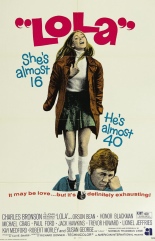
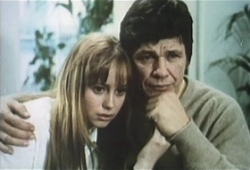 Although they both proclaim to love one another deeply, their time apart is the beginning of the end. And good for him, because no sex would be worth being hitched to someone as brick-stupid as Lola. As Jim Dale’s theme song goes, she’s “pretty crazy, dizzy as a daisy,” with a squeaky voice that makes Teresa Ganzel seem like a Rhodes Scholar by comparison. “Darling, what’s a Puerto Rican?” asks Lola, who literally can’t remember how to look before crossing the street.
 But she mistakenly believes that he has been kidnapped, and refuses to pay. The plot gets more convoluted with twists and turns that eventually involve Sherman Helmsley and Danny DeVito as a morgue attendant with a hard-on for saving things removed from people’s rectums and
 The answer: Because Arthur Penn was awesome.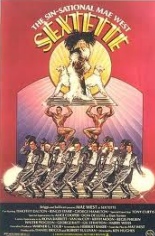
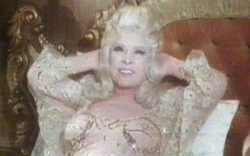 Looking at least two decades older than her 84 years, neither West, her castmates nor the filmmakers ever acknowledge the absurdity of the film’s premise, which only makes it that much more pathetic and sad. It also doesn’t help that the thought of she and Dalton actually fucking is so repellent, the viewer cannot help but get anxious every time they embrace — making the film scarier and more tension-provoking than any horror movie ever made. —Allan Mott