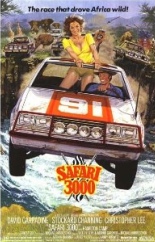
 In director Harry Hurwitz’s Safari 3000, David Carradine basically plays David Carradine, as a former Hollywood stuntman who enters the African International Race with Playboy photographer and vaguely mustachioed Stockard Channing as his navigator. Interesting, but that’s not the kind of bush of which Playboy is interested in running pictures.
Christopher Lee is the villainous mogul who also wants the crown, and the tricks he and his henchman pal are worthy of Bullwinkle cartoons — meaning that they’re entirely stupid for a live-action film. Which is much of the problem for this witless exercise: It’s unsure whether it’s an actioner, an adventure, a comedy or even a goddamn travelogue. Because it’s so start-to-finish insipid, I’m going with comedy. One thing’s for sure: It’s not worth your time.
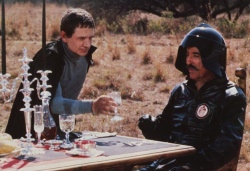 The four-digit number in the title refers to the amount of kilometers of the race, but I suspect it was put there to fool moviegoers into thinking it a sequel to Carradine’s hit Death Race 2000. It also implies futurism, but about the only dose of that you get is Lee driving around in a Darth Vader helmet. —Rod Lott
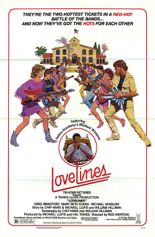
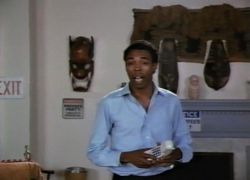 Beyond Winslow, the rest of the characters comprise an amazingly forgettable lot that range from the bland to the obnoxious to the blandly obnoxious. The fact that there isn’t a human alive capable of giving a fuck about its two lovelorn protagonists (Days of Our Lives’ Mary Beth Evans and Skatetown USA’s Greg Bradford) definitely hurts the central romance, which takes up the bulk of the third act.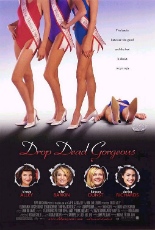
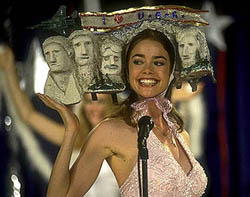 This uncanny coincidence causes the film’s many jabs at conservative “family values” to take on a newfound and occasionally disturbing piquancy. What may have once seemed overly broad now seems unfortunately believable in an age where conservative leaders such as Palin seriously decry the practice of advocating vegetables over junk food to school kids as a form of socialist liberal propaganda.
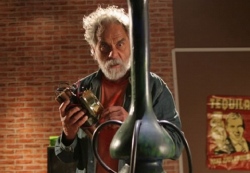 When each guy smokes it — only Alistair doesn’t partake — he’s transported to the Club Bong strip club, where the fake-breasted dancers sport carnivorous chests that kill the dudes in real life. (All the movie is set either here — with animated ganja smoke around the edges of the frame — or at their home, which looks like the set of a sitcom threatening to burst into a porno.) Tommy Chong saves the day and runs toy cars up and down said man-made mammaries.