
Category Archives: Action

The Driver (1978)

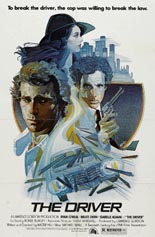
thedriverWhy isn’t The Driver mentioned in the same breath as Dirty Harry, The French Connection, Dog Day Afternoon and other bona fide ’70s crime classics? It’s excellent and — sorry, Warriors fans — easily Walter Hill’s personal best as writer/director.

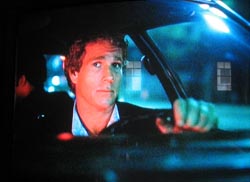
Never a great actor, Ryan O’Neal (Barry Lyndon) also is atop his game here because he has so little to say. With a stoic face and shirt unbuttoned to his chest, he plays a professional getaway driver, perhaps the finest for hire on the West Coast. We see why almost immediately, as an underground casino heist gives way to an incredible nighttime chase through the streets, alleyways and parking garages of L.A.

thedriver1At the scene, a woman (Isabelle Adjani, Ishtar) clearly sees the wheelman’s face, yet lies to the corrupt police detective (a scary Bruce Dern, Silent Running) about it. This so infuriates the cop that he plots a big-score bank robbery specifically to “catch the cowboy that’s never been caught.”

Moody, confident and quiet until tires squeal and sirens blare, The Driver is awash in so much atmosphere that lots were left over for others to soak up, most notably Nicolas Winding Refn’s Drive, the 2011 film whose taut opening pursuit in particular pays transparent homage. Until the end, I hadn’t noticed that Hill failed to give his characters actual names — they’re credited with crime-fic descriptors like “The Player” and “Exchange Man” — which only goes to show how engrossing this undervalued gem is. —Rod Lott

Buy it at Amazon.

Malibu Express (1985)

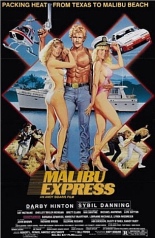
malibuexpressAs the first to arrive in Andy Sidaris’ dirty dozen of independently produced films, Malibu Express stands as one of his most entertaining works, beginning right with the opening credits, typed directly onto a Commodore 64-esque computer monitor by some woman with extra-long fingernails and who licks her lips suggestively. The next 90 minutes are like the best-ever Magnum P.I. episode, but with the added value of bare breasts.

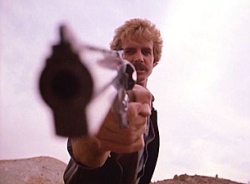
Darby Hinton (Firecracker) stars as Cody Abilene, a rock-dumb, affable private investigator who’s a poor shot with his gun, but a bullseye with the ladies. I can’t even begin to tell you what the convoluted plot is all about, but I can tell you it involves all of the following:
• a shapely race car driver named June Khnockers (Lynda Wiesmeier, Avenging Angel), who gets horny at 180 mph;
• a drag queen who performs at a club called the Screaming Cockatoo;
• a ditzy housekeeper named Maid Marian (Robyn Hilton, Blazing Saddles);
malibuexpress1• a trio of thugs christened with the biblical monikers of Matthew, Mark and Luke;
• cornpone Hee Haw humor;
• horrible country music that makes the series’ later Cynthia Brimhall pop ballads seem like Andrew Lloyd Webber by comparison;
• heavy doses of blackmail and murder;
• heavier doses of good ol’ T&A;
• a not-like-Hitchcock cameo by Sidaris himself;
• and a special appearance by Regis and Joy Philbin, playing themselves!

Howling II‘s Sybil Danning has an all-too-brief nude scene as a European contessa whose costumes barely conceal her shapely bosoms, and Playboy Playmates Kimberly McArthur and Barbara Edwards make equally eye-popping appearances — the latter serving coffee while topless to Cody. (Note to self: Start drinking coffee.) —Rod Lott

Buy it at Amazon.

Shoot First… Die Later (1974)

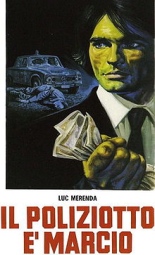
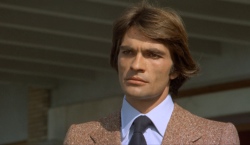
shootfirstLt. Domenico Malacarne (Luc Merenda, Torso) is not the saintly officer of the law he appears to be. Although he’s technically on the side of all that is good, he doesn’t exactly play by the book to enforce it. And there’s plenty to enforce, given his department’s new hard-line policy against gangland violence, but how much the lieutenant adheres to it is another story.

From Eurocrime specialist Fernando Di Leo, Shoot First… Die Later clearly drew influence from William Friedkin’s The French Connection, one of the films repsonsible for igniting the Italians’ new approach to police pictures. Here, Di Leo approaches the material with a mix of noir and pulp that reaches for the ring of gritty realism while also reveling in the fact that it’s still a piece of crowd-pleasing cinema.

shootfirst1He mostly succeeds, much of it due to Merenda’s magnetic presence and the major subplot, examining the torn allegiance Lt. Malacarne’s father (Salvo Randone, My Dear Killer), also on the force, comes to feel toward his son. Sticking out is the use of a pet-toting resident as comic relief, primarily because his arc ends with a huge tonal shift (not to mention an act that would get PETA all riled).

On the plus side, bookending Shoot First are expert car chases. The first runs a breathtaking six minutes, partially through tiny Italian alleys, and is one of the all-time greats. If more people saw the film, they’d been inclined to agree. —Rod Lott

Buy it at Amazon.

Assassination (1987)

AssassinationAssume your best Trailer Guy voice: “The United States’ new first lady is a major bitch … and only Charles Bronson can protect her from … Assassination!”

In this rickety product from the Cannon Films assembly line, Death Wish master Bronson plays Secret Service agent Jay Killion (note that last name), who’s assigned to guard the life and body — upturned nose included — of Lara Craig, wife of the newly elected POTUS. That she is portrayed by frequent co-star Jill Ireland, then Bronson’s real-life wife, is the most interesting element of an otherwise routine actioner.

assassination1Killion takes his job very seriously, whereas Mrs. Craig could give a shit, assuming her haughty attitude of entitlement somehow makes her impervious to bullets. She slowly changes her tune when bad guys in their vicinity start playing tag with heat-seeking missiles. She and Killion fight; she and Killion flirt; she and Killion are trapped in what feels like Hart to Hart fan fiction.

One would expect a tighter film from Peter Hunt — director of the James Bond film On Her Majesty’s Secret Service and editor of many more 007 adventures — but Assassination is a royal mess, overstuffed with weaponry, a dune buggy chase and so. Many. Motorcycles. It’s one of the weakest, least engaging projects to emerge from the Bronson/Cannon partnership, so wrong that Bronson even quips, “I don’t want to die from a terminal orgasm.” Sorry, Chuck, but that sounds like exactly the way to go. —Rod Lott

Buy it at Amazon.

Mean Johnny Barrows (1976)

meanjohnnyIn (and as) Mean Johnny Barrows, Fred Williamson (Black Caesar) plays a decorated Vietnam solider dishonorably discharged from the service for punching a soldier who made him step on a live land mine. Back in California, Unemployed Johnny Barrows can’t seem to find a job. I don’t think it helps that all he wears are jeans so poorly acid-washed that it looks like he peed in them.

Eventually he gets tied up with the mob, hired to be a hit man for $100 grand and a piece of land. One of his assignments is to take out gangster Tony Da Vince, played by Roddy McDowall. After watching the Planet of the Apes star attempt to act like an Italian mobster, I now know where Dana Carvey found the inspiration for his Pistachio Disguisey character in The Master of Disguise; McDowall is more convincing kissing the curvy mob moll — and that’s saying something.

meanjohnny1By the finale, Ambidextrous Johnny Barrows infiltrates a mob boss’ hideout with a shotgun in each hand. Minutes later, he’s defeating an opponent with a well-aimed Chinese star to the eye, making him Master Ninja Johnny Barrows.

Directed by Williamson himself, Mean Johnny Barrows also stars slumming white folk Stuart Whitman (Night of the Lepus) and that noted blaxploitation staple Elliot Gould (Ocean’s Eleven). The actioner ends as all actioners should: with the words “Dedicated to the veteran who traded his place on the front line for a place in the unemployment line – peace is hell” superimposed over a freeze frame of a honky bitch getting blown to smithereens. —Rod Lott

Buy it at Amazon.