

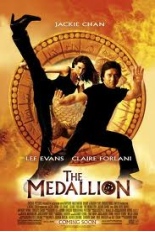
 Hollywood has little clue what to do with Jackie Chan. Their ideas boil down to: a) pair him with a wacky black guy, and b) surround him with special effects. The first one works; the second one never will. There’s no point in hiring the world’s most renowned kung-fu acrobatic clown and dressing him up with lots of wires and CGI; if you’re going to do that, you might as well get, say, Tim Kazurinsky.
In the FX-laden crapfest The Medallion, Chan is a Hong Kong security specialist named Eddie, working with American Interpol agents to track down Julian Sands, obsessed with getting this medallion from a mystical Asian boy. It ends up in Chan’s nimble hands, but he gets killed in the process, but yet is revived by its supernatural powers. So now he can jump real high and fly like Superman. It’s lazy and uninspired, not to mention inane and embarrassing, like the montage of him dancing to “Twist and Shout.”
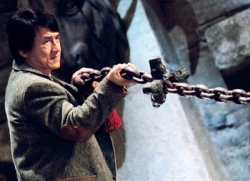 Normally, bad Chan scripts can be made bearable by the ad-libbing of a crazy partner. But Lee Evans is no Chris Tucker or Owen Wilson. As a most unlikely love interest is Claire Forlani, so bad you’ll be praying for the relative grace and panache of The Tuxedo’s Jennifer Love Hewitt. Not even the outtakes that play during the end credits are any good, although it is worth noting that it contains the third instance of Chan being interrupted by a cell phone (first spotted in the bloopers for Rush Hour 2 and Shanghai Knights).
But that’s about all worth noting for this film, Chan’s absolute worst since breaking through on these shores in ’96. Even as a big Chan fan, I can safely say to avoid The Medallion at all costs. —Rod Lott


 But she mistakenly believes that he has been kidnapped, and refuses to pay. The plot gets more convoluted with twists and turns that eventually involve Sherman Helmsley and Danny DeVito as a morgue attendant with a hard-on for saving things removed from people’s rectums and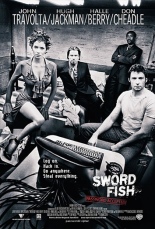

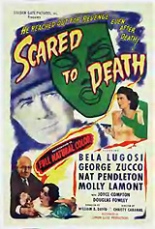
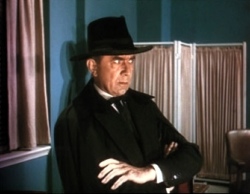 I know that filmmaking was still pretty antiquated back in 1947, but you’d think the filmmakers would have been smart enough not to begin with an autopsy if they wanted audiences to be surprised when the lead female dies at the end. You’d also think they’d have the foresight not to end with the line “She was … scared to death!” but they didn’t, and God bless them for it. —Rod Lott