
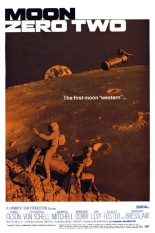
 Hammer Film Productions was and is known for horror, but give the group credit for its one and only attempt at a sci-fi Western in Moon Zero Two. In the year 2021, the moon is inhabited; its residents play a circular-shaped board game called Moonopoly; and social life amounts to hanging out at the Lazy B Saloon, where the drink of choice — distilled rocket fuel, of choice — runs $35 a shot.
Our hero is Capt. William H. Kemp (James Olson, The Andromeda Strain), who specializes in retrieval of satellite scrap, and doesn’t want to shuttle interplanetary tourists: “I’m a space pilot, not a mechanically minded wet nurse.” However, when safety violations threaten to ground him, a guy’s gotta look long-term.
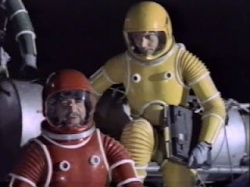 For Kemp, that means listening to Hubbard (Warren Mitchell, Jabberwocky), the purple-cloaked, eyepatch-sporting baldie about illegally mining the sapphire from a 6,000-ton asteroid. Total fox Clementine Taplin (Catherina von Schell, On Her Majesty’s Secret Service), searching for her missing brother, shows up to provide much sexual innuendo.
The film’s highlights are a gravity-free bar brawl, however brief, and cartoon opening credits in a loony spirit not exhibited by the mostly serious story that follows. Directed by Roy Ward Baker (Quatermass and the Pit), Moon Zero Two certainly looks cool — and sounds it, with a swingin’ ’60s score — but feels forever set at quarter-speed. Good thing that in space, no one can hear you snore. —Rod Lott
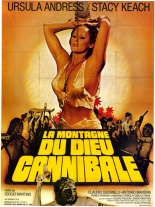
 Judging from the opening credits of this juicy helping of Italian sleaze, you’d think this would be called When Animals Attack the Shit Out of One Another, as the film introduces us to the laws of the jungle via real-life, mondo-style footage of how the food chain works. These bits are sprinkled throughout the film at random moments as well, allowing you the full-color spectacle of, say, a snake swallowing a monkey whole.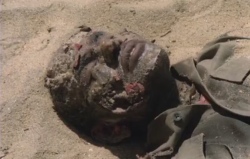
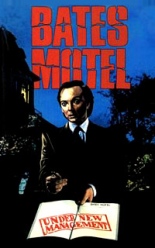
 Complain all you want about the sequels and Gus Van Sant’s shot-for-shot remake, but in reality, the made-for-TV
 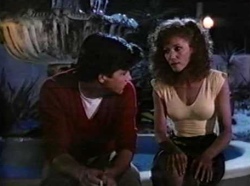 Adding a café and fountain, Alex reopens the place to quite an eager crowd. First, suicidal writer/aerobics instructor Kerrie Keane (