
All posts by Rod Lott

Escape (1971)

Cameron Steele (Christopher George, Mortuary) is a famous escape artist who can get outta anything … but couldn’t get into a weekly time slot, unfortunately. From director John Llewellyn Moxey (Horror Hotel), the made-for-TV movie Escape may be a “failed” pilot for what should have been a series, but it is a damn fine hour and a half of, um, escapism.

Now a private dick who lives above a bar catering to magicians, Steele takes a $25K gig to find Dr. Henry Walding (William Windom, She’s Having a Baby), a scientist who has gone missing — and whose lab has been torched — after cracking the code toward creation of a game-changing virus. As feared by Walding’s estranged daughter in the fashion industry (Marlyn Mason, Fifteen and Pregnant), the doc indeed has been kidnapped. As feared by no one, however, the culprit is Walding’s own brother, Charles (John Vernon, Killer Klowns from Outer Space), which is totally weird since he’s supposed to be deceased!

Charles is holding Henry captive, wishing to use his brother’s breakthrough for nefarious purposes. But the “why” is less important than the “where”: the Happyland amusement park! Yes, in order to spring Henry from captivity, Steele must navigate a funhouse laden with tricks and traps, which is where the telefilm lives up to the wonder promised by its way-out opening credits, scored by Mission: Impossible maestro Lalo Schifrin. In fact, Escape plays like an episode of M:I unfolding within a maze of mirrors — never a bad thing.

Serving up bonus kicks are members of the kitchen-sink supporting cast, including former Bowery Boy Huntz Hall, prime-past Oscar winner Gloria Grahame (The Bad and the Beautiful) and, as Steele’s associate, comedian Avery Schreiber (Loose Shoes) in a rare straight role — well, straight if we’re using his Doritos ads as the benchmark. —Rod Lott

Great White (1981)

Among all the Jaws imitators to have surfaced from international waters, Italy’s Great White is unique: It is the only one to be sued out of the marketplace by the litigious Universal Studios for being too much of a carbon copy. Okay, so in hindsight, maybe it wasn’t the brightest idea to send Vic Morrow to wardrobe as if he were going to a Halloween ball as Robert Shaw’s salty shark hunter Quint.

Milking his Irish accent so hard, Morrow plays grizzled second fiddle to clean-cut James Franciscus (The Cat o’ Nine Tails) in the Roy Scheider family-man role and publicly theorizes that the toothed beast may be “crazed.” The appearance of (B-roll of) this shark threatens to ruin their coastal town’s upcoming windsurfing competition, which is such a big deal that is the radio station DJ talks about local surfers between stacks of platter the way other markets do traffic and weather. Yes, it’s That Big, and the mayor (Joshua Sinclair, Lady Frankenstein), who may as well be named Murray Hamilton, isn’t about to let a few bloody stumps disrupt the economically rewarding festivities.

The longer Great White (aka The Last Shark) goes on, the more you can sense members of the Uni legal team drooling on a draft of the injunction. Whereas Steven Spielberg had the iconic score of John Williams working in his favor, Enzo G. Castellari (Cold Eyes of Fear) is saddled with the discordant theme of what sounds like a seal choking as it passes gas. Whereas Spielberg relied upon that rarely working but terrifyingly lifelike shark, Castellari has to get by on a mix of stock footage, a rigid model and, best/worst of all, a barely moving head that might have been “borrowed” from Universal’s famed tram ride.

To be fair, Castellari does have one thing Spielberg’s classic does not: a shot of a corpse-stiff dummy rocketing into the sky as the shark bursts from the water like a geyser. So phony it’s funny, the bit dared me not to replay it thrice. —Rod Lott

Get it at Amazon.

Reading Material: Short Ends 5/21/17

I suspect I’m not the only one who, upon the death of Pulitzer Prize-winning film critic Roger Ebert in 2013, bought his 2006 collection, Awake in the Dark, thinking it to be the definitive summation of his prolific and distinguished career. The University of Chicago Press has proven me wrong, by issuing Awake in the Dark: The Best of Roger Ebert — Second Edition. Roughly half of the original volume was taken up by his best-of-year reviews from 1967 (Bonnie and Clyde) to 2005 (uh, Crash); this newer edition picks up where that left off, from 2006 (Pan’s Labyrinth) to 2012 (um, Argo). While his choices could be suspect, he nonetheless demonstrated an affinity for making his case, and making it sing; most notable — and representative of his power — are his now-famous support for the 1994 documentary Hoop Dreams and the ’98 sci-fi mind-bender Dark City. The book also features sections on docs, foreign pics and underseen gems, as well as assorted essays, including a Pauline Kael tribute, a list of the century’s 10 most influential movies and a round-robin series from the early ’90s on the state of film criticism, in which Ebert gets into it with peers Richard Corliss and Andrew Sarris. This book is as essential as the man is missed.

Former Nevada Film Office deputy director Robin Holabird draws upon nearly a quarter-century of government work scouting locations for motion pictures and television shows in the Silver State, for her memoir on those glitzy, glamorous years, Elvis, Marilyn, and the Space Aliens: Icons on Screen in Nevada. With such big movies as Independence Day, Ocean’s 11, Showgirls, Smokin’ Aces, Jane Austen’s Mafia and Casino on the table, one longs for a VIP tour through the making of these flicks, but in that department, the author woefully rolls snake eyes. Readers are lucky to get a quote relayed through her here and there, but most of the content is strictly a rundown of Such-and-Such Project shooting Such-and-Such Scene at Such-and-Such scenic spot. At least Holabird keeps the University of Nevada Press paperback moving at a whirlwind, not to mention spanning the gamut of prestige, from the long-running TV smash CSI: Crime Scene Investigation to the chintzy Stella Stevens project Las Vegas Lady. All in all, though, a missed opportunity.

Attention, cult cinemaniacs who like to sniff out zines catering to their peculiar tastes: Hunt down Woof! Dog Eat Cinema Magazine. The damaged brainchild of Hans Minkes, the Netherlands-based publication combines enthusiastic movie reviews with top-notch illustrations, then shoves the oft-ribald results into the size of your standard comic book. Like a Cinema Sewer from the other half of the world, contents lean into the lascivious, yet are wonderfully varied; among the three issues I’ve read (#2-#4), spotlighted titles include Lady Iron Monkey, Pete Walker’s The Comeback, the infamous atrocity pic Men Behind the Sun, a Django porn parody and Albert Band’s Ghoulies II, the latter as part of each issue’s “Whatever Lola Wants,” in which Minkes’ young daughter randomly selects a VHS tape for Dad to cover. Another recurring feature is Hans Van Den Broeck’s “Fur on Film,” with each installment exploring a werewolf subgenre, whether Asian, X-rated or good ol’ Andy Milligan. From my POV, Woof’s two best articles savaged the films of Draculina publisher Hugh Gallagher (Goregasm, et al.) and the post-apocalyptic roller-skate movie, of which there are more than you think (mostly “thanks” to Donald G. Jackson). Interested pups should email woofmagazine at hotmail dot com for ordering deets!

Presumably tied to this summer’s highly anticipated release of War for the Planet of the Apes, Abrams ComicsArts continues its exquisitely packaged series of Topps trading-card retrospectives with Planet of the Apes: The Original Topps Trading Card Series. The hardback devotes a full page to each card’s front and back, numerically going through the entire stack — not just the one based on the 1968 classic film, but also the short-lived TV show and the Tim Burton remake (and its numerous limited-edition cards), with author Gary Gerani contributing commentary as we go. (His introductory essay is fascinating; for example, Charlton Heston initially balked at being pictured on those damn, dirty bubble-gum cards.) As with Abrams’ other Topps books, a sealed pack of cards is glued onto the inside back cover. For Apes fans — and especially collectors of the franchise’s memorabilia — it’s a madhouse of pop-culture preservation! —Rod Lott

Get them at Amazon.

The Belko Experiment (2017)

According to the scientific method — which you would have learned in middle school, had you been paying attention — every experiment exists to test the validity of one’s hypothesis. For example:
• “Refrigerating food will extend its life of edibility.”
• “A brick falls faster than a feather.”
• “When you’re a star, they let you do it. You can do anything. Grab them by the pussy. You can do anything.”
• Or, in the case of The Belko Experiment, “If you lock 80 people inside an office building and tell them to kill, they totally will.”

From director Greg McLean (Wolf Creek) and screenwriter James Gunn (Guardians of the Galaxy Vol. 2), The Belko Experiment proves its hypothesis true, in brutally bloody fashion and with a palpable edge not often seen in mainstream movies.

Some 80 men and women, most of them Americans, work in the high-rise corporate headquarters of Belko Industries in Bogotá, Colombia. Why is the film set in South America? Good question — and one McLean and Gunn do not answer; my suspicion is the foreign setting, coupled with the remote location of the offices, deliberately feeds into the audience’s fear of the unfamiliar “other.” Dorothy was right, you know: There is no place like home, where dozens of people aren’t actively trying to snuff your life, and even if they were, you’d at least know the perfect hidey-hole to sit out the chaos.

It’s tough to tell which startles the Belko workforce more: an intercom message demanding they kill a couple of colleagues within the half-hour or the steel walls that seal them inside a multifloored cage of cubicles. At first, they think the announcement might be a hacker’s prank. (But we know that’s not the case since the voice belongs to Gregg Henry — c’mon, we’ve all seen Body Double!) When the backs of a few heads begin to explode — and the bodies attached instantly slump to the lobby tile in sickening heavy thuds — they know this is no game.

Well, in a manner most most macabre, it absolutely is a game — a Battle Royale among pencil-pushers and number-crunchers. Only one will be left standing, with luck, and it’s exactly who you think it will be, thanks to the movie’s early alignment with that character. Beyond that, however, the lack of marquee names ensures that in this bloodbath, anyone could be taking a dip. One of the Experiment’s strengths is its casting of reliable character actors, including John C. McGinley (Surviving the Game), Tony Goldwyn (2009’s The Last House on the Left), John Gallagher Jr. (Hush), Brent Sexton (TV’s The Killing) and Gunn favored player Michael Rooker (Slither). No one is particularly well-drawn before shit gets real; paying the larger price for that are the few ladies, notably Adria Arjona (TV’s True Detective) and Melonie Diaz (Ghost Team). For the latter’s character, it’s her first day — talk about a flawed onboarding experience!

There is more to The Belko Experiment than just a high concept. As with his underseen 2010 film, Super, Gunn’s screenplay lulls you into its darkly comic world before pivoting into unrelenting violence — a tonal shift so swift and severe, you’re supposed to feel discomfort. Many viewers will check out long before the intended message — admittedly delivered sans subtlety — has time to sink in. Give it a shot! —Rod Lott

Get it at Amazon.

’80s Action Movies on the Cheap: 284 Low Budget, High Impact Pictures

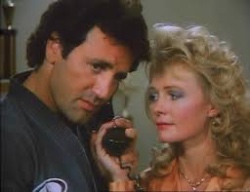
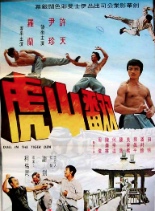
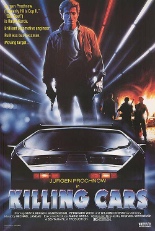
A word of warning to those interested in the book ’80s Action Movies on the Cheap: 284 Low Budget, High Impact Pictures: “Cheap” is an adjective not used carelessly, so expect neither Stallone nor Schwarzenegger. Know that there is nary a Batman or Bond, and that Van Damme is more or less persona non grata. In fact, Mr. American Ninja himself, Michael Dudikoff, is as mainstream as it gets. This is the kind of book in which Reb Brown claims 14 pages, which is nothing compared to Godfrey Ho’s 36 — and if you don’t know who they are, this McFarland & Company paperback release is not for you. I happen to love it like a child.

One-half of the team behind Bleeding Skull!: A 1980s Trash-Horror Odyssey, Daniel R. Budnik has put his life on the line to suffer through nearly 300 ass-kickin’ flicks of the Reagan era, some of which actually played theatrically from coast to coast. Others, not so much, but they sure-as-shit clogged the shelves of Bob’s Video Haven (or whatever the mom-and-pop VHS rental outlet was called in your neck of suburbia). Budnik’s world is one filled with Caucasian ninjas and bikini babes, of Terminator rip-offs and Conan wannabes, of kill squads and lone wolves, of lost empires and the occasional Miami connection.

Grouped by year of release rather than letter of the alphabet, each movie covered is done so in Budnik’s no-nonsense, subject/predicate-style — short on flourish, but high in chuckles. To, uh, wit:
• On misleading titles: “Jungle Warriors is not a very good film. But it does have jungle in it.”
• On the Rambo-esque The Last Mercenary: “So they begin throwing an African child into the air and shooting him. … Who came up with this idea? And is he in prison?”
• On Andy Sidaris’ Malibu Express: “There are more beautiful women in this movie than can be reasonably counted.”
• On the Erik Estrada vehicle Light Blast: “Estrada acquits himself well and looks great in his underpants holding a turkey.”
• On Penthouse Pet turned Silk 2 star Monique Gabrielle: “Ms. Gabrielle is gorgeous and sexy as hell. But she’s as much of an action film star as Selma Diamond.”

I found that last line in particular so rib-tickling that I forgive him for mauling Yellow Hair and the Fortress of Gold director Matt Cimber’s last name as “Climber” across all five mentions (six if you include the index).

From The Great Skycopter Rescue or Robo Vampire, a lot of turds float in Budnik’s bowl of a book, front-to-back insanely entertaining. I can’t really complain that it is not a complete guide — missing are such notable bags of magnetic-tape trash as Killzone, Treasure of the Amazon, Laser Mission and Invaders of the Lost Gold; instead, I only cry out for a sequel. 9 Deaths of the Ninja is screaming your name, Danny Boy. —Rod Lott

Get it at Amazon.