

In films, Indigenous characters (both fictional and non-), are usually created, written and filmed to be stereotypical “redskin” primitives as generic, nonsupporting players in whitewashed plots. If you even get the part, you’re killed off in the first 15 minutes for union scale, an IMDb credit and another notch in white supremacy’s belt.
It seems Indigenous filmmakers aren’t going to take it anymore. In the past few years, when an wholly Indigenous creative team goes all-in, their projects personify simmering rage against polite society’s established systems. A Canadian film by Kaniehtiio Horn (Possessor) puts all those sharp feelings in a blender and goes hits “cultural purée.” Of course, I loved it.
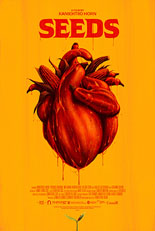
That genre-bending film is Seeds, recently named Best North American Indigenous Film by the Oklahoma Film Critics Circle, of which I’m part. I felt like I triumphed; as half-Choctaw, I identified with Horn’s character, Ziggy, as she tries to reconcile the old world with the new, the traditional ways with the savage, and, naturally, the comedic side with the horrific. Seeds plays very well at balancing these sides.

Living in the city, Mohawk tribe member Ziggy is an influencer/food delivery driver with some outstanding bills she’s trying to pay off. Looking to recharge her account, her cousin (the very funny Dallas Goldtooth, TV’s Reservation Dogs) asks her to come to the Pine River rez to house-sit. Many out-of-water comic scenarios — including strapping ex-boyfriends, homemade energy drinks and clandestine internet issues — make you think Seeds is a comedy.
But soon enough, a storm builds when the town’s white-trash thief and his two accomplices try to steal Ziggy’s aunt’s most prized possession: legacy corn, bean and squash seeds. They break in and kill her cat to scare her to give up the seeds. If you know Natives, that’s easier said than done, because 500 years of Indigenous rage pours out. With total prejudice and no mercy, she strings the guys up, whips them, covers them in hot oil and “de-barks” them in an act of Indigenous revenge that’s very raw and justified.
With a true supporting cast that includes the late Graham Greene and an impossibly Goblin-esque soundtrack by Alaska B, writer and director Horn has ripped up the playbook that white people have used for a hundred years and deftly mixes humor and horror to the hilt.
I am proud to champion this film and hopefully more people will see it, from Indigenous cinephiles to all-around horror fans. However, a different movie called Seeds, a documentary about Black farmers, was released around the same time, causing confusion. As a result, both may go unrecognized. I guess when it comes to non-white films, they all look the same, right? —Louis Fowler